





Analysis
3,525 PILs, no stopwatch: Parliament’s data, M.C. Mehta, and the continuing mandamus question
If the government doesn't know how long PILs take, M.C. Mehta's 39-year wait is the answer it never bothered to record.

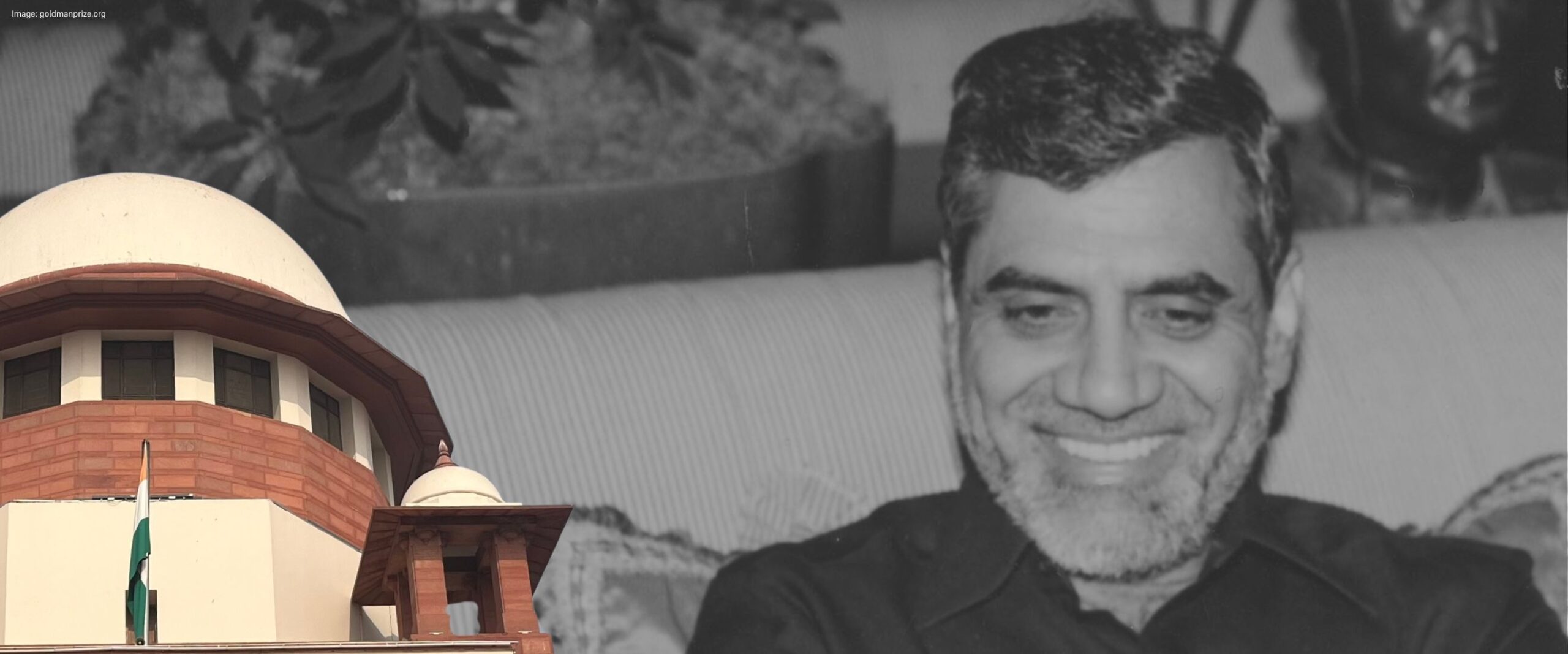
On 13 March, Law Minister Arjun Ram Meghwal placed data before the Lok Sabha on public interest litigation in the Supreme Court. The figures are concerning: A total of 3,525 PILs are pending. Of these, 698 have been pending for over ten years. The oldest was filed in 1984. In 2025, the court admitted 570 new PILs, the highest annual inflow on record since 2014. Over the past five years, the court disposed of 1,872 PILs, averaging roughly 374 per year. The inflow now exceeds the disposal rate. At this pace, the existing backlog of PIL cases would take over nine years to clear (3,525 pending cases divided by the five-year average annual disposal of 374, per the Lok Sabha data). And that’s without taking into account that the Supreme Court’s total pendency has crossed 92,000 cases. Most significantly, the government admitted that the average time taken for disposal of PILs “is not known.”
Two days later, the Supreme Court formally closed WP(C) 13029/1985. This was the most prominent of three M.C. Mehta environmental petitions, all of which had survived on the docket for four decades. Chief Justice Surya Kant described the petition’s continued listing as an “embarrassment.” Parliament had been asking pointed questions about pending cases. The closure drew tributes to judicial activism. The parliamentary data, however, tells a larger and more consequential story.
The Law Minister’s admission about disposal time signals an institutional gap. No agency of government or registry of the court tracks PIL cases as a distinct category with throughput metrics. Cases enter the docket and stay until a bench reaches them or a party loses interest. There is no periodic review of these cases, no ‘sunset clause’ that calls time on the proceedings, no presumption that a PIL should conclude within a defined timeframe. PIL competes for judicial time with criminal appeals, constitutional references, and commercial disputes.
A key factor behind the accumulation of PILs over the years is continuing mandamus, a mechanism once celebrated as PIL’s greatest innovation. In ordinary litigation, a court adjudicates a dispute and closes the file. Continuing mandamus, however, allows the court to retain jurisdiction indefinitely. It monitors compliance, adjusts its directions, and keeps the case alive as long as supervision appears necessary.
In the M.C. Mehta petitions, this mechanism delivered results that other institutions had failed to produce. Delhi’s entire bus fleet was converted to compressed natural gas by December 2002. The court imposed penalties of Rs 1,000 per day on the Delhi Transport Corporation for every diesel bus running past its deadline. Between 2000 and 2003, sulphur dioxide levels in Delhi fell by 34.8 per cent and carbon monoxide by nearly half. In a 1996 judgement, the court directed 292 polluting industries within a particular radius of the Taj Mahal to switch to natural gas or relocate. These were tangible, court-enforced outcomes.
Continuing mandamus, however, lacks defined exit criteria. When judicial supervision should end remains entirely at the court’s discretion. The air quality petition achieved its primary purpose decades before its formal closure. Yet parties continued to route fresh grievances through it as interlocutory applications. By 2026, the petition carried 85 live IAs on subjects entirely disconnected from the original prayer.
The top court itself acknowledged that “none of the issues that still survive originated in 1985 or soon thereafter.” The order relating to one of the other M.C. Mehta petitions, WP(C) 4677/1985 (often termed the ‘greening petition’), was equally candid. It recorded that the main issue had been “rendered otiose due to various developments that have taken place over the last 22 years.” The court had been using 1985 petitions as vessels for contemporary governance problems bearing little organic connection to the original filings.
The deeper structural issue is that continuing mandamus works only when the court has leverage over a discrete, identifiable respondent. The CNG conversion succeeded because the bus fleet was state-controlled. The court could set deadlines, impose penalties, and verify compliance. Delhi’s air quality problem, however, extended far beyond the bus fleet. The city had approximately 3.6 million registered vehicles in 2001. By 2024-25, that figure had reached 15.6 million, with nearly 2,000 new vehicles added daily. Nitrogen dioxide levels rose by 13.7 per cent even during the period of the bus conversion. Private motorists, land use patterns, construction activity, and stubble burning in neighbouring states all lay beyond the court’s reach. The industrial relocation ordered under WP 4677/1985 was unevenly implemented and contested at every stage. Burdens fell hardest on workers and small operators with no electoral recourse against court-driven displacement. Continuing mandamus can discipline a government department. Redesigning an economy lies beyond its capacity.
This brings the analysis to the central paradox. On 12 March, the court closed the 1985 petition. It simultaneously opened a new suo motu proceeding titled In Re: Issues of Air Pollution in the National Capital Region. The 85 pending IAs were directed to be re-registered as independent writ petitions. The amicus curiae remains the same. The respondents remain the same. The new proceeding operates through continuing mandamus under a fresh case number. If the mechanism produced docket bloat in the original petition, what structural safeguards have been developed for its successor?
On paper, the changed institutional landscape offers some answers. The National Green Tribunal, established in 2010, handles environmental adjudication as a specialist body. The Commission for Air Quality Management, given statutory form in 2021, coordinates air quality governance across the NCR. Yet, the Court’s continued adjudication of the M.C. Mehta petitions without delegating oversight of the continuing mandamus on such bodies is a telling indicator of how far it was willing to rely on those institutions. In principle, they should absorb much of the supervisory work the Supreme Court performed through continuing mandamus for decades.
Yet by instituting the new suo motu proceeding, the court is indicating that it doubts their capacity to function without judicial oversight. A 23 February order directed the CAQM and NCR state governments to submit compliance reports before each hearing. The institutional dependency that sustained the original petitions has been reproduced in the successor.
The continuing mandamus debate reflects a larger transformation of PIL itself. When Justices P.N. Bhagwati and V.R. Krishna Iyer relaxed locus standi rules in the late 1970s and early 1980s, PIL was designed as an emergency corrective. The state had failed to protect the most vulnerable. Ordinary litigation was too expensive and too slow. The court stepped in as a surrogate for institutions that were failing. It produced landmark results in bonded labour, custodial violence, environmental protection, and gender justice. Four decades later, PIL has become a routine governance tool. Scholars and judges have observed that PIL has expanded well beyond its original rights-based mandate into territory that overlaps with legislative and executive functions. The court’s willingness to entertain them reflects an expansion of judicial ambition that has outpaced judicial capacity.
Parliament’s data raises design questions that both branches have avoided. Should PILs carry time limits? Should continuing mandamus orders require periodic review, with the burden on the petitioner to justify continued supervision? Should the court publish disposal statistics for its PIL docket, as it does for other categories? Should a presumption apply that once Parliament creates a specialist tribunal, the Supreme Court’s supervisory jurisdiction yields to it? The Law Minister said each PIL varies in complexity, making it difficult to come up with data on their timelines. However, criminal appeals also vary in complexity, and the court tracks their pendency with care.
The irony at the heart of this story is precise. PIL was created because Parliament and the executive had failed to act. Continuing mandamus was the instrument through which the court compensated for that failure. Today, Parliament asks the Supreme Court why its corrective mechanism has become one of the slowest-moving parts of the legal system. The court’s response has been to close individual embarrassments and reopen them under fresh numbers, while the structure producing them remains intact.
Related articles


Analysis
Delhi pollution crisis: Can the Supreme Court clear the air?
A Division Bench appointed 13 advocates as Court Commissioners to ensure compliance with the ban on trucks at Delhi checkpoints
Analysis
Delhi Air Pollution Crisis | Union submits pollution-control plan
Vacancies in pollution control boards and poor enforcement come under scrutiny as Court demands accountability from NCR states

Analysis
Supreme Court Review 2025: Lacking a principled stance on environmental rights
In trying to strike balance between environmental rights and the development imperative, the SC delivered a mixed bag of verdicts in 2025
75 Years of SC Articles
What a Jagged Little PIL: The People’s Court at 75
The original promise of the PIL from the 1980s, based on social justice, has devolved into a confused and intimidating jurisprudence