





Analysis
A reform and its shadow
The Collegium's new advance-transfer policy is a welcome administrative fix packaged with a less comfortable supersession.

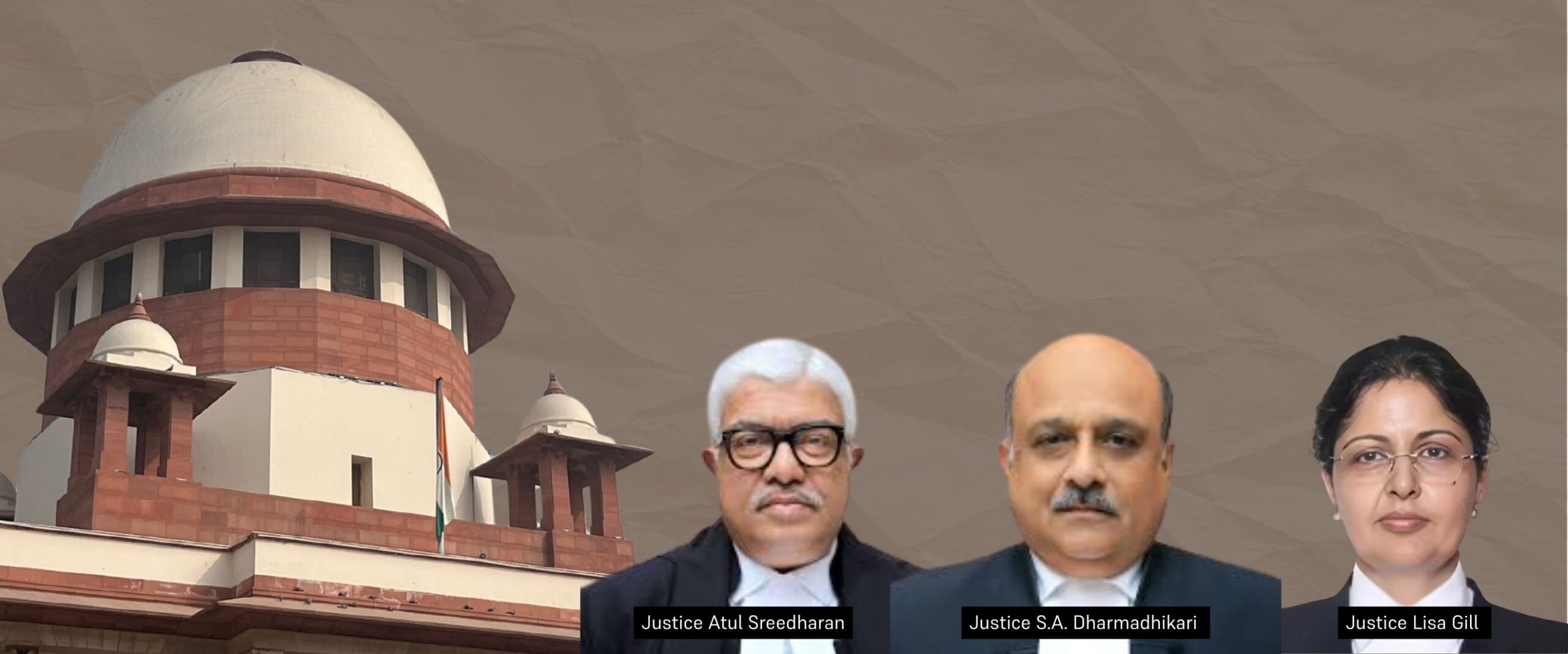
On February 26, the last working day before the Holi vacation, the Supreme Court Collegium held a meeting and made two decisions. One progressive, the other troubling.
Let’s start with the good news.
The Collegium announced that going forward, judges proposed as incoming Chief Justices of High Courts will be transferred to their destination court roughly two months before the vacancy arises. The immediate beneficiary of this new policy is Justice Lisa Gill. She is being moved from the Punjab and Haryana High Court (where she was elevated as a Judge on 31 March 2014) to the Andhra Pradesh High Court. She will serve as a puisne judge for a couple of months before taking over as Chief Justice when the incumbent retires in late April.
The policy decision is a logically sound one. A Chief Justice doesn’t just preside over benches—she runs the roster, oversees inspections of subordinate courts, and sets the institutional tone for an entire High Court. Arriving on the day of a predecessor’s retirement, as has been the norm, is a bit like being handed the controls of a moving aircraft mid-flight. Being given a bit of runway before take-off will make a considerable difference.
Justice Gill’s elevation also carries its own significance. She will be the first woman to lead the Andhra Pradesh High Court.
Now for the part that is harder to digest.
The same meeting recommended Justice S.A. Dharmadhikari as the next Chief Justice of the Madras High Court. Justice Dharmadhikari was appointed as Additional Judge of the Madhya Pradesh High Court on 7 April 2016, the same day as Justice Atul Sreedharan. Both judges were then appointed as Permanent Judges to the same Court on 17 March 2018. When two judges share the same date of appointment, seniority is determined by the date of initial enrolment at the Bar. This is reflected in the order of their names in the original warrant of appointment at their parent High Court. By this measure, Justice Sreedharan is senior to Justice Dharmadhikari.
The Collegium’s resolution says nothing about why Justice Sreedharan was not recommended for elevation as the Chief Justice of the Madras High Court, despite his seniority.
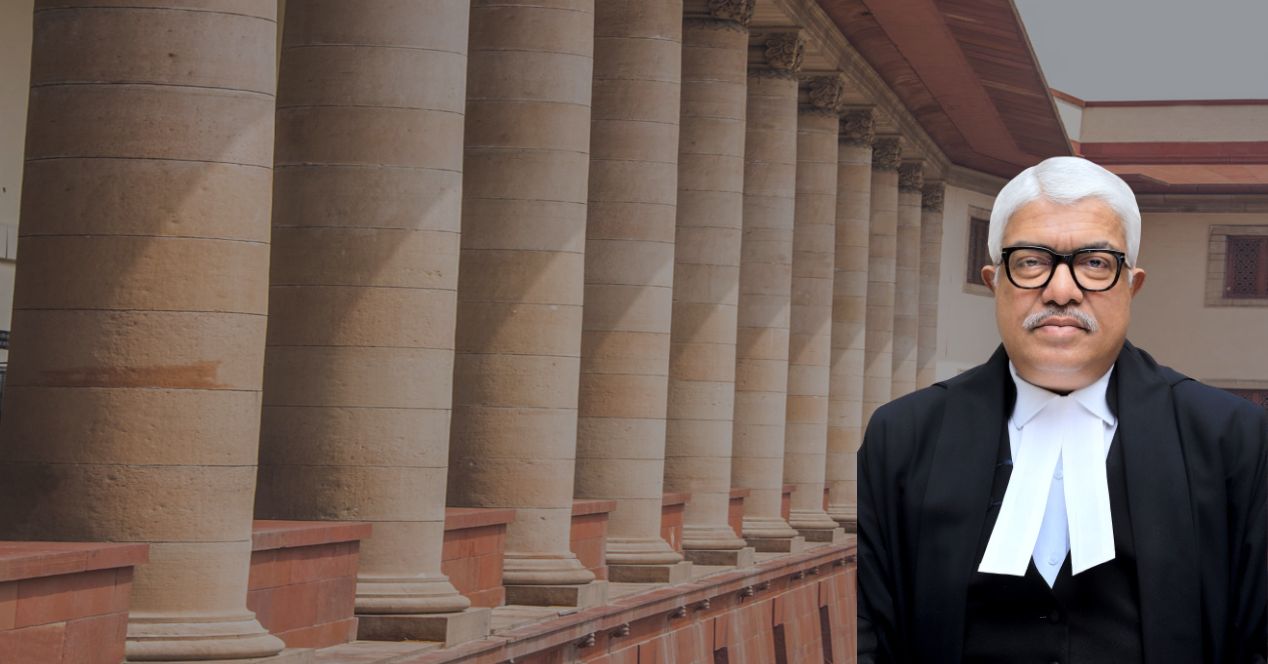
The silence is all the more relevant in light of Justice Sreedharan’s record of conspicuous independence. While in Jammu and Kashmir, he repeatedly struck down preventive detentions under the Public Safety Act — at one point fining a District Magistrate personally for what he called an “unjustifiable” order. He was openly critical of the government invoking national security in court as a way of psychologically overawing judges. Back in Madhya Pradesh, he took suo motu cognisance of a case involving alleged caste humiliation, and ordered an FIR against a BJP minister who made communal remarks about a woman army officer. The minister was let off with an apology after the Supreme Court stepped in and stayed the proceedings.
Then came Justice Sreedharan’s transfers. In August 2025, the Collegium recommended moving him from Madhya Pradesh to Chhattisgarh, where he would have remained part of the High Court Collegium. Within two months, the Union Government asked for a reconsideration. The Collegium obliged, redirecting him to the Allahabad High Court instead, where he ranks seventh in seniority and sits outside the Collegium entirely. His role in shaping future appointments has, as a practical matter, been ended.
What is notable—and somewhat unprecedented—is that the Collegium itself publicly acknowledged in its resolution that the October revision was made at the Government’s request. It did not, however, record reasons for doing so.
And now, in the same February 26 sitting, Justice Sreedharan’s junior by seniority has been made Chief Justice of one of India’s larger High Courts.
To be clear: supersessions are not, in themselves, irregular. The Collegium has always exercised discretion on grounds beyond bare seniority—including conduct, temperament, and suitability. Justice Dharmadhikari may well be the right person to head the Madras High Court. There could be sound reasons for the choice.
That is exactly the problem. Without published reasons, everyone—the Bar, litigants, the public—is left to do their own arithmetic. In this case, the tale is a familiar one; a judge with an uncomfortable record of independence has been moved around, kept out of Collegiums, and passed over for elevation while the institution responsible has offered no explanation.
The advance-transfer policy is genuinely a good one. It should be institutionalised and extended. Attention must be paid however, to the unexplained supersession that has been wrapped alongside this decision and obscured by a language of efficiency and administrative continuity.
A Collegium that wants to be trusted on process must also be trusted on substance. Publishing reasons for supersession would cost nothing and clarify a great deal. If the reasoning is sound, it could even put the February 26 decision in a fairer light.
Until that changes, the same question will trail behind every recommendation announced by the Collegium: why this judge, and not that one?
Related articles

Analysis
A tale of a transfer
For the first time, the Collegium has publicly acknowledged that it revisited—and changed—its decision at the Government’s request
Analysis
A crack in the Collegium’s wall of secrecy
Justice Nagarathna’s reported dissent against a recent recommendation highlights the lack of transparency around Collegium deliberations
Analysis
How the Emergency birthed the Collegium system
The Emergency left deep scars on the judiciary—it took until the 1990s for the Supreme Court to acknowledge and respond to those compromises

Analysis
Has the Supreme Court Collegium’s Focus Shifted to Diversity and Inclusion?
DESK BRIEF: Recent Collegium recommendations show a renewed attention towards ensuring regional and gender diversity in Indian courts.