





Analysis
Beyond the Bench: Judicial Conduct and Constitutional Accountability | Highlights from the Courts and Constitution Conference 2026
The Panelists discussed what constitutes judicial conduct of judges and how far can accountability for judicial conduct be demanded

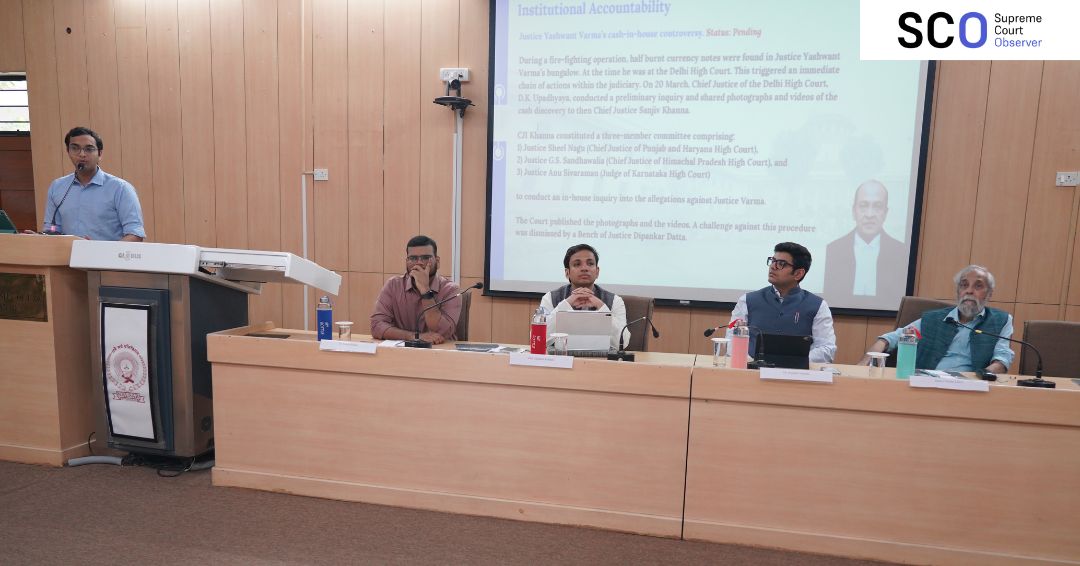
In the 7th edition of The Courts and the Constitution Conference, organised by the NALSAR University of Law in partnership with Law and Other Things (LAOT) blog and BML Munjal University, the second panel of Day 2 was themed around judicial accountability.
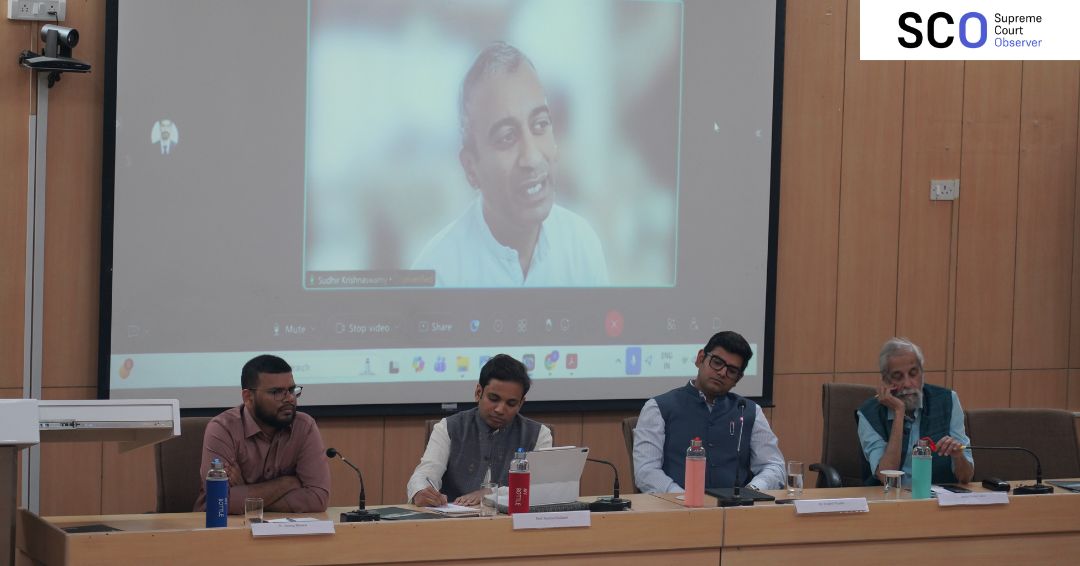
The Panel included Justice Madan Lokur, former Judge, Supreme Court; Professor Sudhir Krishnaswamy, Vice Chancellor, NLSIU; Dr. Swapnil Tripathi, Lead, Charkha at Vidhi Centre for Legal Policy; and Dr. Anurag Bhaskar, Faculty at NALSAR.
The panel was moderated by Prof. Shardool Kulkarni, BML Munjal University.

The many colours of accountability
Justice Lokur started the discussion by positing the question: What is misconduct? He drew on several instances where a judge’s personal conduct – unrelated to their institutional role – was labelled as misconduct. He stated that there are aspects of misconduct which are quite black and white, such as corruption. What is to be kept in mind is that there are grey areas too.
Moving to instances of action against misconduct, Justice Lokur recounted being in an in-house inquiry committee, set up to probe allegations of corruption against a Judge in the Punjab and Haryana High Court. He claimed that the then Chief Justice did not take any action after the inquiry committee submitted a report. Eventually, the Judge was transferred.
After a long drawn investigation procedure, the Judge was acquitted. Reflecting on the incident, Justice Lokur remarked that the in-house mechanism procedure depends heavily on how the Chief Justice deals with the report.
Taking over from Justice Lokur, Bhaskar spoke of the established principles of conduct/ misconduct entrenched in the Bangalore Principles of Judicial Conduct, 2002. Bhaskar stated that there are unanswered questions when it comes to the judicial conduct of a judge: Should they be publicly talking about the case that they are hearing? Should they be publicly taking pride in their class and/or caste? Should they make their religious preferences public? These instances, says Bhaskar, raise concerns about impartiality, adding that the perception of impartiality is important to maintain a fair public image.
Accountability in past and present
Tripathi remarked that the problems of accountability are not new. For instance, he stated, in 1953 the Chief Justice of the Bombay High Court had written a letter in praise of the then Prime Minister—Jawaharlal Nehru. Similarly, the Courts, on certain occasions, have been vocal about their liking for the Prime Minister.
Tripathi clarified that there is a key difference between what happened before and what is happening today. For starters, judges today are more public facing. He stated that judges today should stick to the law, instead of straying away from the legality of the matter, going further into opinions, and observations.
Judiciary not vertically accountable
Krishnaswamy elaborated further on the institutional design of the judiciary. By design, he stated, the judiciary is not vertically accountable. There is a tendency, he said, to conflate the models of judicial accountability with the model of legislative and executive accountability. The judiciary is a through and through public institution, whereas the legislative and the executive is not, he said.
Krishnaswamy also addressed the question of judicial accountability pertaining to pendency in the Court. Unfortunately, he remarked, we do not have a mechanism to demand judicial accountability on that front.
Krishnaswamy remarked that the in-house procedure for investigation of judges has not been effective enough. While it has made the judiciary more transparent, it has had no effect in the substantive sense.
Disclaimer: Prof. Sudhir Krishnaswamy is the Founding Editor of the Supreme Court Observer
Related articles

Analysis
Adjudicating the Environmental Juristocracy | Highlights from the Courts and Constitution Conference 2026
Find out what the panel discussed on the recent interventions from the Court in matters of environmental conversation
Analysis
Prof. MP Singh Memorial Panel | Highlights from the Courts and Constitution Conference 2026
Colleagues and mentees on the panel shared anecdotes and stories about the late jurist
Analysis
Special Intensive Revision of Electoral Rolls | Highlights from the Courts and Constitution Conference 2026
Four panellists closely scrutinised the ECI’s special intensive revision of electoral rolls; here’s what they said
Analysis
Gubernatorial Powers, Federalism and Institutional Balance | Highlights from the Courts and Constitution Conference 2026
The panel discussion revolved around the advisory opinion delivered in the aftermath of the Tamil Nadu Governor decision of April 2025