




Analysis
Clipped justice
An intervention asks whether open justice can survive prior permission for sharing courtroom videos online.

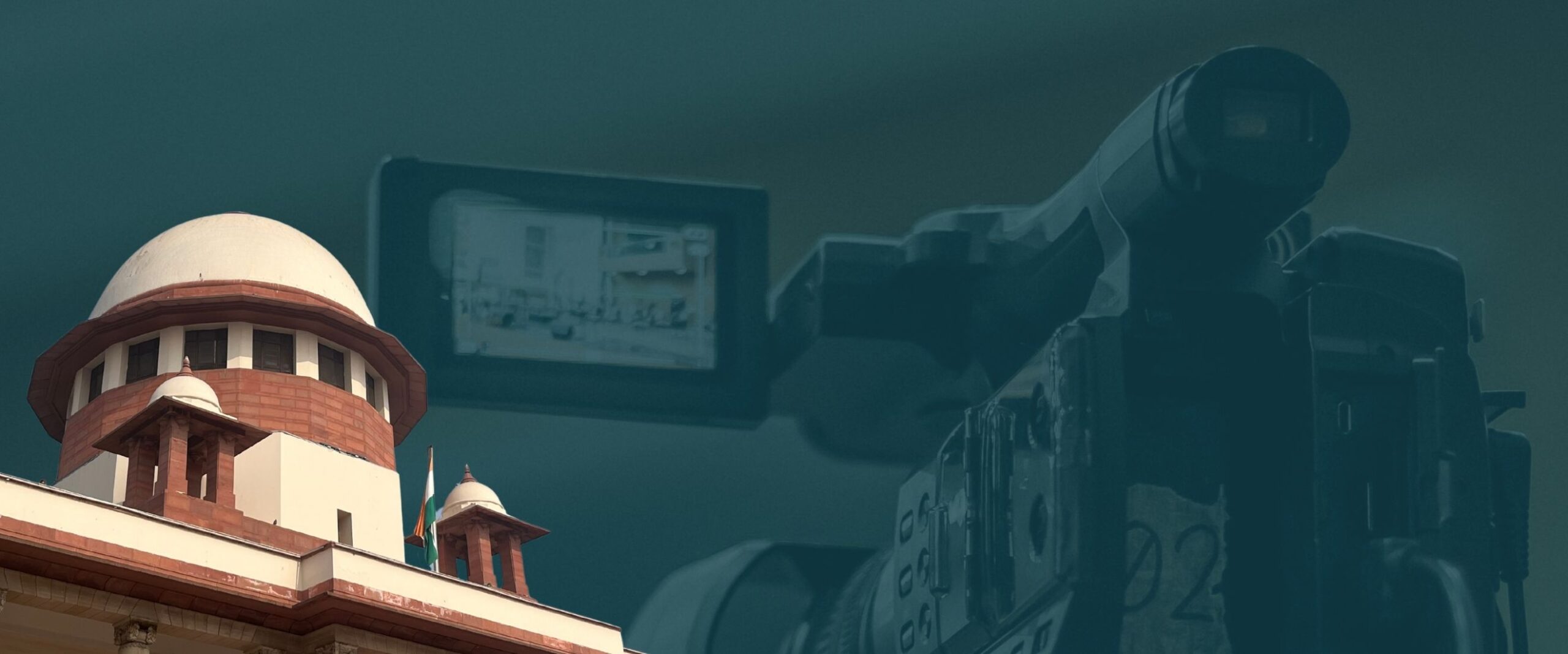
The Supreme Court in Swapnil Tripathi v Supreme Court of India (2018) famously quoted Jeremy Bentham who said that “Publicity is the very soul of justice,” as it opened the door to livestreaming of Supreme Court proceedings. The aphorism has acquired a digital sequel: Do citizens need the Court’s permission to share clips of live proceedings after they conclude?
In Harshita Grover v Union of India, the Court, on 24 July 2026, prohibited the extraction, dissemination, monetisation, posting, reposting, uploading, transmission, modification, storage or hosting of audio-video recordings of judicial proceedings on digital platforms without prior permission from its Secretary General or the Registrar General of the relevant High Court. Reporting by recognised news outlets remains permissible, although the Court subsequently clarified that they too cannot republish the audio-video clips without permission.
RTI activists Anjali Bhardwaj and Amrita Johri intervened. Their application acknowledges the need to deal with manipulated and misleading clips, but also challenges the architecture of the 24 July order. They argue that fair and accurate sharing should remain permissible. Any kind of morphing, misleading captions, deliberate misrepresentation and harassment should carry consequences. Prior permission converts an open courtroom into one in which transparency depends on administrative discretion, without a stated mechanism or appeal process.
The expression “recognised news outlets” carries an uncertainty as digital media has blurred the boundary between journalists, independent reports and citizens who document matters of public importance. Since India does not mandate registration for everyone engaged in journalism, the undefined category of recognised outlets could potentially result in unequal access to material that was otherwise publicly available.
Swapnil Tripathi viewed technology-enabled access as an extension to open justice. It facilitated viewing of court proceedings for those who could never be physically present in the court room. The intervenors rely on Chief Election Commissioner of India v M.R. Vijayabhaskar (2021), where the Court protected media reporting of oral observations and acknowledged the movement of reporting from print and television into digital and social media.
The Supreme Court Observer has tracked these developments in detail. We covered the 2021 Draft Model Rules which had restrictions on recording and sharing; and examined the risk of sensational reporting and snippets being taken out of context in our 2022 Desk Brief: Live Steaming: Justice Dramatised. Four years down the line, the concern is omnipresent: snippets and clips being taken out of context, trading accuracy for likes and reposts. While wider access has made hearings more familiar to citizens, viral excerpts detach judicial remarks from the proceedings that gave them meaning.
Bharadwaj and Johri’s intervention refers to the Open Supreme Court Licence provided by the United Kingdom Supreme Court. A user may copy, publish, distribute, transmit and adapt covered information, subject to conditions against misleading others, misrepresenting the source, undermining the dignity of the Court or jeopardising the administration of justice. The British model regulates misuse by providing conditions in advance rather than a prior permission regime.
The intervenors propose an official archive of complete recordings that are freely accessible as an authoritative source against which viral extracts can be checked. Their claim is practical: a complete official recording makes it easier to expose manipulation and test edited clips.
The issue has already been brought to the Court’s attention. Advocate Bhanu Pratap Singh, on 16 September, complained about circulation of clips of his own court appearances. Instead of a sweeping removal, the Bench of Chief Justice Surya Kant and Justices Joymalya Bagchi and V. Mohana asked him to approach the intermediaries carrying the material, leaving him free to return if that remedy failed.
When Harshita Grover is taken up again, the Court will be forced to determine either of two options: controlling circulation through prior permission, or preserving circulation while attaching consequences to distortion and misuse. Lord Hewart, then Lord Chief Justice of England, wrote in R v Sussex Justices (1924) that justice “should not only be done, but should manifestly and undoubtedly be seen to be done”. Bentham’s old argument for publicity survives; the question is: how far publicity should be allowed to travel after the livestream ends?
This article was first featured in SCO’s Weekly newsletter. Sign up now!
Related articles

Analysis
Trending: #SupremeCourt
Two years after the top court began livestreaming hearings, concerns about institutional posturing and performative justice remain relevant
Analysis
Getting Digital Access to the Supreme Court
The Supreme Court live streamed Court proceedings for the first time in its history today.
Analysis
Court Goes Viral
At least two hundred thousand citizens have been tuning in daily to the Karnataka High Court’s live stream of the Hijab Ban hearings.

Analysis
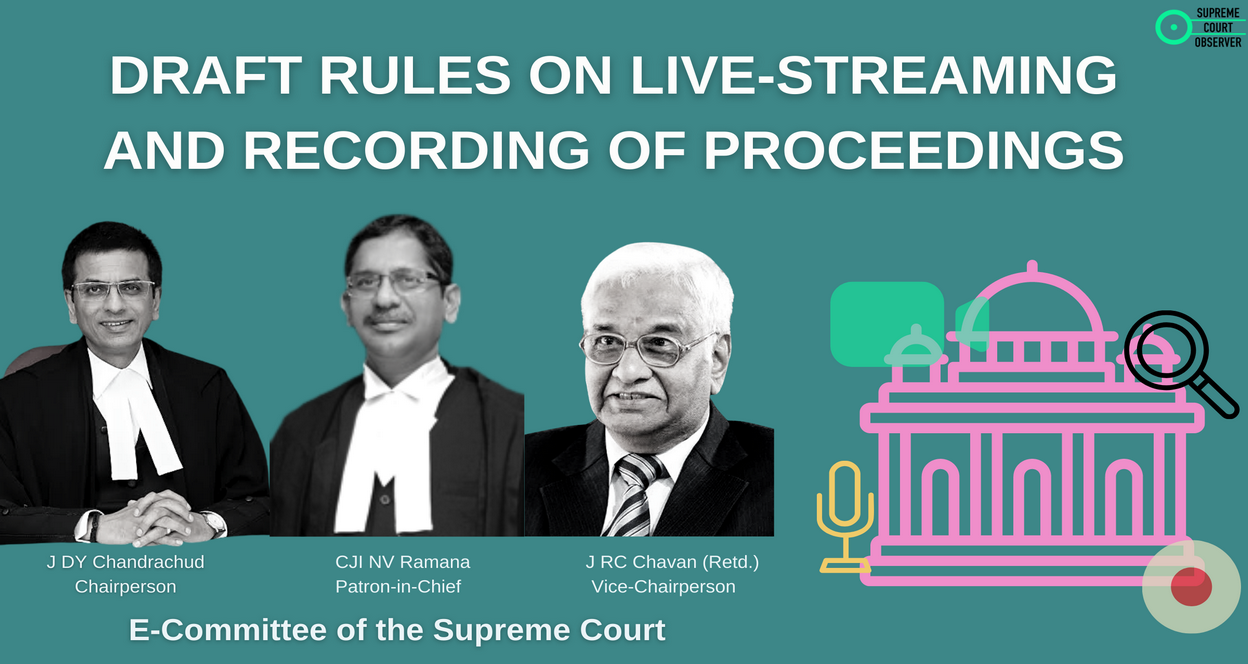
E-committee Releases Draft Model Rules for Livestreaming HC Proceedings
The e-committee of the Supreme Court announce Draft Rules for livestreaming of High Court proceedings.