





Analysis
Grading the Courts on openness
A new index scores India's higher judiciary on disclosure, and no court clears 60 percent

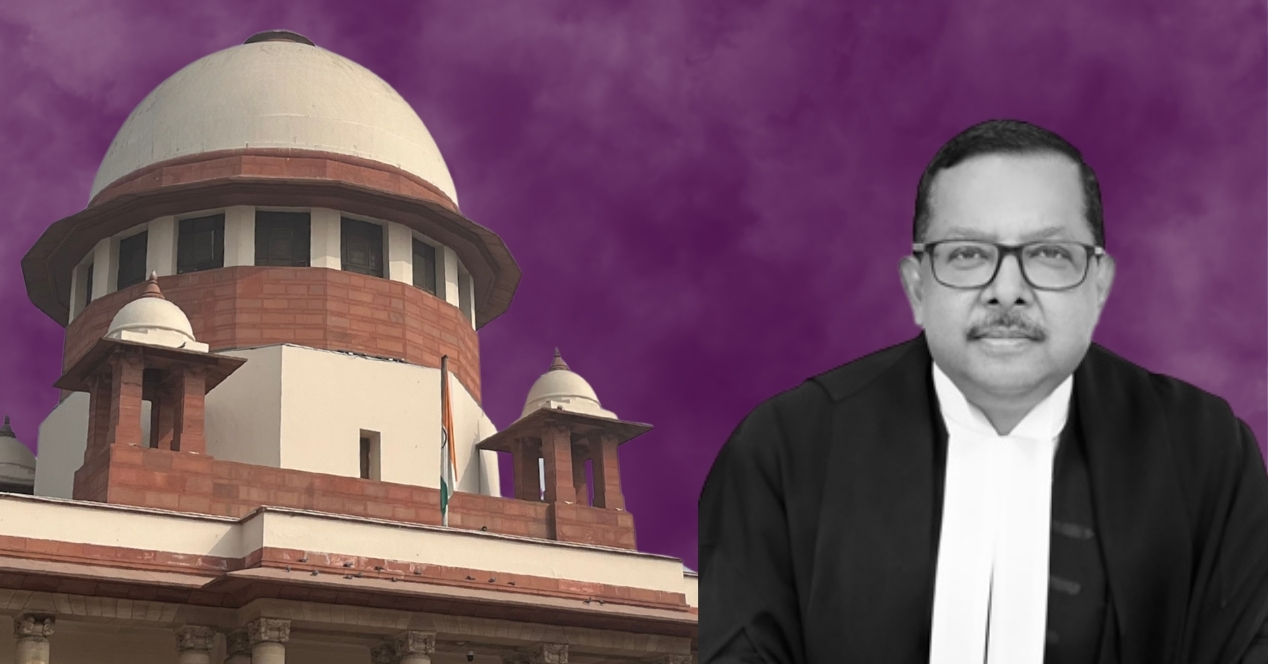
On 1 August, Justice Ujjal Bhuyan of the Supreme Court, at the launch of the Judicial Transparency Index, asked whether the Collegium had “taken a step back” from transparency. He said that the last three resolutions recommending judges to the Supreme Court carried no reasons at all.
The claim was already tested by the report. The past five resolutions recommending judges to the High Courts disclosed no reasons. Only a few resolutions recommending judges to the Supreme Court carried some reasoning, which were formulaic, stating that the candidate had been picked after “evaluating merit, integrity and competence and also accommodating a plurality of considerations.” What that evaluation actually found was not disclosed.
Justice Bhuyan stated that the citizens have a right to know who their judges are.
The remark landed in a year already marked by disclosure. A cash discovery at the Delhi residence of Justice Yashwant Varma triggered an in-house probe. The report was leaked by the media. In the aftermath, the Court resolved to declare assets of all sitting judges under a 2025 resolution. The Index turns that year into a standing yearly framework, covering the Supreme Court and all 25 High Courts. As of 4 August 2026, 28 out of the 35 sitting judges have revealed their assets.
What the Index measures
The Index scores courts on 68 indicators across 18 themes, sorted into judicial processes, institutional governance and personnel administration. High Courts are scored out of 91 points, the Supreme Court out of 88.
Websites were reviewed between November 2025 and February 2026. The framework was devised in an earlier 2025 report by JALDI researchers—Jyotika Randhawa, Shruthi Naik and Shreya Tripathy. Its application to the higher judiciary is authored by Randhawa with fellow researchers Abhishek Rath and Navami Krishnamurthy.
A single indicator shows why the method matters. For instance, a litigant looking to attend a virtual hearing starts with the cause list. Cause lists from 19 High Courts include a video-conferencing link, six do not. That gap ties to a 2023 Supreme Court order in Sarvesh Mathur v The Registrar General, High Court of Punjab and Haryana, which directed every High Court to make virtual access available. Formally open hearings carry little value if the route to them cannot be found.
What the Index found
As per the Index, no High Court cleared 60 percent of the available points. Himachal Pradesh ranks first overall, with 52.5 out of 91. Tripura follows closely at 52. Orissa, Delhi and Chhattisgarh round out the top five. Meghalaya and Bombay rank lowest, at 34 and 34.7 respectively. Himachal Pradesh leads on institutional governance, with strong Right to Information (RTI), Protection of Sexual Harassment policy and budgetary disclosures. It discloses little on physical access to hearings. Tripura leads on personnel-related transparency. Chhattisgarh tops judicial processes outright but trails elsewhere, landing sixth overall.
Some findings cut across nearly every court. For instance, no High Courts except eight of them give a 24 hours notice before publishing the cause list. No High Court publishes the criteria governing case allocation or recusals. Only Delhi High Court indicates how a litigant might request one.
Only eight High Courts published an annual report for 2024-25, and four published none. Twenty-one High Courts run online RTI portals, but fifteen have RTI rules adding exemptions beyond Section 8 of the RTI Act itself.
Budgetary disclosure is starker. Only five High Courts had published a budget for the current financial year, 2025-26. Eight published no budget at all, and fifteen published no expenditure data for either year examined.
On personnel, only 87 of 813 judges disclose their assets to some degree—across just seven High Courts. No High Court publishes a code of conduct for judges. Only Jammu and Kashmir and Tripura publish disciplinary sanctions against district judicial officers. Translation is thin too: Delhi High Court translated its judgments consistently until 2024, then managed only six in 2025.
The Supreme Court scored 53 out of 88, unevenly spread. It scored strongest on governance—22.5 out of 31—having published ten years of annual reports, though not committee mandates or minutes. It scored 15 out of 28 on judicial processes. It live-streams only Constitution Bench matters, and does not publish the criteria behind its own roster. It scored 15.5 out of 29 on personnel, the category where its own resolutions substantiate Justice Bhuyan’s point most directly. It managed one point on six further indicators covering AI use and open data. This was not counted toward the main score.
From principle to practice
The launch itself was with a panel discussion titled “From Principle to Practice: Understanding Openness in the Indian Judiciary”. Senior Advocates Dr. Aditya Sondhi and Saurabh Kirpal joined the panel, with report co-author Randhawa moderating.
Sondhi pressed a different failing: inconsistency. He pointed out that different High Courts approach disclosure in their own way. Transparency, in his argument, flows from the right to information and access to justice. Both are pan-Indian constitutional rights. “It shouldn’t depend on which state you’re a litigant in,” he said.
Kirpal pressed the disciplinary gap suggesting that the Supreme Court should publish the reports of in-house inquiries evaluating complaints against judges. He pointed out that the district judiciary already publishes reports when district judges face inquiry. This should work for the higher judiciary too, he said.
Kirpal questioned the ad hoc character of the in-house machinery. The committee that examined the allegations against Justice Varma, he noted, was constituted afresh by then Chief Justice Sanjiv Khanna. A standing committee, on his argument, would serve the process better. He cautioned that disclosure must be balanced. An unproven allegation can cause stigma.
The report gives his complaint empirical footing. Its reviewers found no inquiry report, and no orders recording sanctions against judges of the higher judiciary on the Supreme Court website.
The panel also embodied one of the keynote’s sharpest examples. Justice Bhuyan cited the Collegium’s January 2023 resolution reiterating Kirpal’s own recommendation for the Delhi High Court. Yet more than three and a half years on, he noted, no appointment has followed. Government inaction on reasoned and reiterated recommendations, on this account, is opacity of another kind.
Independence is not the same as secrecy
The report’s numbers point to a broader question. Why do courts which routinely require government bodies to give reasons and act through fair procedure inconsistently apply that standard to themselves?
Judicial independence protects who decides a case and how. It does not arguably require budgets, recruitment, rosters, committee mandates or disciplinary statistics to stay confidential. In Subhash Chandra Agarwal, the Court held the Chief Justice of India’s office a public authority under the RTI Act. In Swapnil Tripathi, it tied open courts to the right to receive information under Article 19(1)(a). The e-Committee’s model live-streaming rules permit narrow exceptions for sensitive matters. Openness and confidentiality were meant to coexist through defined limits, not general discretion. The Index shows where that line blurs.
What a score cannot show
A disclosure index counts documents, not decisions. A court can publish its cause list punctually while deciding cases erratically. It may say little about personnel while its judgments remain sound. The Index’s claim is narrower: sunlight on process, not the soundness of outcome. That is what makes the scoring auditable, rather than a subjective verdict on any one court.
The weighting still creates a difficulty. Basic access indicators carry substantial points; case allocation and recusals carry very few. The report is candid about its own limits too. It confined itself to what court websites proactively display, and did not assess the veracity of the information or whether it was up to date. Live-streaming and other daily-changing indicators were checked on a single working day.
Justice Bhuyan’s own verdict was gentler than his critique itself. The judiciary, he said, has taken significant strides towards transparency, though much more remains to be done. The report’s own conclusion agrees, crediting the Supreme Court with leadership while noting that no court has achieved full transparency in any single category. Neither the Supreme Court nor the Law Ministry had issued a public response to Justice Bhuyan’s remarks as of this report. The Collegium’s most recent resolutions, the ones already found wanting in reasons, remain on the Supreme Court’s website in that form.
Related articles

Analysis
An exercise in introspection
Justice Bhuyan’s recent speech brought back questions on public engagements by judges
Analysis
Five new judges recommended for appointment to the Supreme Court
The Supreme Court Collegium has recommended four HC Chief Justices and a senior advocate for appointment to the apex court
Court Data
Filling in the blanks | The Collegium story, part 2
A brief history of how and why the Supreme Court Collegium came to be
75 Years of SC Articles
Master of the Roster: Securing Process Legitimacy of the Supreme Court
As the SC turns 75, we analyse rostering under Chandrachud and Lalit courts and make a case for a publicly defensible allocation rationale