





Analysis
Justice Rajesh Bindal’s Notable Judgements
Highly regarded by the Bar for his calm disposition, Justice Bindal did it all. We list his notable judgements

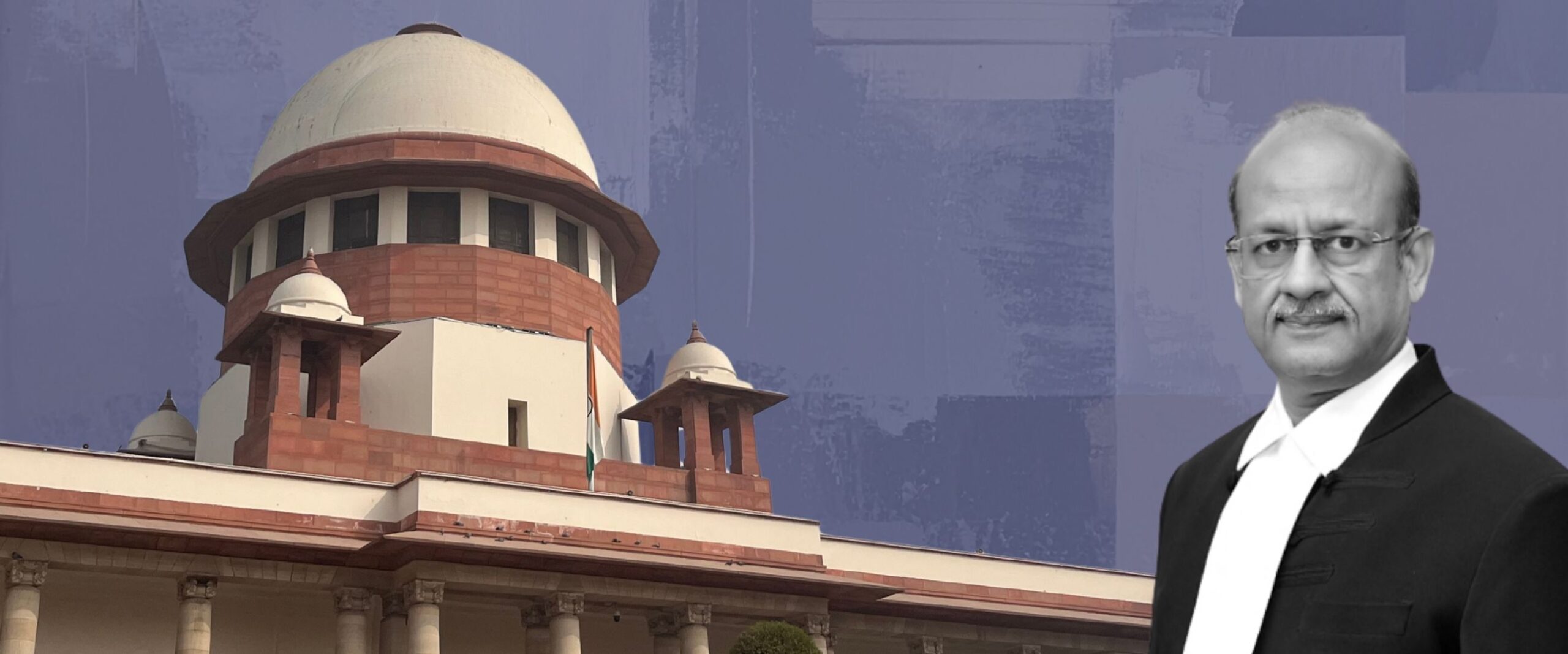
Today, Justice Rajesh Bindal retired after serving a tenure of three years and two months as a judge of the Supreme Court. In this period, Justice Bindal oversaw matters of varying gravity which sat at the intersection of individual rights and State power.
Justice Bindal was elevated to the Supreme Court in 2023, at the time when the Court had seven vacancies against the sanctioned strength of 34. After his appointment, he took over a host of case, which included criminal, civil and motor vehicles liability matters.
Justice Bindal has authored 166 judgements and has been a part of 254 benches.* On the occasion of his retirement, we list five of his notable judgements.
Primacy of child welfare
In Shazia Aman Khan v State of Orissa (2024), a Division Bench of Justices Bindal and C.T. Ravikumar refused to grant custody of a 14-year old girl to her biological father. They held that in the cases of custody, the Court is not bound by statutes, strict rules of evidence or precedent. Rather, it is the welfare and will of the child that must be prioritised.
The Bench held that in selecting a guardian, the Court cannot invoke a parens patriae jurisdiction without considering the due weight of the child’s ordinary comfort and favorable surroundings.
Entitlement to gratuity
In Ashok Kumar Dabas v Delhi Transport Corporation (2025), Justice Bindal considered the case of a deceased serviceman who was denied payment of gratuity upon resignation. Granting the legal heirs accrued gratuity with interest, he held that voluntary retirement does not bar gratuity for employees who have served at least five years in service under Section 4 of the Payment of Gratuity Act 1972.
Justice Bindal noted that gratuity is “not bounty” but the entitlement of an employee.
Liberal interpretation of overtime wages
In Union of India v. Heavy Vehicles Factory Employees’ Union (2026), the Division Bench of Justices Bindal and Manmohan held that compensatory allowance should be included in calculation of overtime wage under Section 59(2) of the Factories Act 1984.
The Bench disposed of the Union’s appeal, noting that a plain reading of Section 59(2) suggests that overtime must include house rent and transportation allowances which the worker is entitled to from time to time. It was held that the executive cannot dilute the intention of the legislature through mere Office Memorandums. The Bench emphasised that an interpretation which restricts the benefits available to workers under the 1984 Act must be avoided.
Invalidity of employment termination
In Priyanka Kumari v State of Bihar (2026), the Division Bench of Justices Bindal and Vijay Bishnoi held that services of employees cannot be terminated merely on subsequent invalidity of the university degree. The Bench ordered the appellants to be reinstated, noting that subsequent invalidity is no fault of the appellants. The responsibility lies with the State.
Private property and “material resources of a community”
In 2024, Justice Bindal was part of a nine-judge Constitution Bench in Property Owners Association v State of Maharashtra. Led by former Chief Justice D.Y. Chandrachud, the Bench held that not all privately owned properties can be classified as “material resources of the community” under Article 39(b) of the Constitution. In an 8:1 majority, it disagreed with Justice Krishna Iyer’s interpretation of the provision in State Of Karnataka v Shri Ranganatha Reddy (1977), and held that the Court must not endorse a particular economic ideology in interpretation of constitutional provisions.
*Data collected from Manupatra on 14 April 2026.
Related articles


Court Data
Justice Rajesh Bindal: Tenure in numbers
Justice Bindal authored 166 judgements in his three year tenure with an average of 55 judgements a year
Analysis
10 notable judgements by CJI Gavai
Two recalls, a Presidential reference, and a stay order in a highly contentious issue of our times—a list of the outgoing CJI’s key verdicts

Analysis
Justice Sudhanshu Dhulia’s notable judgements
Highlights include a dissent in a long-pending case, a stirring verdict on language recognition and a reiteration of evidence law principles
Analysis
Justice Bela Trivedi’s Notable Judgements
Known to be ‘tough’, especially in personal liberty matters, Justice Trivedi delivered key opinions on affirmative action and POCSO issues