




Analysis
SC validates Telangana HC guidelines shielding political speech on social media
A two-judge Bench categorically dismissed Telangana’s contention that there were inconsistencies in the HC’s procedural framework.

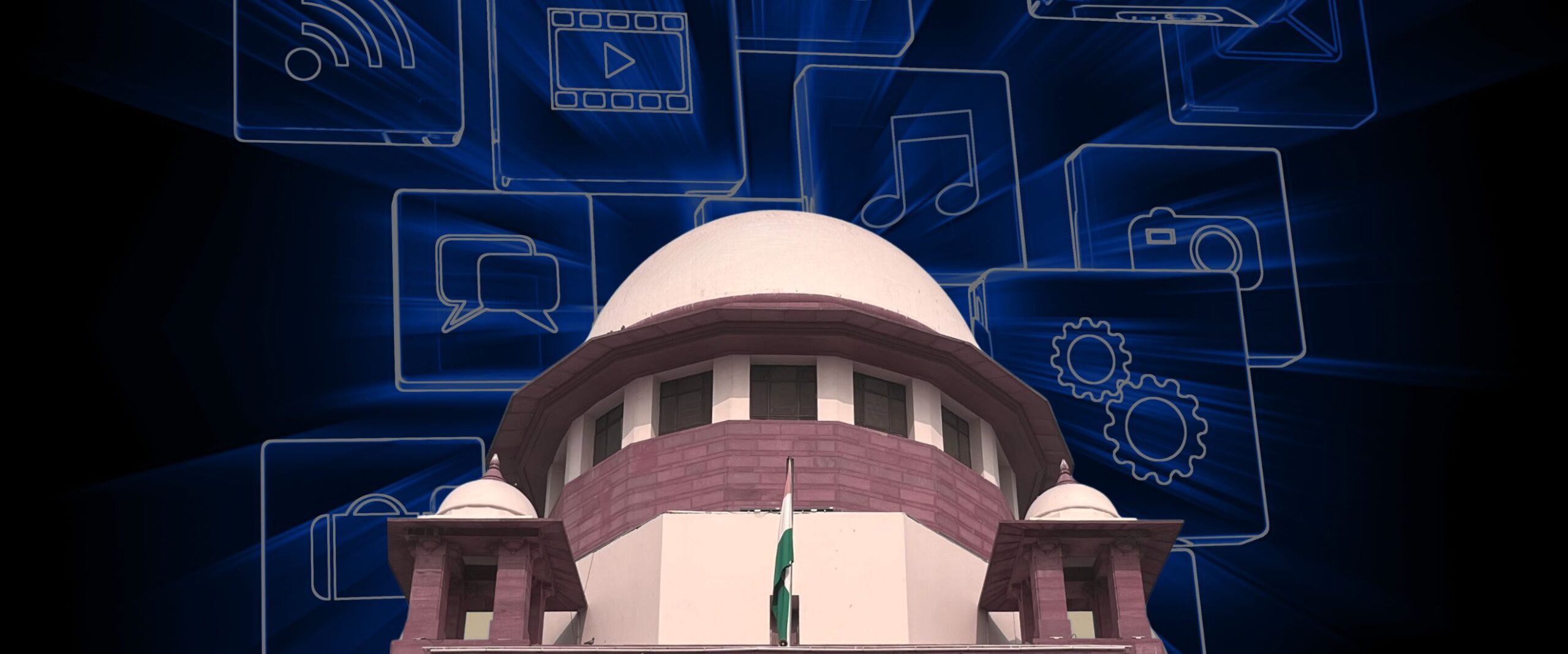
On 2 February, the Supreme Court dismissed a special leave petition filed by the state of Telangana challenging a September 2025 High Court judgement that quashed criminal proceedings against Nalla Balu, a political activist affiliated with the Bharat Rashtra Samithi party. The dismissal, delivered by Justices J.B. Pardiwala and Vijay Bishnoi, laid down a framework of operational guidelines for police authorities on handling social media speech cases.
Three tweets, three prosecutions
Between February and March 2025, three separate FIRs were registered against Nalla Balu for posts on social networking platform X criticising the Congress-led state government and Chief Minister A. Revanth Reddy. The first tweet described the Congress Party as the scourge of the state and likened it to a pest. The second alleged “20% commission” under the government led by the CM. The third contained allegedly vulgar and abusive messages targeting the CM.
Significantly, all three complaints were filed not by the CM or the Congress, but by police constables and third parties. The charges spanned provisions of the Bharatiya Nyaya Sanhita, 2023 criminalising wanton provocation with intent to cause riot, intentional insult to provoke breach of peace, statements conducing to public mischief, and defamation, along with Section 67 of the Information Technology Act, which penalises obscene material in electronic form.
HC: ‘Criticism was political, not communal or provocative’
In the Telangana High Court, Justice N. Tukaramji’s verdict examined each statutory provision and found them fundamentally misapplied. On the first tweet, the Court held it constituted harsh political criticism but did not attract Section 192 of the BNS on promotion of enmity, as it targeted a political party rather than a protected group. It fell outside Section 352 BNS on intentional insult or Section 353(1)(b) BNS on public mischief as there was no imminent threat of public disorder. At most, it could amount to defamation under Section 356 read with Section 61(2) BNS; however, statutory exceptions such as truth for public good and fair comment provide strong defences, the High Court held.
The High Court found the second post alleging “20 percent commission” as being closer to the domain of defamation, as it named both the CM and the party. Citing R. Rajagopal v State of Tamil Nadu (1994), Justice Tukaramji noted that while individual ministers may sue for defamation, a government itself cannot. Even here, statutory defences of truth and fair comment in the public interest remain available, he noted. Notably, the High Court found Sections 192, 352 and 353(1)(b) of the BNS to be inapplicable, as the criticism was political, not communal or provocative.
The third set of allegedly vulgar and abusive remarks against the Chief Minister could not attract Section 67 the IT Act on obscene material, which is limited to sexually explicit content. Political invective, however crude, does not constitute obscenity in the statutory sense, the High Court held.
The verdict noted that constitutional protections under Article 19(1)(a) must be scrupulously enforced. Citing Maneka Gandhi v Union of India (1978), Rangarajan v P. Jagjivan Ram (1989) and Subramanian Swamy v Union of India (2016), it underscored the position that political expression enjoys strong constitutional protection in a democracy.
Beyond substantive analysis, Justice Tukaramji identified a procedural defect. Criminal defamation under the Bharatiya Nagarik Suraksha Sanhita is a non-cognisable offence requiring a complaint by the person aggrieved rather than police registration based on third-party reports. In the absence of locus standi, the proceedings were untenable in law. The verdict cited Lalita Kumari v Government of U.P (2013), which mandates FIR registration only for cognisable offences and requires preliminary enquiry for non-cognisable matters. The mechanical registration of FIRs without preliminary enquiry violated this binding precedent.
The HC’s broad guidelines
What elevates this Judgement to potential precedent are the “broad guidelines” Justice Tukaramji prescribed for police authorities and judicial magistrates when dealing with social media posts. The first mandates verification of locus standi before registering any FIR for defamation. The second requires preliminary inquiry even in cognisable offences to ascertain whether statutory ingredients are prima facie made out.
The third establishes a high threshold for speech-related offences. No case alleging promotion of enmity, intentional insult, public mischief or sedition shall be registered unless there exists prima facie material disclosing incitement to violence, hatred, or public disorder. This threshold must be applied per Kedar Nath Singh v State of Bihar (1962) and Shreya Singhal v Union of India (2015), both emphasising that mere offensive speech without tendency to cause imminent disorder cannot attract criminal sanction.
The fourth specifically protects political speech. Police shall not mechanically register cases concerning harsh political speech. Only when speech incites violence or poses imminent threat to public order may criminal law be invoked.
The remaining guidelines address procedural safeguards. In defamation cases, complainants must approach a magistrate; the police may act only on a specific order under Section 174(2) of the BNSS. This reflects the settled position that defamation is a non-cognisable offence, and the police cannot register an FIR on their own. Police must comply with Arnesh Kumar v State of Bihar (2014), making automatic arrests impermissible. In matters involving political speech, police shall obtain the Public Prosecutor’s opinion before registering FIRs. Where complaints are frivolous, vexatious or politically motivated, police shall close the matter citing absence of grounds for investigation.
The Supreme Court’s dismissal
Telangana challenged the judgement through Senior Advocate Sidharth Luthra. At the 2 February hearing, however, Luthra submitted he had nothing to argue on the merits. The state’s sole grievance concerned alleged inconsistencies in the guidelines, but the Court’s Order provided no elaboration on which guidelines, according to the State, conflicted or how.
The Order notes that the Bench found no merit in the argument about conflict after a “threadbare” examination of the paragraph with the guidelines. On the basis, it refused to interfere with the High Court verdict. The dismissal, therefore, leaves the High Court’s procedural framework untouched.
Implications and open questions
The Supreme Court’s refusal to interfere potentially extends the guidelines’ persuasive authority across the country, though they remain formally binding only in Telangana. The Order establishes that political criticism, even harsh or accusatory, enjoys robust constitutional protection absent specific evidence of incitement to violence. The person aggrieved requirement cannot be circumvented through third-party complaints, closing the avenue for proxy prosecutions. Preliminary inquiry is now explicitly required even for cognisable social media speech offences. Police must obtain the Public Prosecutor’s opinion before registering FIRs in politically sensitive cases, introducing prosecutorial discretion and legal scrutiny.
Some questions remain unanswered. What constitutes vulgar remarks that cross from protected criticism into actionable defamation? How should courts distinguish imminent threat to public order from mere potential for offence in India’s polarised environment? Is the fear of prosecution itself enough to chill speech, regardless of procedural protections? Yet, whether this verdict becomes a watershed moment for free speech in India’s digital public square will depend on how lower courts, police authorities and prosecutors respond to its reasoning and guidelines.
Related articles

Analysis
Controversy over Grok’s images: Uncertainty surrounds intermediary liability
Can a platform that enables an AI system invoke the legal protections designed for neutral digital intermediaries?
Analysis
X relies on ‘Shreya Singhal’ in arbitrary content-blocking case in Karnataka HC
The social media company has taken the government to court over the legality of information blocking orders under Section 79 of the IT Act
Analysis
Supreme Court Review 2025: Testing the limits of free speech
In balancing institutional sensitivities with open dialogue, the Court’s focus was on how the legal process could create a chilling effect
Analysis
Where does the Supreme Court really stand on free speech?
Mainstream media coverage of three recent free speech cases in the Supreme Court highlights the inconsistencies of a polyvocal court