





Analysis
Speaking in silence
Interim orders shape public life long before either Court finds its words

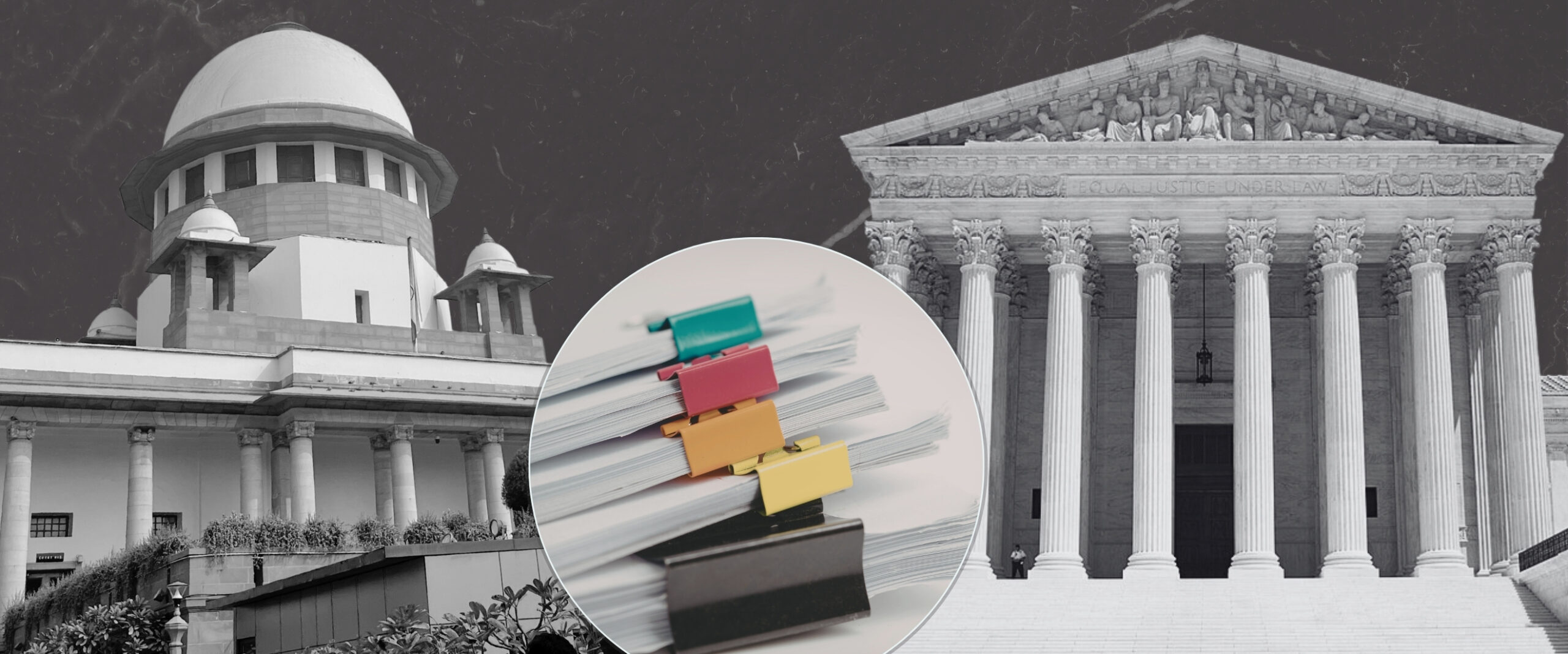
Last Saturday, the New York Times, in a coup of legal journalism, dissected a series of confidential memos behind a controversial 2016 stay on the Obama administration’s Clean Power Plan. The decision of the Supreme Court of the United States (SCOTUS) was communicated in a single, unsigned paragraph without oral arguments, a full briefing or any further written explanation.
This exposé has reignited conversations on the ‘Shadow Docket’ of the SCOTUS. A term coined in 2015 by William Baude, it refers to the practice of issuing consequential emergency orders, bypassing standard requirements of a full briefing, oral arguments and reasoned opinion. The Court’s mechanism to manage by exception is riddled with arbitrariness which is, perhaps, its most seductive quality.
The fact that the stay was passed by a Conservative-majority Bench with dissent from a Liberal-minority, lends merit to the speculation that the review of federal policies by SCOTUS are often on partisan lines. A summary of Shadow Docket lawsuits against the Trump Administration in 2025 reveals that the pattern has only sharpened since. In 20 out of 25 emergency applications filed by the Department of Justice, the Court has ruled, at least partially, in favour of the Trump administration.
For Indian lawyers watching from a distance, imagining a shadow docket might be akin to imagining a Bigfoot—there is no comparative metric. Unlike SCOTUS, the Supreme Court of India (SCI) does not have limited or exceptional jurisdiction. Its polyvocality—multiple benches, varied concurring and dissenting opinions and wide mechanism of review and reference to a larger bench—resists a neat classification on ideological or political grounds.
Further, the SCI hears challenges in an open court and with briefing. Constitutionally, Article 32 grants every individual the right to directly move the apex court to seek judicial remedy, including an interim stay, on legislation or executive actions in violation of their fundamental rights. As early as 1991, the Court laid down established principles of granting an interim stay, considering that a case for an injunctive relief is made if: (a) it is a prima facie case, (b) denial of stay may cause irreparable injury, and (c) there is balance of convenience weighing in favour of the petitioners.
Yet, even without the urgency and opacity of the Shadow Docket, the SCI wields the same essential power: to grant or withhold interim stays on legislative and executive actions. It has not always been generous with recording reasons, even in cases of serious constitutional challenge. The abrogation of Article 370, the mandatory linking of Aadhaar with social welfare schemes, and demonetisation of currency notes are but a few examples that come to mind.
Decisions to intervene have similarly been made without sufficient explanation. Earlier this year, the Court granted an interim stay on the University Grants Commission Equity Regulations 2026, deeming the regulations “prima facie vague”. This sits uncomfortably with the Court’s earlier refusal to stay the Special Intensive Revision of electoral rolls on the grounds that it had “no reasons to doubt” the Election Commission of India.
Concerns of proportionality compound the picture further. In February, the Court not only banned the circulation of a Class 8 NCERT textbook for its reference to judicial corruption, but also directed governments and state-funded institutions to refrain from employing the authors in any capacity. Its 2021 decision to issue an interim stay on the three farm laws stands out for its 7-page justification—a sign that the norm of reasoned orders has now become the exception. Perhaps the longest shadow over the SCI today is cast not by what it decides, but by what it decides to reasonably and proportionally explain.
While SCOTUS and SCI differ vastly in their structure, both courts have, in their consequential moments, spoken in silence. The effects are strikingly similar—hurried decisions to grant or deny interim orders shape public life long before final judgements arrive.
This article was first featured in SCO’s Weekly newsletter. Sign up now!
Related articles

Analysis
LGBT Rights: Comparing SC to SCOTUS
Has the SCOTUS jurisprudence on LGBT rights had an impact on the Supreme Court of India?
Analysis
When SCOTUS refused to advise the President
Recently, the Indian President referred questions to the SC. It’s an opportunity to revisit an instance in another country at another time