





Analysis
Touch me not
Another day, another ‘ban’—is the NCERT matter an opportunity for the Court to question alleged executive interference in curriculums?

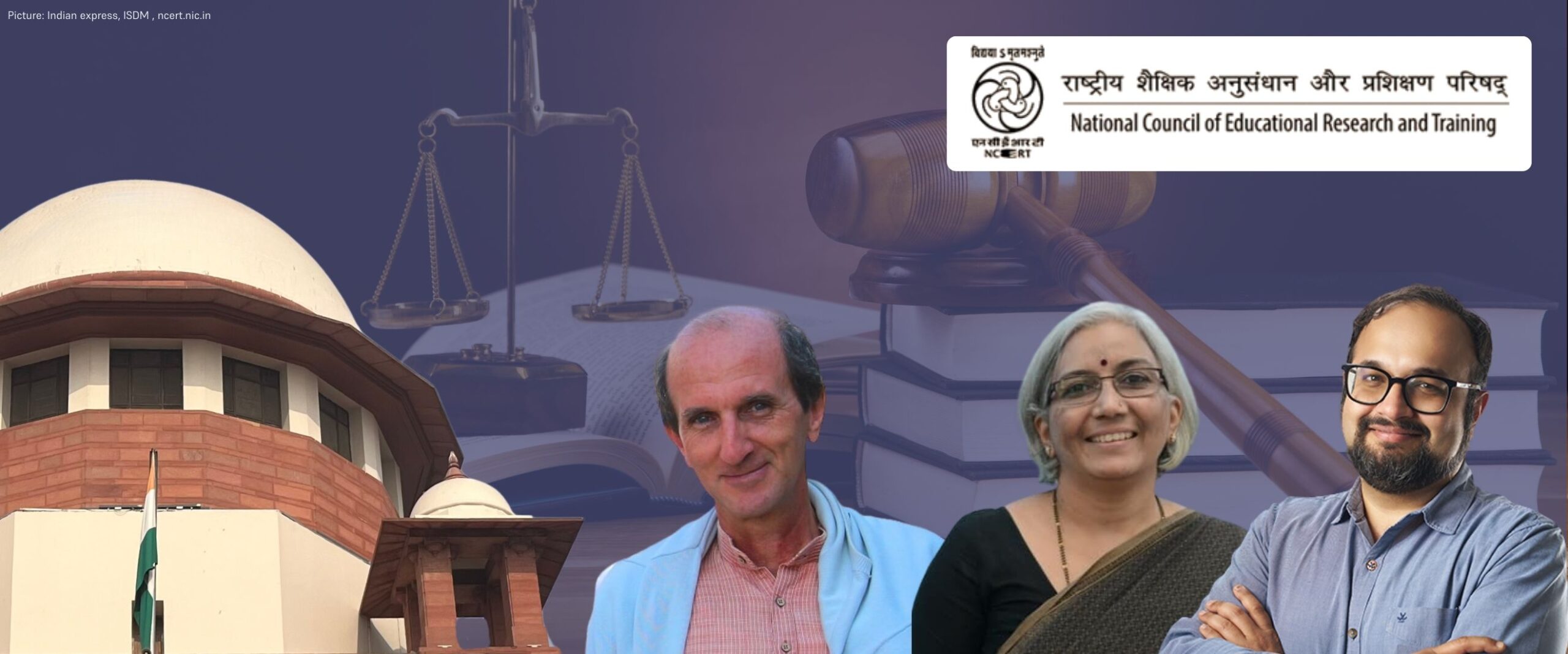
On Wednesday, a Bench led by Chief Justice Surya Kant blacklisted the authors of a chapter on the judiciary in NCERT’s Class 8 Social Sciences textbook. On 26 February, the Bench had banned the dissemination and further publication of the textbook after taking objection to a portion on “Corruption in the Judiciary”. The Court took suo motu cognisance of the matter following newspaper reports about the textbook which cited ‘corruption’ and ‘backlog of cases’ as the primary challenges facing the judiciary. The Bar too had urged the Court to intervene
Following backlash, the NCERT issued a statement to emphasise its “highest esteem” for the judiciary and informed its decision to have the chapter rewritten. The next day, a show-cause notice was sent to NCERT Director D.P. Saklani by the Court. After learning of the authors from Saklani, the Bench directed governments and public-funded institutions to refrain from employing them.
Anyone who followed the February hearing will not be surprised by this response. Then, the CJI had remarked that the chapter was part of a “deep-rooted, well-orchestrated conspiracy.” The concern within the Bench and the Bar is the selective targeting of the judiciary, while other wings of the Government received scant mention. The chapter on the electoral system contains a fleeting reference to the “growing influence of money” while the chapter on the parliamentary system only flags “absenteeism and disruption of the Question Hour” as challenges. When corruption is rampant across institutions in the country, such omissions are difficult to excuse. This time, the Bench said that the authors had “deliberately misrepresented facts to project a negative image” before impressionable students.
Admittedly, this is not the first time that the NCERT has been chastised for “mispresentation”. Formed by the Government of India, the NCERT’s executive committee includes members of the Union government. While it’s an autonomous institution, it has come under the scanner for alleged executive interference. In the early 2000s, the Supreme Court dismissed a petition from activist Aruna Roy, educationist Meena Krishna Tyabji and journalist B.G. Verghese, who described the NCERT’s national curriculum framework as anti-secular and unconstitutional. Challenges against the curriculum have not died down. In recent years, commentators have raised concerns after the organisation expunged material on Darwin’s theory of evolution, the 2002 Gujarat riots and the Babri Masjid demolition from school textbooks. Editions released in April 2023 did away with passages on the assasination of Gandhi. At the time, Saklani had justified the cuts as “rationalisation” to lighten the workload for students after COVID-19.
NCERT textbooks are drafted by Textbook Development Teams that consist of academics and subject-experts identified by the Curricular Area Group (CAG). It involves multiple stages of scrutiny, with teams of experts that review the content of the textbooks at different levels. In this case, the development team—the blacklisted authors—included Professor Michel Danino (Chairperson of the CAG), Suparna Diwakar and Alok Prasanna Kumar. Danino has been involved in the drafting of previous editions as well.
There is another backdrop to this controversy. The Union government and the judiciary have been in a long tussle over judicial appointments. The executive often points to a lack of transparency in the Collegium system to press for a greater role in appointments. It invokes allegations of corruption, though these are often framed in broad or vague terms. The relationship between the two pillars stretched thin over 2025 with clashes over the administration of tribunals and the powers of state governors.
The inclusion of judicial corruption while excluding other pillars raises anxieties of “conspiracy” and “negative image”. While the controversy brings into focus the old tension between the wings of the government, it strays away from the larger discussion on institutional accountability—be it executive, legislative or judicial. These are viewed as serious challenges that must be communicated to future generations. Critical content is essential in school textbooks to foster political consciousness among students while staying true to the Constitution. Perhaps this is an opportunity for the Supreme Court to address this structural concern within the curriculum framework.
Resorting to sharply-worded attacks—with measures that are both drastic and contrary to the Court’s own warning against indefinite blacklisting—may only soothe a personal hurt.
This article was first featured in SCO’s Weekly newsletter. Sign up now!
Related articles

Analysis
Curriculum under contempt
The Supreme Court’s order to ban a school textbook referring to judicial corruption tests the limits of its own free speech jurisprudence
Analysis
“Judiciary” chapter row: NCERT authors blacklisted by SC
The Bench directed the formation of expert panel, including a former judge, to vet the rewritten chapter

Analysis
Supreme Court Review 2025: Testing the limits of free speech
In balancing institutional sensitivities with open dialogue, the Court’s focus was on how the legal process could create a chilling effect