





R. Mahadevan

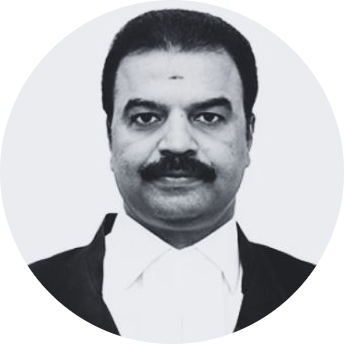
R. Mahadevan
Sitting judge of the Supreme Court of India
Assumed Office18th Jul, 2024
Retires On9th Jun, 2028
Previously
Acting Chief Justice of the Madras High CourtMay 24, 2024- July 15th, 2024
Permanent Judge of the Madras High CourtApril 14, 2015-May 23, 2024
Additional Judge of the Madras High Court October 25, 2013 - April 13, 2015
Profile
Early life and education
Justice R. Mahadevan was born on 10 June 1963 in Chennai, Tamil Nadu. His father, Maa. Aranganathan, was a Tamil writer and a government employee in Tamil Nadu’s health department. He ran a self-funded magazine called “Mundril” and has written seven novels and 200 short stories. Justice Mahadevan now runs a trust in his father’s memory.
Justice Mahadevan completed his legal studies at Madras Law College, Chennai, and enrolled with the Bar Council of Tamil Nadu and Puducherry in 1989.
Career as a lawyer
Justice Mahadevan began his practice at the Madras High Court. In a career spanning over 20 years, Justice Mahadevan specialised in indirect taxes, customs, and central excise matters. He also dealt with civil, criminal, and writ matters. Over the years, he built a substantialpractice across these areas.
Beyond his private practice, Justice Mahadevan appeared for the government as well. He served as an Additional Government Pleader (Taxes) for the Tamil Nadu government, an Additional Standing Counsel for the Union government and a Senior Panel Counsel for the Union government at the Madras High Court. It is said that he conducted more than 9,000 cases before he began his career as a judge.
Career as a judge
On 25 October 2013, Justice Mahadevan was appointed as an Additional Judge of the Madras High Court. A year and a half later, he was appointed as permanent judge of the High Court on 14 April 2015
On 24 May 2024, following Chief Justice S.V. Gangapurwala’s retirement, Justice Mahadevan was appointed as the Acting Chief Justice of the Madras High Court. He retained this position until the Supreme Court Collegium recommended his elevation to the Supreme Court on 11 July 2024.
Typically, the Collegium takes into account the seniority of judges from a High Court while making recommendations. However, the Collegium bypassed this rule in Justice Mahadevan’s case to ensure representation of a backward community from Tamil Nadu. “His appointment will bring diversity to the Bench,” the resolution stated.
Notably, Justice Mahadevan is the first Chief Justice of the Madras High Court to be elevated to the top court in six years. From 2008 to 2018, all sitting Chief Justices of the Madras High Court were elevated to the Supreme Court. This trend stopped in 2019 when Chief Justice V.K. Tahilramani resigned from her in protest against her transfer to the Meghalaya High Court.
On 16 July 2024, the Department of Justice notified of his appointment. He assumed office on 18 July 2024. This is the first time Justice Mahadevan has served on a bench outside the state of Tamil Nadu.
Justice Mahadevan is expected to serve a tenure close to four years.
According to Manupatra, Justice Mahadevan has authored 122 judgements and has been a part of 244 benches. So far, Justice Mahadevan’s highest authorship was in 2025 with 80 judgements.
Figure 2 indicates that Justice Mahadevan mainly authored judgements in Civil matters (22%). This is followed by Criminal (18%), Property (15%), Limitation (4.8%) and Contract (4.2%).
Notable judgements
In Amit Kumar v Union of India (2026), a Bench of Justices J.B. Pardiwala and Mahadevan issued directions to Higher Education Institutions to address high rates of student suicides across the country. The directions were based on recommendations made by a National Task Force constituted by the Court in the previous year.
In Lakshmanan v State through Deputy Superintendent of Police (2025), a Bench of Justices B.V. Nagarathna and Mahadevan held that a joint trial in distinct offences hinges on the discretion of the Court and is the exception, not the norm. Justice Mahadevan, who authored judgement, held that this discretion may be exercised only when such offences form a part of the same transaction and satisfy the requirements under Section 219 of the Code of Criminal Procedure, 1973.
In Hindustan Construction Company v Bihar Rajya Pul Nirman Nigam (2025), a Bench of Justices Pardiwala and Mahadevan held that any challenge against the appointment or the continuation of an arbitral tribunal under the Arbitration and Conciliation Act, 1996, will be waived if the parties jointly apply for extension of time under Section 29A of the Act.
In Pernod Ricard India Private Limited v Karanveer Singh Chhabra (2025), a judgement authored by Justice Mahadevan,held that rival marks in a trademark dispute must be assessed in their entirety, rather than by dissecting composite trademarks into isolated components.