





Sanjeev Sachdeva

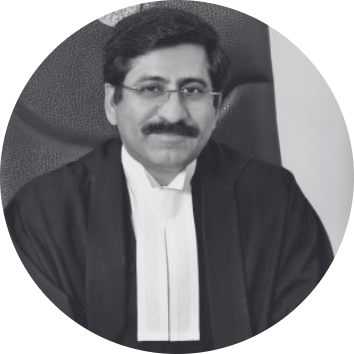
Sanjeev Sachdeva
Sitting Judge of the Supreme Court of India
Assumed Office2nd Jun, 2026
Retires On25th Dec, 2029
Previously
Chief Justice of the Madhya Pradesh High Court17 July 2025 - 1 June 2026
Acting Chief Justice of the Madhya Pradesh High Court24 May 2025 - 16 July 2025
Permanent Judge of the Madhya Pradesh High Court25 September 2024 - 23 May 2025
Acting Chief Justice of the Madhya Pradesh High Court9 July 2024 - 24 September 2024
Permanent Judge of the Madhya Pradesh High Court31 May 2024 - 8 July 2024
Permanent Judge of the Delhi High Court18 March 2015 - 30 May 2024
Additional Judge of the Delhi High Court17 April 2013 - 17 March 2015
Senior Advocate28 July 2011
Advocate-on-recordSeptember 1995
Enrollment1988
Profile
Early life and education
Justice Sanjeev Sachdeva was born on 26 December 1964 in Delhi. He completed his schooling at Delhi Public School, Mathura Road, New Delhi.
He graduated with a Bachelor of Commerce (Honours) degree from Shri Ram College of Commerce, University of Delhi, in 1985. Thereafter, he obtained his Bachelor of Laws degree from the Campus Law Centre, University of Delhi, in 1988.
Career as an advocate
Justice Sachdeva enrolled as an advocate with the Bar Council of Delhi on 1 August 1988 and practised before the Supreme Court, the Delhi High Court and district courts in Delhi.
In 1992, he was one of five young lawyers selected from India for the Commonwealth Young Lawyers Course at the Institute of Advanced Legal Studies, University of London, under a British Council Scholarship. As part of the programme, he worked with solicitors and barristers in England.
He became an Advocate-on-Record (AOR) in September 1995. He secured the second position in the AOR examination. During his years at the Bar, he served as Standing Counsel for the Bar Council of India before the Supreme Court and the Delhi High Court for over two decades. He was also appointed as a Senior Panel Lawyer for the Union of India and represented the Union Government in a wide range of matters for more than 10 years.
Apart from his litigation practice, Justice Sachdeva played an active role in legal education and training. As a lead trainer under the Indo-British Advocacy Skills Project, he trained advocates in examination and cross-examination of witnesses as well as courtroom advocacy. He conducted advocacy skills programmes for lawyers associated with the Delhi, Jharkhand, Andhra Pradesh, Punjab and Haryana, and Manipur High Courts.
On 28 July 2011, he was designated as a Senior Advocate by the Delhi High Court.
Career as a judge
Justice Sachdeva was appointed as an Additional Judge of the Delhi High Court on 17 April 2013. He was confirmed as a Permanent Judge on 18 March 2015.
After serving on the Delhi High Court for over 11 years, he was transferred to the Madhya Pradesh High Court with effect from 31 May 2024. He subsequently served as Acting Chief Justice in July 2024 to September 2024. He was appointed the Acting Chief Justice again in May 2025 before taking charge as the 29th Chief Justice of the Madhya Pradesh High Court on 17 July 2025.
The Collegium recommended Justice Sachdeva’s appointment to the Supreme Court alongside four others. On 2 June 2026, Justice Sachdeva took oath as a Judge of the Supreme Court of India. He is expected to serve a tenure of 3 years and 6 months, retiring on 25 December 2029.
Notable Judgements
In the Delhi High Court
In Vasudev Panchal v Union of India (2024), a Division Bench of Justices Sachdeva and Manoj Jain set aside the dismissal of a Sashastra Seema Bal constable who had been suffering from severe depression and had allegedly attempted suicide. The Bench held that authorities had failed to adequately consider the petitioner’s mental health condition and the statutory presumption of severe stress under Section 115 of the Mental Healthcare Act, 2017. The Bench observed that that mental illness could not be treated as misconduct and that dismissal from service was grossly disproportionate in the circumstances.
In Rouse Avenue Bar Association v Bar Council of Delhi (2024), a Division Bench of Justices Sachdeva and Ravinder Dudeja considered whether the right to form an association under Article 19(1)(c) includes a right to recognition by a court or statutory authority. The Court recognised the Central Delhi Court Bar Association as the court-annexed bar association for the Rouse Avenue District Court Complex and laid down a framework for its administration and elections.
In the Madhya Pradesh High Court
In Ashutosh Dixit v State of Madhya Pradesh (2026), a Division Bench of Chief Justice Sachdeva and Justice Vinay Saraf initiated suo motu criminal contempt proceedings against BJP MLA Sanjay Satyendra Pathak after a sitting judge of the High Court recorded that an attempt had been made to contact him regarding a pending case, leading him to recuse from the matter.
He was also part of a Division Bench that dismissed a challenge to the suspension and cancellation of a drug licence arising from the distribution of Coldrif Cough Syrup, allegedly linked to the deaths of 30 children. Describing the matter as one of the “most shocking cases in medical history”, the Bench declined to exercise its writ jurisdiction.
In Surendra Verma v High Court of Madhya Pradesh (2026), a Division Bench of Chief Justice Sachdeva and Justice Saraf directed a comprehensive audit of facilities available for women, persons with disabilities, senior citizens and persons suffering from chronic illnesses across the High Court, District Courts and Tehsil Courts in Madhya Pradesh, noting the need for accessible and inclusive court infrastructure.
In Suresh Prasad Khare v High Court of Madhya Pradesh (2026), a Division Bench of Chief Justice Sachdeva and Justice Saraf quashed a cheating case against a practising advocate who had appeared as counsel for his son, a co-accused in the same criminal proceedings. The Bench held that the Bar Council of India Rules do not prohibit an accused advocate from representing a co-accused and found no material to establish fraud or cheating.