





Analysis
Curriculum under contempt
The Supreme Court’s order to ban a school textbook referring to judicial corruption tests the limits of its own free speech jurisprudence

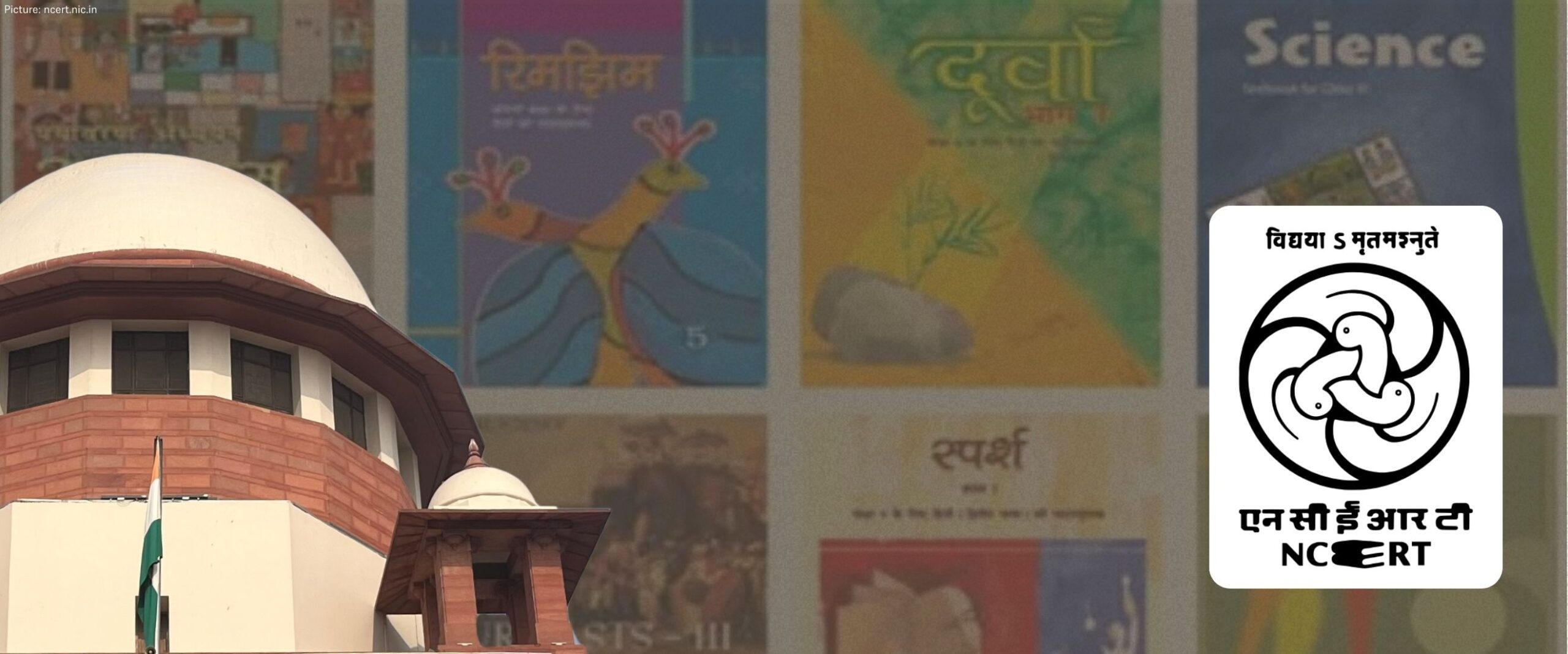
Earlier this week, a three-judge Bench led by Chief Justice Surya Kant ordered a complete ban on a Class 8 Social Science textbook published by the NCERT. The Court directed seizure of physical copies, removal of digital versions and barred publication “through electronic media or alternative titles.”
The objection? A chapter that referred to “Corruption in the Judiciary” and judicial backlog. The CJI described the episode as a “deep-rooted, well-orchestrated conspiracy” to malign and single out the judiciary. When he was told that the chapter had been withdrawn, he said “they fired a gunshot, judiciary is bleeding today.” He also described the NCERT Director’s response defending the chapter as “contemptuous and reckless”.
Later, Education Minister Dharmendra Pradhan said that the government had “utmost respect for the judiciary”, and would comply with the Court’s order. Prime Minister Narendra Modi reportedly expressed concern about the lapse and directed that “the matter be looked into in detail.”
The Court said it was not seeking to “stifle any legitimate criticism” but observed that the text referred to the number of complaints received against judges in a way that gave “the impression that no action was taken” and made “no reference to the illustrious steps taken by the judiciary…”
The effective ban on the textbook is baffling at best, and extra-legal at worst. The Constitution permits reasonable restrictions on the freedom of speech and expression, but they must be imposed by law and on specific grounds. When Parliament enacts a law to curb free speech, the courts’ role is confined to examining whether it meets constitutional standards, not fashioning one of their own.
The Court’s recent jurisprudence serves as a reminder of its role as a guardian of the constitutional boundary. In Imran Pratapgarhi v State of Gujarat (2025), it underscored that political statements—even critical ones, such as describing the abrogation of Article 370 as a ‘Black Day’—belong to legitimate democratic debate, not the realm of criminal prosecution. In Wikimedia Foundation v ANI Media (2025), the Court set aside a takedown direction issued by the Delhi High Court and cautioned against interim censorship orders, noting that even temporary restrictions can have far-reaching consequences in the digital sphere.
In those cases, the Court was reviewing restrictions created by the executive. In the present instance, however, the restriction flows directly from a judicial order. The Court does possess powers that may be invoked: under Article 129, it can punish for contempt; under Article 142, it may pass orders necessary to do complete justice. If it concluded that the publication scandalises the Court, it could ground its reasoning there. By imposing “a complete blanket ban”, the order goes further than censorship.
References to corruption in the judiciary are not merely familiar to public discourse; they are a necessary part of it. In 2025, after a fire at the residence of Justice Yashwant Varma of the Delhi High Court, reports of the recovery of partially burnt cash led to the initiation of impeachment proceedings against him. Data placed before Parliament shows that between 2016 and 2025, the office of the Chief Justice received 8,630 complaints against sitting judges of the “High Courts or the Supreme Court.” In this context, references to judicial corruption are hardly aberrational—so why is the Court so perturbed?
The Court expressed concern that such material may influence “young minds.” But shielding teenaged students from discussions of judicial accountability does little to foster the critical faculties education is meant to cultivate. As Advocate Prashant Bhushan warned: “The more the judiciary tries to suppress discussion or restrict access to information, the more distrust is likely to grow in the minds of citizens.”
The discourse is especially relevant in a polity that lacks a workable mechanism to investigate complaints against judges—the in-house procedure is opaque and a judge has never been successfully impeached. Was such a sweeping order necessary for a chapter in a social science textbook for Class 8? When a subject that should be actively debated in public life is met with a total ban, the response begins to feel uncomfortably Orwellian.
This article was first featured in SCO’s Weekly newsletter. Sign up now!
Related articles

Analysis
Judge inquiry: The opacity of the in-house process
The CJI’s power to recommend removal of a judge on the basis of an in-house committee’s report may be diluting the separation of powers
Analysis
Supreme Court Review 2025: Testing the limits of free speech
In balancing institutional sensitivities with open dialogue, the Court’s focus was on how the legal process could create a chilling effect
Analysis
Nine-judge Summer
The much-awaited listing of the two nine-judge cases in the Supreme Court comes with a formal cap on hearing days
Analysis
Tick, tock, takedown
Do the new three-hour digital takedown rules undermine the limits Supreme Court decisions have placed on executive power?