




Analysis
Inquiry Committee submits report on Justice Yashwant Varma to Speaker Om Birla
The Lok Sabha speaker set a precedent by directing the committee to complete its work despite Justice Varma's resignation

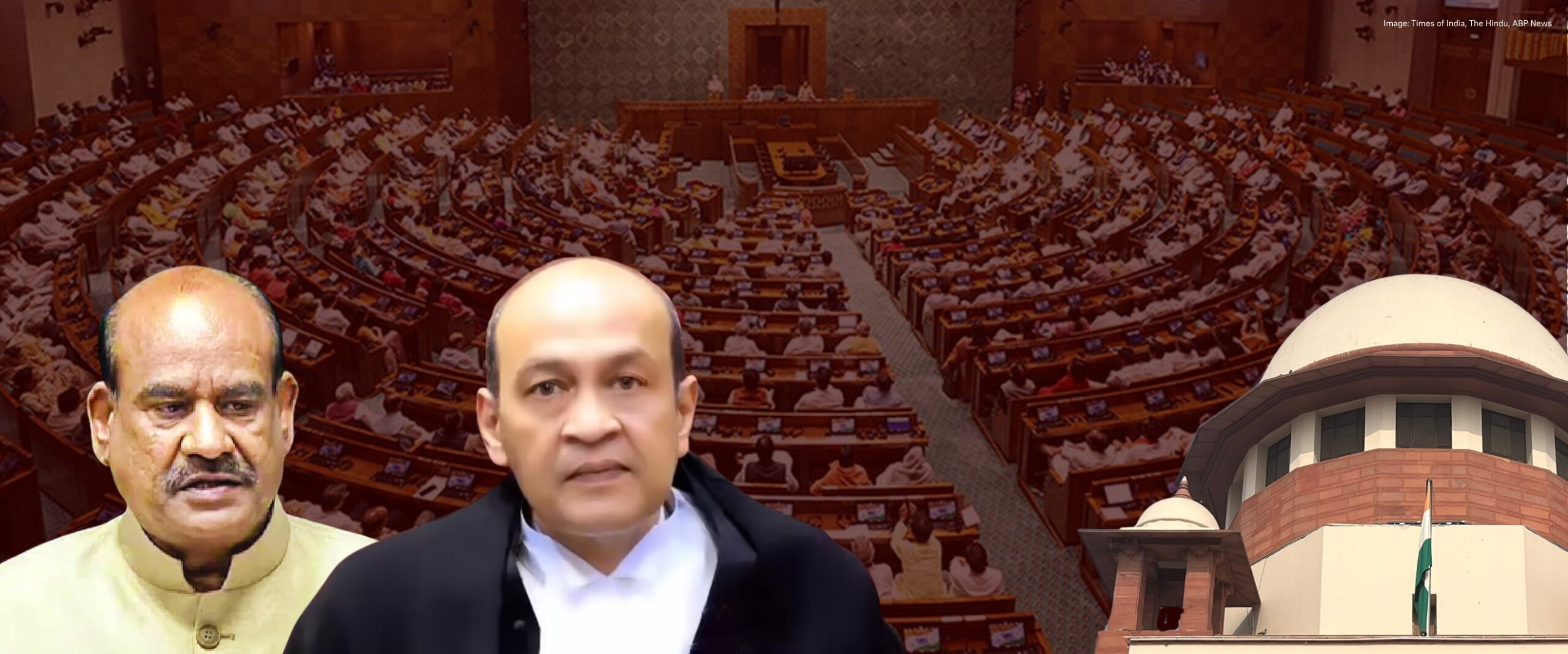
On 9 April, Justice Yashwant Varma resigned and withdrew from the statutory committee inquiring into his charges. The former Allahabad High Court judge had penned a letter to the statutory committee noting three specific evidentiary failings that prejudiced the investigation. At that time, the Supreme Court Observer wrote that there has been no precedent where a statutory committee continues its investigations after the resignation of a judge. On 18 May, the committee set a valid precedent as it submitted its report to Lok Sabha Speaker Om Birla at Parliament House.
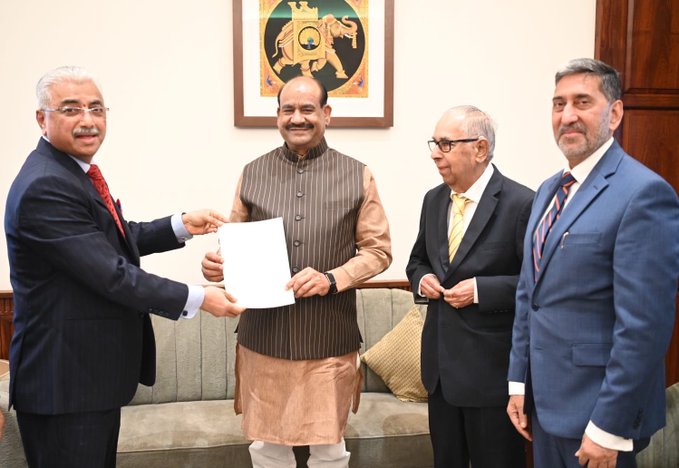
Justice Aravind Kumar of the Supreme Court, who led the three-member committee, handed it over. Chief Justice Shree Chandrashekhar of Bombay High Court and Senior Advocate B.V. Acharya were the other two members present. The report will be laid before both Houses of Parliament “in due course.”

The event seems unremarkable on its surface. Procedurally, it is anything but. Justice Varma had resigned and withdrawn himself from the committee more than five weeks before its work concluded. The committee continued proceedings ex parte. This is not impermissible. Rule 8 of the Judges (Inquiry) Rules, 1969 permits the committee to continue its work if the judge does not appear, despite proof of service of notice. Therefore, the committee was able to complete its hearings, record findings and submit its report. Prior to this, charges against Justice Varma had survived two stages of scrutiny.
First, Justice Varma had challenged former Chief Justice Sanjiv Khanna’s move to constitute an in-house procedure. The challenge was dismissed. The in-house committee found that Justice Varma had “tacit” control of the store room in his official residence where wads of cash were discovered during a fire fighting operation. Next, he challenged Speaker Om Birla’s decision to set-up a Statutory Committee to look into the allegations. This too was dismissed by a Division Bench of the Supreme Court.
Justice Varma maintained his innocence throughout, even in the letter informing his resignation.
An administrative lag

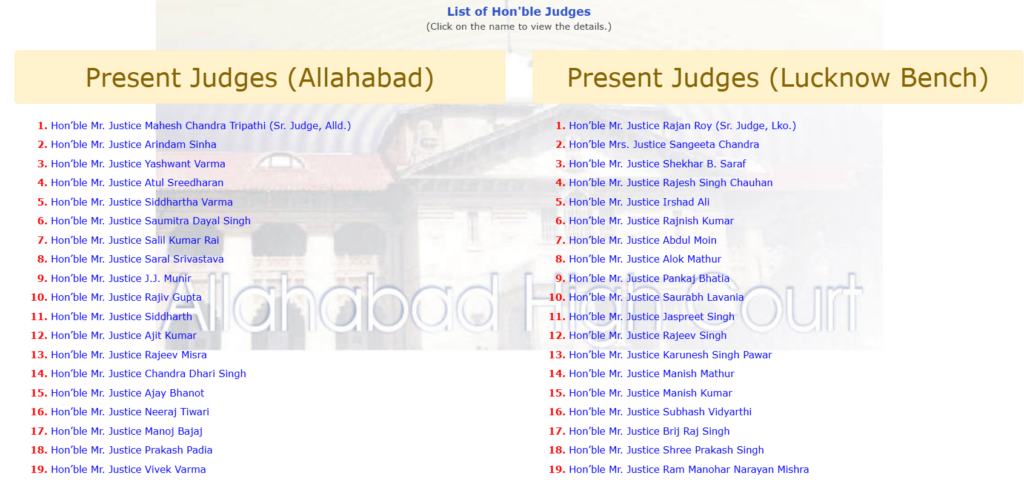
A curious institutional artifact survives the resignation. As of today, the Allahabad High Court website still lists Justice Yashwant Varma at S. No. 3 of present judges at Allahabad. A list of permanent judges published by the Department of Justice, dated 1 May 2026, places Justice Varma at S. No. 5. It records his date of retirement as 5 January 2031. Both are administrative carryovers, not statements of law. The legal position was settled by a Constitution Bench in Union of India v Gopal Chandra Misra (1978). A High Court judge’s resignation under Article 217(1) proviso (a) is complete on receipt by the President; it requires no acceptance.
A defensible precedent
The committee’s decision to continue its work is an important clarification as it addresses a question the Rajya Sabha Secretariat answered erroneously 15 years ago. The question is whether a statutory inquiry under the Judges (Inquiry) Act, 1968 lapses when its subject ceases to be a sitting judge. In 2011, the Justice Aftab Alam committee inquiring into charges against Sikkim High Court Chief Justice P.D. Dinakaran wound up on that same basis.
Justice J.S. Khehar, the High Court nominee of the Justice Alam committee was elevated to the Supreme Court. Justice Alam wrote to the Rajya Sabha Chairman seeking that the vacancy be filled. Meanwhile, Justice Dinakaran resigned. The Chairman, Vice President Hamid Ansari, refused to fill the vacancy and wound up the committee.
The reasoning, since placed on the public record by the Rajya Sabha Secretariat in response to RTI applications, rested on two propositions. First, the inquiry mechanism contemplated by the 1968 Act was available only against a sitting judge. Second, that two American precedents involving judges Samuel Kent and George English supplied doctrinal cover. Judge Kent had pleaded guilty to sexual misconduct before quitting the Southern District of Texas in 2009. Judge English had first been impeached by the US House of Representatives in April 1926, and then resigned from the Eastern District of Illinois Court in November 1926, days before his Senate trial was to begin. The Dinakaran record contained neither a guilty plea nor a formal charge by either House to take its place alongside them. The committee chairperson, Justice Aftab Alam who was prepared to continue, if the vacancy caused by Justice Khehar’s elevation was filled, could not prevail. Jurist member G. Mohan Gopal’s letter to the other two members, seeking continuation, was ignored.
On the other hand, Speaker Birla let the statutory machinery run to a tabled report. Resignation cannot extinguish the question of proof.The inquiry’s findings stand on their own terms, irrespective of what Parliament does with them. It will be said that the submission is ceremonial. If the committee finds guilt, it is likely that Justice Varma will not be removed from an office he has vacated. The pension question stands on its own statutory footing. However, the report is not ceremonial in its institutional effect. A future committee facing a mid-inquiry resignation will not find the Ansari shutdown standing as untroubled precedent. Speaker Birla has cleared the procedural ground.
What remains is the consequence: forfeiture of post-retirement benefits on a finding of proven misbehaviour. The 1968 Act still does not answer that question. That substantive lacuna remains for Parliament to close.
Related articles

Analysis
Quit before the verdict: The judicial accountability gap
Justice Yashwant Varma's exit revives a constitutional lacuna that has remained unresolved for 15 years
Analysis
Justice Yashwant Varma inquiry: The witnesses the Committee did not hear
Three specific evidentiary failings of the Justice Varma inquiry stand out from his withdrawal letter

Analysis
Judge inquiry: The opacity of the in-house process
The CJI’s power to recommend removal of a judge on the basis of an in-house committee’s report may be diluting the separation of powers
Analysis
SC dismisses Justice Yashwant Varma’s challenge against Inquiry Committee
The Court held that the Judges (Inquiry) Act cannot be interpreted to obstruct proceedings that investigate actions against a Judge