





Analysis
Judging lawyers
What began as a challenge to a bank’s blacklist ended with a blueprint for reforming the legal profession

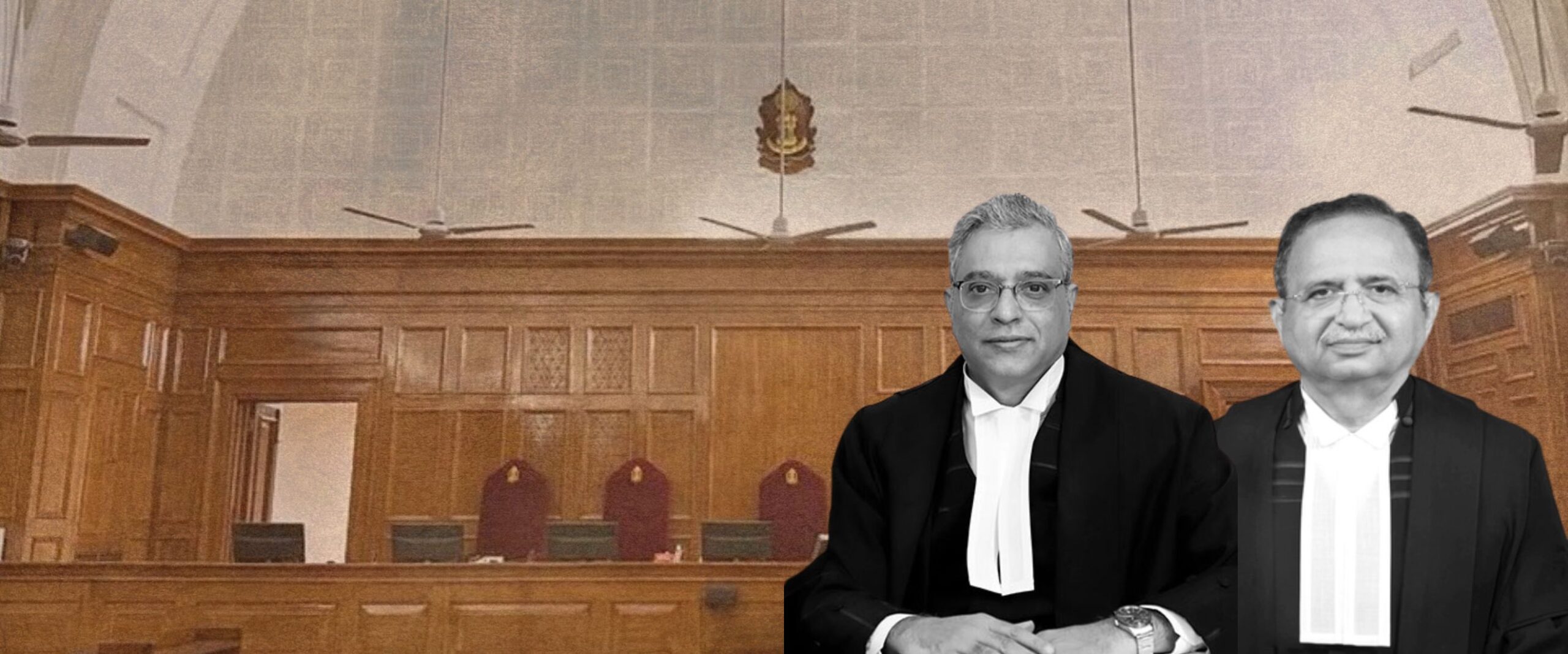
Ajay Vijh was an advocate empanelled with Canara Bank since 2010. The bank removed him from its panel of advocates after it concluded that Vijh’s opinion in a title verification report had overlooked certain details of a sale deed. The Bank reported that he provided a “wrong legal opinion” and forwarded his name to the Indian Banks’ Association’s “Third Party Entities Involved in Fraud” caution list, under the Reserve Bank of India’s fraud reporting framework.
Vijh approached the Supreme Court after his petition in the Allahabad High Court was dismissed. The dispute before the Supreme Court was straightforward. While the Bench of Justices P.S. Narasimha and Alok Aradhe accepted that a bank was free to discontinue a lawyer’s engagement; it cannot issue a public declaration to all other banks concerning the conduct, competency or incompetency of an advocate. The Bench observed that those questions fall within the exclusive jurisdiction of the disciplinary authorities constituted under the Advocates Act, 1961.
Ordinarily, that would have disposed of the appeal. However, somewhere around the halfway mark of the judgement the Court undertook an examination of the institutions governing the legal profession. The Court asked: If Parliament entrusted the Bar with the “right and privilege of self-regulation”, what does that privilege demand? It answered: “Public confidence in the legal profession,” adding that it “can be sustained only when disciplinary mechanisms inspire trust and credibility.” The Advocates Act creates a unified profession and vests enrolment, ethics and discipline in elected Bar Councils rather than the executive or the judiciary.
The Supreme Court has consistently defended that arrangement. In Supreme Court Bar Association v Union of India (1998), it held that even the Supreme Court could not suspend an advocate’s license because Parliament had vested disciplinary authority in the Bar Councils. The principle was reaffirmed in R. Muthukrishnan v Registrar General (2019), despite growing concern over professional standards. In Bar of Indian Lawyers v D.K. Gandhi (2024), Justice Bela M. Trivedi described the legal profession as sui generis, holding that the Advocates Act already provides “a robust mechanism laying down professional standards for compliance and for determining professional misconduct.” Complaints against advocates, the Court held, belonged before the Bar Councils, not consumer fora.
In Ajay Vijh’s case, the Court turns to the institutions that exercise this exclusive jurisdiction. It orders a comprehensive audit of disciplinary proceedings across the Bar Council of India (BCI) and the State Bar Councils, examining complaints, pendency, regional variations, staffing, infrastructure and transparency. It revives proposals left behind by the Advocates (Amendment) Bill, 2023, urging the Bar Council to institutionalise Continuing Legal Education and recommending a National Legal Academy for advocates. Continuing education, the Court says, is not “a mere regulatory requirement” but “a professional commitment to excellence and service.”
The Court refuses to collapse negligence into fraud, or professional incompetence into misconduct. Fraud, it observes, requires “mens rea and deliberate intention”. An erroneous legal opinion may warrant disciplinary scrutiny, but it does not become fraud for that reason alone. The judgement treats discipline and professional development as distinct responsibilities. One safeguards the profession’s integrity; the other strengthens its competence.
The response of the BCI suggests that it understood the judgement in those terms. Within a day, it announced committees to implement many of the recommendations, including a performance audit of disciplinary mechanisms and the establishment of a National Lawyers Academy. The response was unusually swift. A four-page statement described the decision as “the beginning of a New Institutional chapter for the legal profession.” It also adopted what may prove to be the judgement’s most enduring idea: “The true strength of an independent Bar lies not merely in resisting external pressure, but also in possessing the courage and institutional maturity to examine, reform and improve itself.”
This article was first featured in SCO’s Weekly newsletter. Sign up now!
Related articles

Analysis
Congratulations, Mr. Solicitor General
With his extension, Tushar Mehta is on track to be one of India’s longest serving Solicitor General

Analysis
Postman ban
The Delhi High Court's decision on suspension of Telegram services raises questions on intermediary liability
Analysis
The audit from below
On unrelated facts, both Allahabad and Madras High Courts fault the Supreme Court for ignoring consistency.