





Analysis
Justice Sanjay Karol’s notable judgements
From proportionality in criminal sentencing to nationwide directives, Justice Karol leaves a legacy of firm and precise adjudication

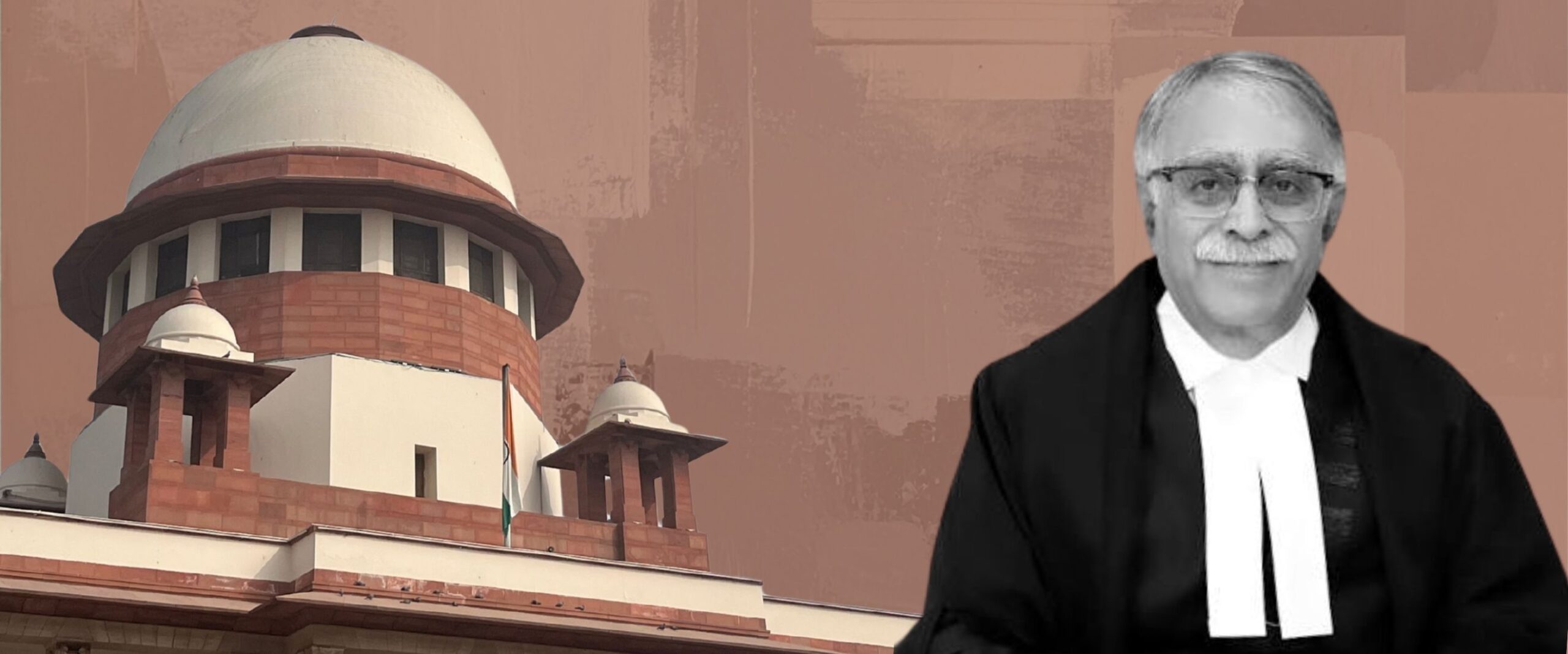
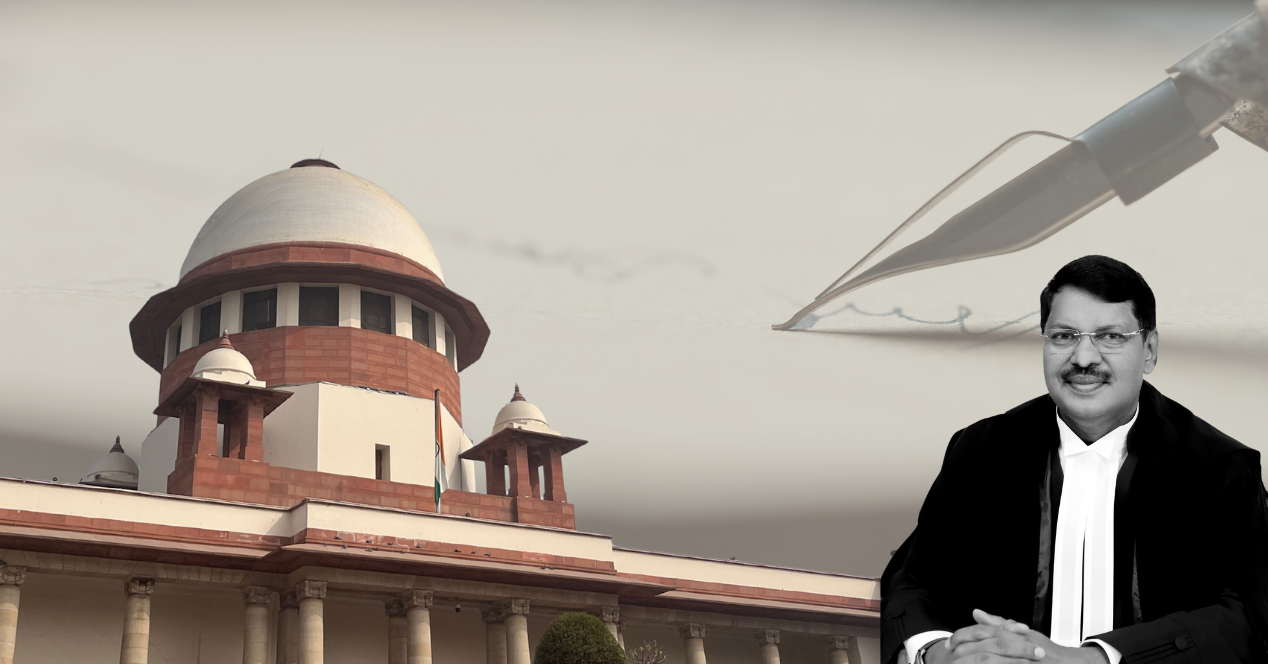
Justice Sanjay Karol will retire on 22 August 2026, after over three years and six months at the Supreme Court. A prolific writer, Justice Karol has authored over 270 judgements during his tenure.
His judgements are often emotive, opening with film-like descriptions of the facts of the case and featuring poems by Subhadra Kumari Chauhan or quotations of Justice H.R. Khanna and John Stuart Mill.
On the occasion of his retirement, we recollect some of his notable decisions.
Gender equality cases
On 3 August 2026, Dr Lokesh B.H. v State of Karnataka, a Bench of Justices Karol and N.K. Singh extended prosecution for cruelty under Section 498A of the Indian Penal Code, 1860 to live-in relationships. The Court noted that exclusion of such relationships would defeat the social purpose of the legislation but clarified that this would only apply to parties who intend to marry.
Earlier, on 11 June, Justices Karol and Singh created a new head for compensation under the Motor Vehicles Act, 1988 for “loss of domestic care” in cases involving death of a homemaker. Recognising the unpaid work of women as “nation-builders”, the Bench fixed a notional monthly income of ₹30,000 for the purpose of monetary calculation.
In Rousannara Begam v S k Salahuddin,the same Bench held that divorced Muslim women have a right to recover gifts given to their husbands at the time of marriage.
On 17 July 2025, Justices Karol and Joymalya Bagchi upheld a tribal woman’s right to an equal share of ancestral property, describing prohibition on female succession as having no rational nexus or reasonable classification.
Extending legal protection
On 4 August 2026, in National Insurance v Thungala Dhana Laxmi, Justices Karol and P.K. Mishra clarified that comprehensive motor insurance covers vehicle occupants. The Court further mandated a four-tiered policy structure as the standard and extended third party insurance duration to four years.
In Urmila Dixit v Sunil Sharan Dixit, Justices Karol and C.T. Ravikumar upheld the right of senior citizens to reclaim property transferred to their children when such transfer adversely affects their welfare.
Nationwide directives to ensure administrative change
On 24 March, the same Bench in State of H.P. v Hukum Chand@Monu directed all High Court’s to strictly adhere to Section 228-A IPC which prohibits public disclosure of a rape survivor’s identity. The Court held that a child’s testimony cannot be rendered unreliable on the basis of minor inconsistencies or human lapses of memory. A year prior, a Bench of Justice Karol and Justice Vikram Nath similarly noted the High Court’s failure to redact a child rape survivor’s name from the record. Deciding not to remand the case due to its 40 year pendency, the Bench adjudicated the matter on merits, and held that conviction can be secured even without a child survivor’s testimony.
On 15 July 2025, in Kattavellai v State of Tamil Nadu, a three-judge Bench of Justices Nath, Karol and Sandeep Mehta issued guidelines for handling of DNA evidence in order to prevent wrongful incarceration of accused persons due to faulty investigation. As the matter resulted in a clean acquittal for a person on death row, the Bench noted arguments on the right to compensation in such cases while ultimately leaving it for the legislature to decide.
In April 2026, Justice Karol sought again to address the impact of inordinate delay on legal aid filings, this time with Justice Singh. Directing the creation of a unified digital platform for legal aid, the Bench in Shankar Mahto v State of Bihar, laid down a Standard Operating Procedure with binding timelines for translation, transmission and monitoring of legal aid case records.
On the death penalty and proportionality in sentencing
Justice Karol has often highlighted the importance of procedural safeguards and consideration of mitigating factors such as conduct and psychological background in death penalty matters.
In Ehsaan v. State (NCT of Delhi) (2026), Justices Karol and A.G. Masih reduced the sentence of a 25 year old convicted for gang rape, highlighting the need to balance the gravity of the offence and interests of the victim and society with the offender’s age, antecedents, conduct and prospects of reformation. Mitigating factors were similarly considered in Ramesh A. Naika v. Registrar General (2025) and Byluru Thippaiah v State of Karnataka (2025) which were also authored by Justice Karol.
In Vasanta Sampat Dupare v Union of India (2025) the same bench held that the Supreme Court can revisit the sentencing aspect of death penalty under Article 32 in “cases involving a clear, specific and serious breach of procedural safeguards.”
On another three-judge bench in Prakash Nishad v State of Maharashtra (2023), the Bench of Justices B.R. Gavai, Nath and Karol acquitted a man on death row for lack of conclusive evidence, emphasising the need to record disclosure statements in a language known to the accused.
Justice Karol has also authored judgements upholding the Governor’s powers of remission and the limits of judicial review of Presidential decisions regarding life sentence without remission.
Note: This article was updated on 24 August 2026 at 11:20 AM.
Related articles

Analysis
Justice Rajesh Bindal’s Notable Judgements
Highly regarded by the Bar for his calm disposition, Justice Bindal did it all. We list his notable judgements
Analysis
Justice Pankaj Mithal’s Notable Judgements
From Waqf to Sub-classification of Scheduled Caste Persons, Justice Mithal has been a part of it all
Analysis
Justice J.K. Maheshwari: Notable judgements
As precise as his prose, Justice Maheshwari’s rulings were marked by clarity on rules of interpretation
Analysis
10 notable judgements by CJI Gavai
Two recalls, a Presidential reference, and a stay order in a highly contentious issue of our times—a list of the outgoing CJI’s key verdicts