





Analysis
Nine-judge Summer
The much-awaited listing of the two nine-judge cases in the Supreme Court comes with a formal cap on hearing days

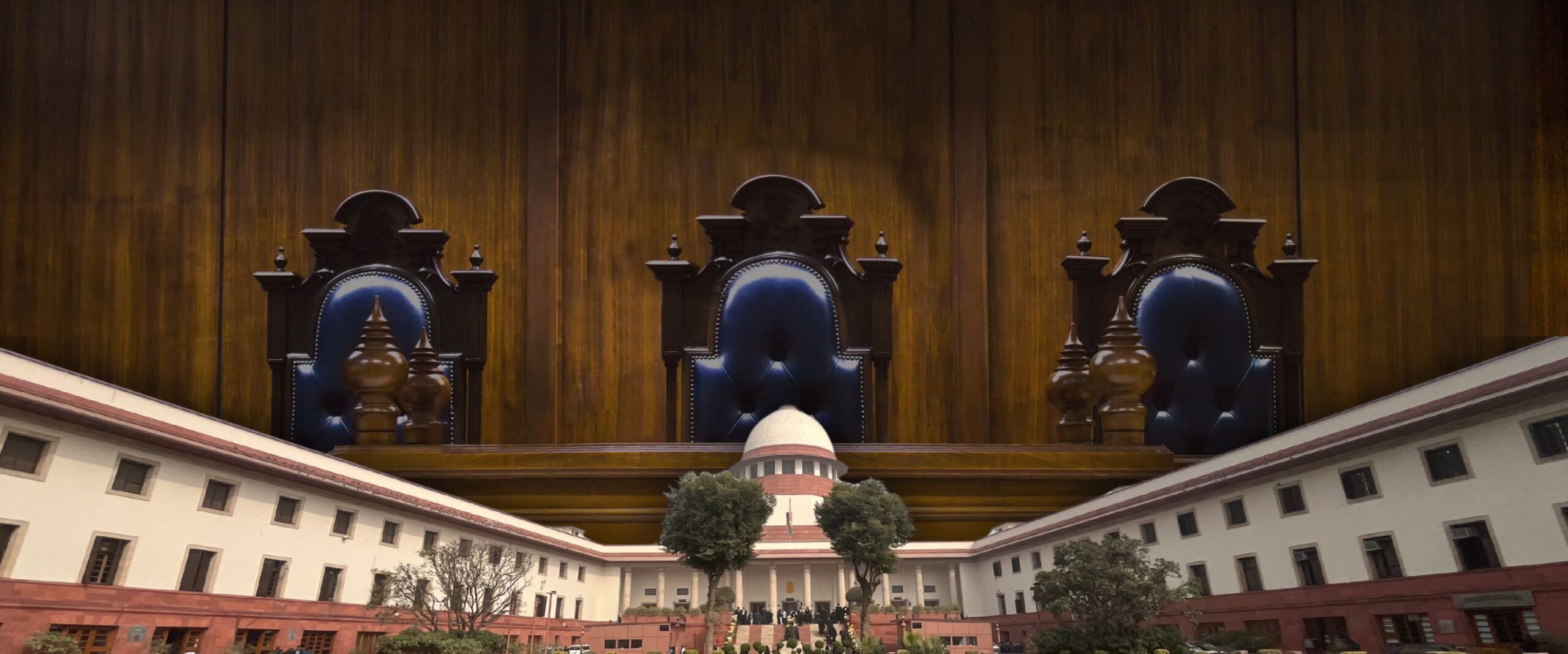
When he assumed office in November last year, Chief Justice Surya Kant had acknowledged the backlog in Constitution Bench cases as a cause for high pendency. With a term exceeding a year, he was better placed to address it than his predecessors, who had six months each. Earlier this week, he showed signs of doing so by listing the only pending nine-judge cases.
Until the Monday morning listing, State of Uttar Pradesh v Jai Bir Singh and Kantaru Rajeevaru v Indian Young Lawyers’ Association had long gathered dust. Jai Bir Singh centres on the definition of ‘industry’ under the Industrial Disputes Act, 1947—it will decide how widely labour law protections extend across public institutions, non-profits and service-sector entities such as schools and hospitals. Kantaru Rajeevaru involves a review of the much-discussed Sabarimala Judgement (2018), where a 4:1 majority held that barring women from an Ayyappa temple in Kerala violated their constitutional right to religion.
The industry matter will be heard in March, and Sabarimala in April. In an encouraging move, the Court has set formal time limits for oral arguments—two days for Jai Bir Singh and eight days for Sabarimala. The directions note that counsel must adhere to the Court’s recently released Statement of Procedure, which imposes strict timelines for arguments and a page-limit on written submissions.
It would not be far-fetched to view these limits as lessons from the Chandrachud tenure. While that two-year period produced a commendable 18 Constitution Bench decisions, including three nine-judge verdicts, the Court often refrained from imposing hard and fast timelines. Extended hearings—often repetitive—inevitably consume judicial time that might otherwise be spent addressing a mounting docket. The five-judge Article 370 hearing, for instance, ran for 16 days; the nine-judge Bench on states’ power to tax mines and minerals sat for eight.
In the five-judge marriage equality hearings, CJI Chandrachud warned that time for oral arguments would need to be rationed, or it would become “impossible” to list Constitution Bench matters. However, even his successors Sanjiv Khanna and B.R. Gavai preferred gentle reminders to counsel to wrap up their submissions.
The Supreme Court of the United States (SCOTUS) typically limits oral arguments to 30 minutes per side. Such a rule would be ill-suited to India’s Court, where constitutional cases often involve multiple counsel representing different parties, state governments and public interest groups.
This multiplicity of voices reflects the scale and diversity of Indian democracy and the Court’s central role in adjudicating disputes that are as political as they are legal. The contrast is also structural—SCOTUS exercises tight docket control and hears a small, carefully filtered set of cases, whereas our Court combines appellate jurisdiction with expansive constitutional remedies.
Yet there is only a fine line separating feature and bug. The openness that makes space for many voices can slow the Court down, and may come at the cost of timely justice. The pendency of over 90,000 cases is a sign of that strain.
Further, institutionalising this change will require consensus among the Bar and all sitting judges. In a hearing in the stray dogs matter, Justice Vikram Nath quipped that as the “master” of his own court, he had not adopted the timeline SOP. In a recent hearing in the Bihar SIR matter, CJI Surya Kant himself avoided imposing timelines since the Court had commenced hearings before the publication of the SOP. His Bench heard the matter on 29 different days before reserving judgement. A lawyer I spoke to suggested that while the SOP may impose discipline, guidance on its implementation remains thin. Stay tuned to the SCO to see whether the timelines hold this summer. On our part, we promise coverage that is to-the-point and allergic to repetition.
This article was first featured in SCO’s Weekly newsletter. Sign up now!
Related articles

Analysis
The CJI Surya Kant era begins
CJI Surya Kant’s first week sets the tone for his 14-month long tenure
Analysis
Timed advocacy
A new SOP caps the length of written submissions and requires counsel to state the time sought for oral arguments
Analysis
Constitution Benches to become a “permanent feature” of SC: Chief Justice D.Y. Chandrachud
In 2023, a Constitution Bench has assembled almost each month to tackle matters of public importance
75 Years of SC Articles
Master of the Roster: Securing Process Legitimacy of the Supreme Court
As the SC turns 75, we analyse rostering under Chandrachud and Lalit courts and make a case for a publicly defensible allocation rationale