




Analysis
Postman ban
The Delhi High Court's decision on suspension of Telegram services raises questions on intermediary liability

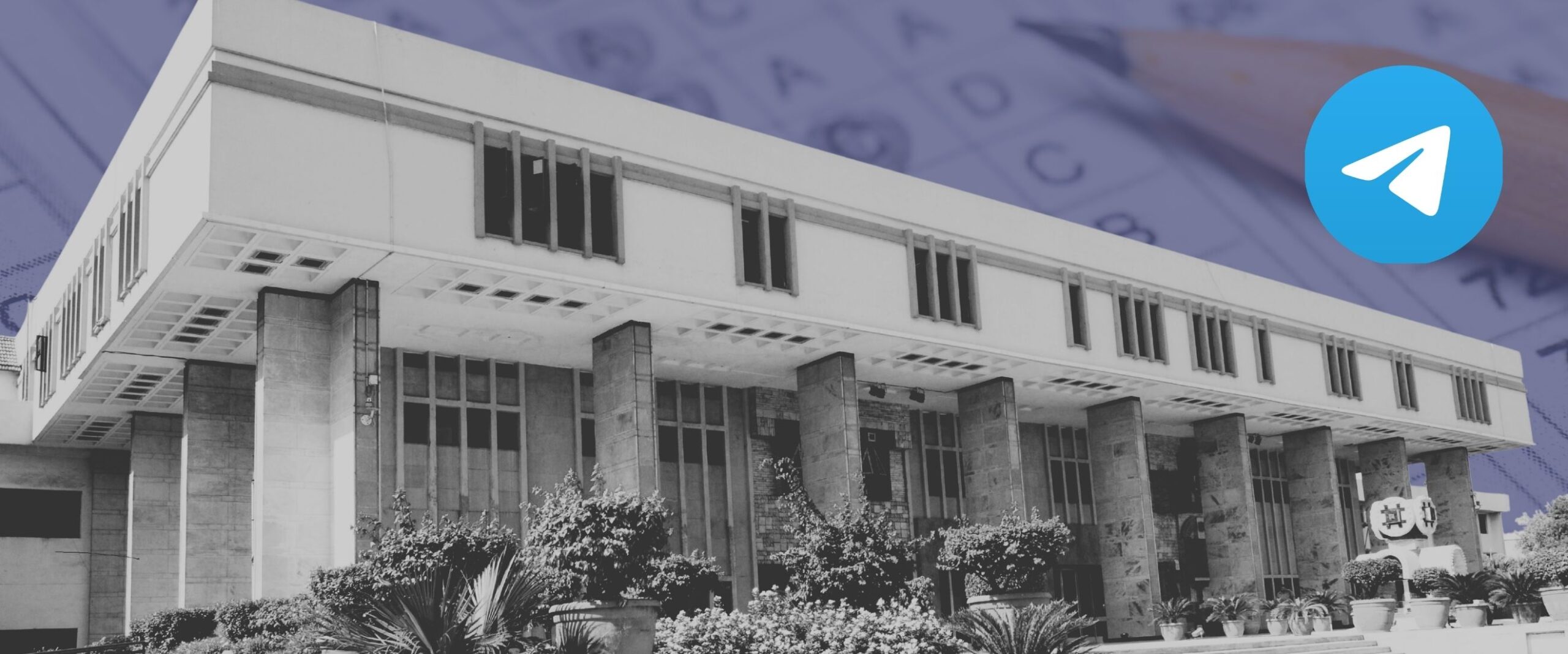
On Friday, the Delhi High Court upheld the Union government’s temporary suspension of global messaging application Telegram. Access was blocked last week in light of the upcoming NEET-UG retest scheduled for 21 June. The ban comes at a time when public faith in the National Testing Agency (NTA), which conducts the exam, has significantly eroded. While the Supreme Court has already sought long term measures from the Union, this development makes it as though the Union may be grasping at straws.
Telegram approached the Delhi High Court on two grounds: First, Section 69A of the Information Technology Act, 2000 only permits blocking specific “information” and not entire platforms. Second, the suspension fails the test of proportionality as it affects over 150 million legitimate users in the name of preventing harm caused by a few.
Framed in K.S. Puttaswamy v Union of India (2017) and expanded in Anuradha Bhasin v Union of India (2020), the test of proportionality requires that measures restricting fundamental freedoms satisfy three conditions: 1) they must be legal; 2) they must be in furtherance of a legitimate aim; and 3) they must be the least restrictive measure possible, containing a rational nexus with the object sought to be achieved. Telegram argued that it complied with the directions to take down over 900 unlawful accounts, and that less restrictive measures such as entity-specific interventions, channel removal and internal regulation were available.
The Delhi High Court found no merit in this argument. Justice Tejas Karia, authoring the verdict, noted material distinctions between Telegram and other intermediary platforms due to its automated bot ecosystems, user anonymity provisions, large-volume file-sharing capabilities and message editing feature that permitted time-stamp retention. He held that a blanket blocking of access was proportionate as less restrictive measures such as mirror channels and audience redirection permitted resumption of illegal activity almost instantly. MeitY’s final order also relied on a report from the Indian Cyber Crime Coordination Centre (I4C). It recorded that unlawful use resumed on more than 35 occasions despite corrective measures.
Interestingly, the 18 June order issued by the Committee under Rule 7 of the IT Rules, 2009 states that Telegram’s unique features themselves are not unlawful but have been utilised by the network “actively and systematically to evade enforcement measures and to sustain unlawful activity during the critical pre-examination period.” A recent announcement of Telegram’s plans to update its message editing feature to prevent backdated scams confirms the Union’s concerns. The Union’s focus on this feature suggests it fears fake leaks stoking public outrage more than the real leaks themselves.
Relying on the definition of “information” under Section 2(1)(v) and “computer” and “computer resource” under Section 2(1)(i) and (k) of the Act respectively, Justice Karia held that the Union was empowered to block access to the entire software under Section 69A. He noted that a restrictive interpretation of these words would “unduly narrow the scope” of the provision. Notably Section 69A was upheld in Shreya Singhal v Union of India (2015), primarily due to the procedural safeguards provided under the IT Rules 2009. These rules mandate examination of complaints by a statutory Committee, as well as notice and fair hearing to the person/intermediary responsible.
In the past decade, nearly 90 comparable leaks have surfaced, prompting close to 50 retests across exams such as UGC-NET, JEE Main and CTET. Could the Telegram suspension set a precedent as a preferred measure for all these examinations? Will it be enforced next year, now that NEET-UG 2027 is going to be conducted in an online format?
With 22 lakh students competing for barely 1.3 lakh seats, the stakes are high with any decision on NEET. It remains to be seen whether shifting the burden to intermediary platforms is sufficient for the NTA and Ministry of Education to meet public demands for accountability.
This article was first featured in SCO’s Weekly newsletter. Sign up now!
Related articles

Analysis
The NEET-UG lacks institutional memory
The Union’s assurance that the Prime Minister was supervising the re-test does not answer questions on institutional failure
Analysis
Broken bargain
The NEET-UG 2026 leak unsettles the premise on which the 2024 refusal was decided
Analysis
Supreme Court issues directions to High-Powered Committee to strengthen NEET exam management
The Court has directed the Committee to submit a status and compliance report by 30 September
Analysis
Supreme Court refuses to cancel 2024 NEET UG exam due to insufficient evidence of “systemic” leak
The Court held that a retest would have “cascading effects” on medical education and prejudice students from marginalised communities