





Analysis
“Let the Union of India…put the bricks back”: Former Attorney General K.K. Venugopal on Babri Demolition
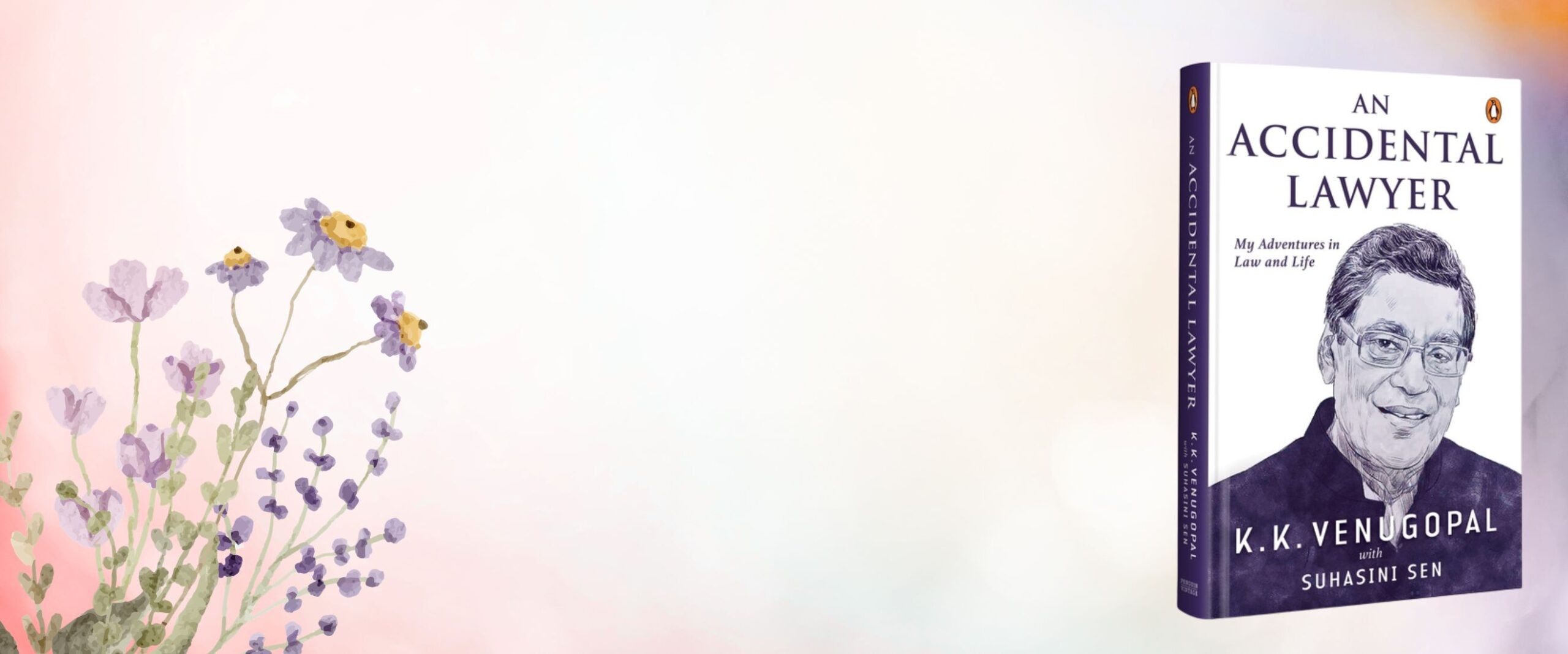
In his autobiography, Senior Advocate K.K. Venugopal describes the Supreme Court proceedings before and after the Babri demolition

…Through the early months of 1992, the situation at Ayodhya continued to deteriorate; rather, intensify. Contempt petitions were filed by Muslim groups both in the Allahabad High Court and before the Supreme Court, urging that the state of UP had committed contempt of the orders of both courts, which had interdicted any construction activity at the disputed site. I appeared for Chief Minister Kalyan Singh in those proceedings and initially told the court that my client could not fairly answer the contempt as new allegations of disobedience were being heaped upon him every day, as the ground realities continued to shift. The court agreed with me and directed the alleged contemnors to answer contempt only as it pertained to the situation till July 1992.
Meanwhile, the situation in Ayodhya continued to simmer, till finally, it reached a boiling point. Tempers were flying high among both the Hindus and the Muslims. The tensions that had built up over many months of incremental polarization between the two communities, resembled a swollen river in spate, waiting for the final impetus before bursting its banks.
Interlocutory applications were filed in the contempt proceedings, urging that the situation had become ‘explosive’ as a result of certain religious groups openly declaring that from 6 December 1992 there would be a resumption of kar seva on the disputed site. On 20 November 1992, during the hearing of these applications, I sought time till the end of the month for the state of Uttar Pradesh to place on record its plan of action for how it proposed to ensure that there was no disobedience of the court’s orders. The bench headed by Justice Venkatachaliah recorded my submissions and time was granted.* Five days later, on 25 November 1992, I placed before the court an affidavit of the state of UP spelling out its plan of action. The court recorded these submissions as well, and said:
6. . . . Shri Venugopal has filed an affidavit by the Special Secretary to the Home Department of the Uttar Pradesh Government, in which, inter alia, it is stated:
The State Government has been giving grave and anxious consideration to the situation arising from the call given for resumption of Kar Seva on the acquired land. The State Government agrees that the duty of preventing the violation of orders of the Court lies on it and is its responsibility.
8. Shri Venugopal shared our concern and expressed the hope — he was not in a position to hold out any more than that at this stage— that given a week’s time, the Government would negotiate with the religious groups to avoid a collision course and persuade them to take a rational view of the situation.
…
11. Shri Venugopal aired a strong grievance that the issue is equally sensitive the other way as well, in that the religious aspirations and hopes of a large section of the populace in the country for the construction of a Temple there, seemed entrapped in frustrating legal manoeuvres and that the present impasse is the manifestation of the exasperation resulting from such legal experience. He submitted that the State Government should be trusted to explore the possibility of defusing the situation in its own way.
A few days later, it appeared that these endeavours of the state government to negotiate were appearing to bear fruit. On the next date of hearing, i.e. 28 November 1992, I placed a second affidavit on record before the Supreme Court. This too was recorded by the court in its order as follows:
-
- Today, the Special Secretary to the Government of Uttar Pradesh, Home Department, in the context of what Shri Venugopal calls a major, markedly reassuring and eminently appropriate progress in the mood of the situation, has filed an affidavit on behalf of the State Government which, referring to the efforts made by the State Government in regard to the negotiations and discussions with the religious groups which have called for a Kar Seva from 6-12-1992, states:
…
-
- As already stated, the State Government is now confident that as long as the writ petitions regarding acquisitions are pending and the interim orders of the High Court are in force no construction, permanent or temporary, will take place though to satisfy the religious aspirations of the Ram Bhaktas Kar Seva other than by way of construction as stated may take place.
- The State Government is confident that there will be no movement of construction machinery or construction materials into the acquired land of 2.77 acres and, therefore, the question of machinery or building material being moved from the site of the Lakshman Temple or Seshavatar Temple (which is adjacent to the acquired land) into the acquired 2.77 acres does not arise.
- The State Government has also filed an undertaking before us to this effect:
State Government assures the Court that it will ensure that no construction machinery or construction material will move into the acquired land and no construction activity will take place or carried out as long as the High Court interim orders are in force in the writ petition pending before it relating to the land acquisition.
At that point of time, I had no reason to doubt the words of Kalyan Singh, who had assured me that his government would prevent any demolition from taking place. When I put it to him that perhaps the kar sevaks could enter the disputed area where the Babri Masjid stood, he specifically assured me that the kar sevaks would not be permitted to do so. It was on that basis that I had handed over the affidavits of the state government. However, during the hearing, the then Attorney General, Shri Milon K. Banerji had handed over reports of the Intelligence Bureau; intelligence that suggested that there was a likelihood of demolition of the Babri Masjid. However, the court did not lend credence to those reports, probably in light of the assurances given by the state government.
I remember vividly that 6 December 1992 fell on a Sunday. I had just finished my lunch when I got a call from the Registrar of the Supreme Court saying that the judges had assembled at Justice Venkatachaliah’s house, and that a large crowd had gathered there. I immediately realized that something had happened and to my utmost horror, I saw on TV that the Babri Masjid was being demolished by a swarm of kar sevaks, who had got on top of its cupola with heavy implements like axes, hammers and iron bars and were destroying the same. The Registrar informed me that the judges were urgently seeking my presence. Therefore, I put on a jacket and rushed over to the house of Justice Venkatachaliah, the presiding judge. I recall the judges looking at me accusingly, which was inevitable, as I had placed before them the assurances of the state of UP that the mosque would be protected. Before anyone could say anything, I told Justice Venkatachaliah, ‘I hang my head in shame. As swiftly as this demolition has taken place, let the Union of India, the central government, put the bricks back so that the next day the Masjid would stand whole and untouched.’
However, rather than agreeing to my suggestion, which was technically feasible at that time, the Attorney General, appearing for the Union of India, refused, perhaps believing that to do so would cost the Congress government several Hindu votes. I refused to appear for Kalyan Singh thereafter, and though the court hauled up Kalyan Singh for contempt, instead of sending him to jail for one month, they only ordered that he remain in court till it rose for the day. All that he had to do was to sit in court till evening and then leave.
The impact of the demolition of the Babri Masjid was felt long after the event, and resulted in rioting all over the country. As one journalist put it, ‘The rest is not history. It is the present, it is the future.’ I count this episode as one of the darkest experiences of my career as a lawyer, and one that cannot easily be forgotten.
(This is an excerpt from ‘An Accidental Lawyer: My Adventures in Law and Life’ published recently by Penguin Random House India)
Related articles

Analysis
“The Supreme Court treated the Constitution as lex rather than jus”
In this excerpt from the conclusion of a new book, V. Krishna Ananth argues that the SC has often downplayed the aspirations of the framers
Analysis
How India’s judiciary tried to shape its own independence
Tensions between the Judiciary and the Executive over appointments were brewing even as the Constitution was being drafted
Analysis
What is the role of ‘constitutional morality’ in legal interpretation?
In this excerpt from a longer essay, Senior Advocate Gopal Subramanium writes that Indian courts developed this tool to uphold rights
Analysis
How the Supreme Court used the Basic Structure Doctrine in the EWS judgement
This excerpt from a longer essay analyses why the Court held that reservation based on economic criteria was valid