





Analysis
Proving the polluter: What the Yamuna floodplain verdict demands of environmental liability
The Supreme Court holds that the polluter pays principle presupposes a proven polluter and a documented ecological baseline.

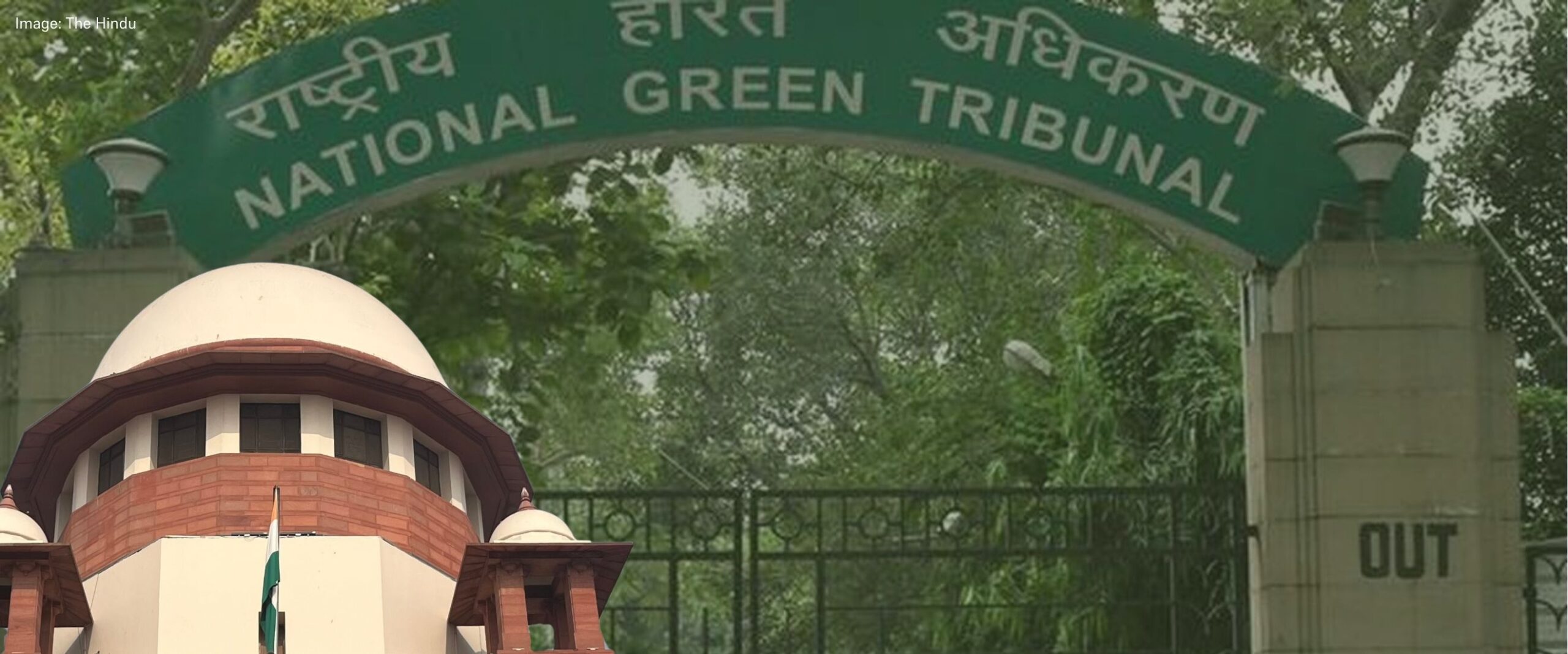
In Vyakti Vikas Kendra India v Manoj Misra (Dead), decided on 22 August, the Supreme Court set aside the National Green Tribunal’s finding of 7 December 2017 that the World Culture Festival of March 2016 damaged the Yamuna floodplain. A Division Bench comprising Justices S.C. Sharma and N. K. Singh ordered the Delhi Development Authority (DDA) to refund the Rs 5 crore deposited by the organiser in 2016, while leaving the DDA’s duty to rehabilitate the floodplain intact.
The judgement lays down a sequence for environmental adjudication: establish the harm, and the baseline against which that harm is measured, test the evidence and identify the party responsible before imposing a remedy. It insists on proof of causation. Its treatment of the Tribunal’s remedial powers under Section 15 of the National Green Tribunal Act, 2010 is more open to question.
The Bench declined to examine the legality of the DDA’s permission for the event, noting that the Tribunal itself had acknowledged that the question lay beyond its jurisdiction. The “only issue”, the Court said, was whether the organiser caused damage to the floodplain and, consequently, whether it must answer for restoration.
Temporary findings, permanent liability
On 9 March 2016, two days before the festival, the Tribunal passed an interim order, permitting the event subject to a 5 crore deposit and an undertaking by the organiser to meet restoration costs if damage was subsequently established. On 4 April it clarified that the order was provisional and prejudiced no one’s rights. Yet the final proceedings never reopened the question on whether the organiser had caused damage at all. The early view of damage was treated as settled, and the case narrowed to the scale and cost of repair. The Supreme Court held that the organiser was denied a meaningful chance to contest the premise of its liability. Compliance with an urgent order, it added, could not make that order permanently binding. The Court found this had “a cascading effect” on everything that followed.
The Court measured the Tribunal’s method against its own description of the body as “a neutral fact-finding body”. The record fell short in three ways. The Tribunal accepted expert material without adequately testing it. This included a damage estimate of Rs 100 to 120 crore that the committee’s chairman had disowned as unscientific, a pre-event assessment based on a single satellite image and unattributed recollection, and photographs whose provenance the report did not state.
The committee itself conceded in November 2016 that assessing “the ecological status of the riparian ecosystems at the site before event” was not possible. And a later committee of officials, whose inspection found no soil compaction and no material change between pre-event and post-event imagery, was excluded for exceeding its mandate, though its facts were never disputed.
This holding sits comfortably with Municipal Corporation of Greater Mumbai v Ankita Sinha (2021), where a three-judge Bench upheld the Tribunal’s power to act on its own initiative and gather facts, but anchored those powers in natural justice: notice, a fair hearing and a reasoned decision. Vyakti Vikas Kendra adds an important procedural qualification: urgency may justify interim protective action, but an interim assessment cannot become a finding of liability without being tested against the full record .
An accident clause and a causation threshold
On liability, the Tribunal had rested its conclusion on Section 17(3) of the NGT Act , which directs it to “apply the principle of no fault”. Under no-fault liability, the person responsible for an activity answers for the damage it causes, without proof of negligence or intent. It treated the provision as a general mandate, calling its application “inescapable”. The Supreme Court disagreed on the text. Sub-section (3) operates “in case of an accident”, and “accident” refers to hazard events “such as gas leak, etc.” A planned festival, whatever its consequences, is not one. The doctrine behind the provision is untouched. Absolute liability, first laid down in M.C. Mehta v Union of India,(1986) retains a place of permanence in our environmental jurisprudence. What changes is the gateway.
Outside the accident field, the polluter pays principle governs. That principle makes the person who causes environmental harm bear the cost of repairing it. But the principle does not dispense with proof that the person before the Tribunal caused the harm. The Tribunal had approached liability from the opposite end. It did not first establish who caused the damage. It began from the fact that the floodplain stood damaged, and placed the burden of proof on the organiser. To escape liability, the organiser had to show that it had taken every required precaution before, during and after the event, and that its activity had caused no damage or pollution at all The Court inverted the sequence. It identified the “foremost factor” as “the causation of real damage”, followed by a causal link between actor and degradation.
On this record the link failed for want of a baseline. A baseline is a record of the land’s condition before the disputed activity, against which any later damage is measured. The Tribunal’s own file in the earlier Yamuna proceedings, culminating in its judgement of 13 January 2015, recorded a floodplain in disrepair before the site was handed over.
Restoration, rehabilitation and the reach of Section 15
The remedial holding is the judgement’s most contestable. Section 15 of the NGT Act empowers the Tribunal to order restitution, including restitution of damaged property and the environment. The Tribunal read it purposively, treating restoration and rehabilitation as interchangeable, and directed the organiser to fund a wider plan, including a biodiversity park that did not exist at the site.
The Court drew a line. Restoration returns the affected area to its prior state, “regardless of how optimum the original state was”. Rehabilitation seeks to restore full ecological functionality and remains the State’s responsibility. The distinction limits a private party’s liability to the damage attributable to it. The biodiversity, moreover, was already the DDA’s obligation under the 2015 judgement.
The difficulty begins when the line becomes a limit on the Tribunal’s power. In Mantri Techzone v Forward Foundation (2019), the Court called Section 15, read with Section 20, an “entire island of power and jurisdiction”, meaning a self-contained source of authority. Section 20 obliges the Tribunal to apply sustainable development, the polluter pays principle and the precautionary principle, which requires authorities to act against a serious environmental risk even without full scientific certainty. The Court there warned against narrow readings of a statute built for preventive and restorative remedies. There is a scientific objection too. International restoration standards treat restoration as assisting an ecosystem’s recovery towards an appropriate model, not reconstructing an uncertain past. A floodplain is dynamic. Where its earlier state was degraded or unknowable, restoring ecological function may be more meaningful. Making an exact historical state the sole destination risks leaving Section 15 least effective in cases involving cumulative or long-standing environmental damage.
The Act anticipates that problem in a limited way. Section 17(2) permits liability to be divided fairly among several activities whose combined effects cannot be attributed to one alone. It still requires proof of some contribution by each party, which is precisely the finding the Tribunal never made. The route therefore stayed unexplored here. But its existence shows the statute contemplates calibrated allocation, not an all-or-nothing answer.
The baseline problem
The judgement’s insistence on a baseline raises a harder question: what happens when the State itself has failed to document the condition of an ecosystem it holds in trust? The Tribunal had held, in a passage the Supreme Court did not disturb, that a wetland exists whether or not it is notified. If undocumented ecosystems cannot ground liability because their prior state is unknowable, degraded commons become safe venues, and each user inherits impunity from the neglect of the last.
The judgement’s answer works like this. The DDA is the agency in charge of the Yamuna floodplain in Delhi. Before handing the land to the organiser in December 2015, it could have inspected and documented the site—its water bodies, vegetation and existing debris. No such record was produced before the Tribunal or the Supreme Court.
So when the expert committee later said the festival destroyed a thriving wetland, there was no official document to check that claim against. The Tribunal filled that gap by proceeding on the assumption that the site had been healthy and placing the burden on the organiser to show that it had not caused the damage. The Supreme Court rejected that approach.
An authority cannot leave public land undocumented, and then shift liability for the gap to a private party. That is why the Court faulted the DDA’s permission under the precautionary principle and the public trust doctrine. That is also why the duty to rehabilitate the floodplain stays with the DDA alone.
Critics may ask whether this makes floodplains safer, or only harder to litigate over. The next case involving an undocumented ecosystem will answer that. For now, the Court has made the sequence clear: damage and causation cannot be presumed merely because environmental degradation is alleged. A tribunal that cannot establish it cannot go further.
A rule of sequence
Read as a whole, the judgement prescribes an order of operations. The Tribunal may intervene early, commission expert inquiries and issue temporary safeguards. It must then let the evidence be contested, make a final finding on attributable harm, and only thereafter select a proportionate remedy. Environmental adjudication must accommodate scientific uncertainty without converting it into a presumption of guilt. It must equally prevent uncertainty about an old baseline from producing remedial paralysis. The Tribunal’s legitimacy depends on holding both principles together.
Related articles


Analysis
From questionnaire to committee: Himachal’s ecology case turns a year old
A year after warning Himachal Pradesh could vanish, the Court handed its ecology case to the Central Empowered Committee.

Analysis
Vanashakti III | Judgement Summary
The Bench held that the Environment (Protection) Act allows limited post-facto environmental clearances in exceptional cases

Analysis
Vanashakti III restores rule and exception
A three-Judge Bench declares prior clearance mandatory, corrects the precedent record, and forgives every project already in the pipeline.
Analysis
2026 Supreme Court mid-year review: Environmental and animal rights
The Supreme Court restructured decade-old litigations and delivered a range of firm environmental rulings in the first-half