




Analysis
Supreme Court confronts student suicide “epidemic”
After the vague mental-health guidelines of July 2025, the SC’s latest directions to educational institutions are more sharply focused

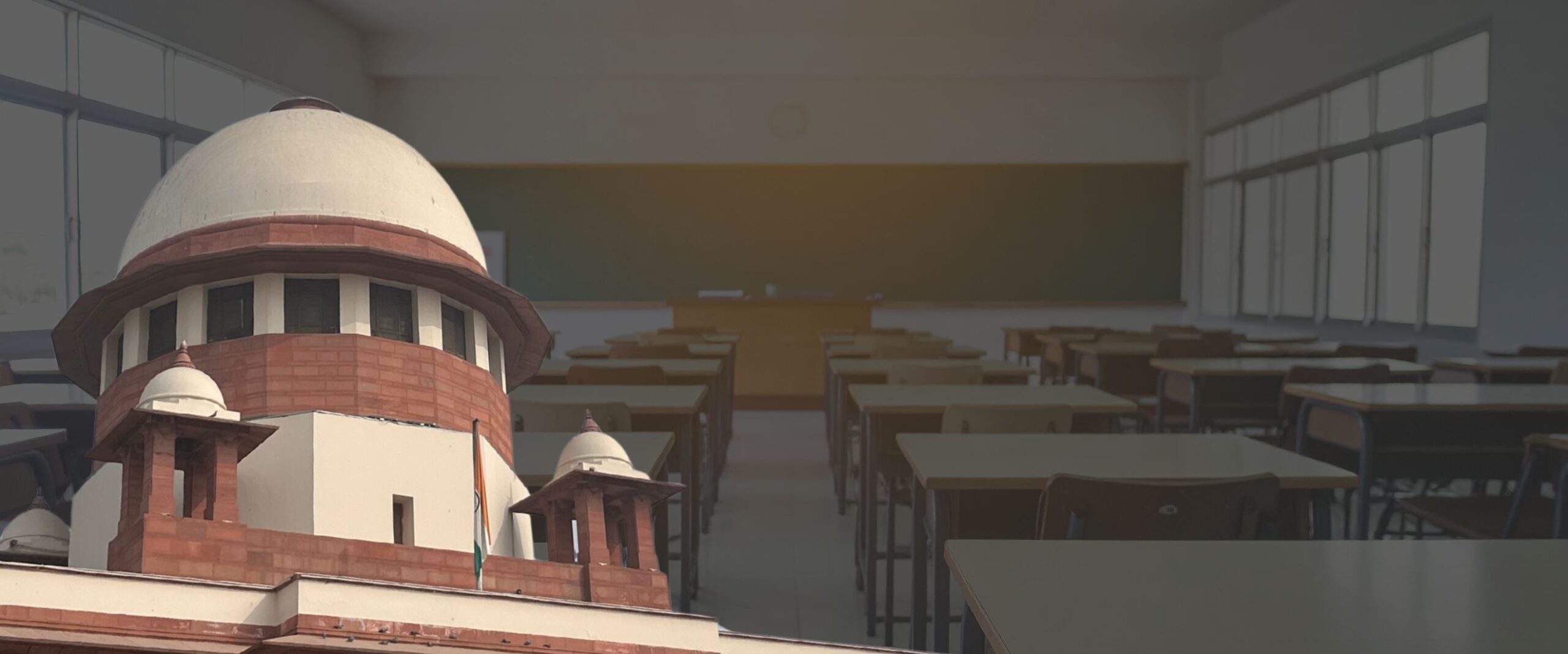
Last year, three separate benches of the Supreme Court took cognisance of the “disturbing pattern” of student suicides in India and sought effective measures to improve mental health within higher education. Last week, it issued a slew of directions to all 60,383 Higher Education Institutions (HEIs) across the country, giving them four months to clear scholarships dues and fill all vacant faculty and administrative positions. What began as a probe into mental health concerns of students has begun to reveal deeper faultlines in the Indian education sector.
Three benches, three steps
On 3 January 2025, a Bench of Justices Surya Kant and Ujjal Bhuyan heard a petition filed by Radhika Vemula and Abeda Tadvi, parents who had lost their children to suicide due to sustained caste-based discrimination in their respective institutions. The Bench directed the University Grants Commission (UGC) to notify new regulations to promote equity and prevent caste discrimination in HEIs. Almost a year later, on 13 January 2026, the UGC notified regulations for the same. The Bench is scheduled to hear the petitioners’ response in two months.
On 24 March 2025, a Bench of Justices J.B. Pardiwala and R. Mahadevan decided on a petition filed by the parents of two students who were found dead in their hostels at IIT Delhi. Both students belonged to Scheduled Castes. After affirming the mandatory requirement for registration of FIR by police in such instances, the Bench went a step further and constituted a National Task Force on Prevention of Suicides in HEIs.
Headed by Justice (retired) S. Ravindra Bhat, the Task Force initiated a series of surveys in August 2025. Despite several deadline extensions, only 3.5 percent of HEIs sent in their response to the survey. The Task Force submitted its interim report to the Court in November. Based on its recommendations, the Court issued a set of nine directions to all HEIs on 15 January 2026.
On 25 July 2025, a Bench of Justices Vikram Nath and Sandeep Mehta decided on a petition filed by the parents of a 17-year-old NEET aspirant who was found dead in Visakhapatnam, Andhra Pradesh. Recognising an urgent need for immediate institutional safeguards pending recommendations of the Task Force, the Bench had laid down 15 binding guidelines for all educational institutions, coaching centres and student-centric environments.
Troubling figures
The latest data from 2022 records over 13,000 suicides each year. NCRB’s Accidental Deaths and Suicides in India (ADSI) Report was relied on by the Court. While the NCRB records a 65 percent increase in student suicides from 2013 to 2023, a report by IC3 notes that the number of student suicides has now surpassed the number of farmer suicides. In its latest Order, the Court reproduced findings of the Task Force to observe that “in the 15-29 age group, suicides are either the second highest cause of death in the case of men or, the highest cause of death in the case of women, with medical reasons falling far behind.”
The Task Force was directed to identify predominant causes, analyse existing regulation and propose necessary reforms. Some of the identified factors are familiar—persistent social and structural inequalities, non-existent or powerless grievance redressal mechanisms and barriers to accessing mental health services. Others however, point to the systemic shortcomings of India’s higher education sector as a whole.
Remarking on the quantitative expansion of higher education in the country, the Court noted an absence of qualitative support. While “increased academic pressure” is used in almost every description of student suicides, the Court broke down the umbrella term to identify “extremely rigid” attendance policies, badly planned academic curriculum, faculty shortages and “excessive reliance on inexperienced guest faculty” as among the reasons for academic stress.
Notably, a parliamentary report released last year revealed that over 28 percent of total sanctioned teaching posts lie vacant across India’s central universities, IITs, NITs, IIMs and IISERs. Of these, over 56 percent are professor-level positions. Nearly 429 of 1100 faculty positions at IIT Madras and 822 of 1600 faculty positions at IIT Kharagpur remain vacant today. In Karnataka alone, six public universities functioned without Vice-Chancellors for more than a year until late 2025.
Beyond academic pressure, the Court observed that financial concerns were a significant contributor to heightened distress among students. While the Task Force identified “extensive delays, inconsistencies and inequities in scholarship disbursement,” as a primary factor, steep fee hikes across public universities have repeatedly pushed students to desperation. Last year, Jamia University and Aligarh Muslim University saw large scale protests against the hikes, while Delhi University recently hiked its fees by over 17% in the last six months.
Clear deadlines
The 15 guidelines released by the Court in July 2025 focused significantly on mental health services and contained vague directions regarding the need for “adequately trained” staff and “heightened mental health protections”. It included measures such as installation of tamper-proof ceiling fans and restricted access to rooftops and balconies. While the Court did identify batch segregation based on academic performance as a potential stressor, it only directed coaching institutes to refrain from doing so “as far as possible.” These guidelines failed to account for the fact that it is not a dearth of regulations but rather non-adherence by educational institutions to existing regulations that lies at the root of the problem.
The January 2026 directions are far more concrete and specific in their approach. Not only have HEIs been given clear deadlines to clear scholarship backlog and fill critical vacancies, the Court has also taken step to improve data on student suicides through a centrally maintained Sample Registration System. It further directed the NCRB to distinguish between school and college students while recording suicide figures. Interestingly, the Court also remarked on the tendency of HEIs to shift the blame by individualising incidents of student suicide and reprimanded institutions for “shirking away” from their “fundamental duties”.
The policy battle over NEET
All three decisions contain observations on the larger context in which the student deaths are situated. Quoting philosophers Jean-Jacques Rousseau and Jiddu Krishnamurti, the Court remarked that education was never confined to mere academic success and noted that the contemporary framework of competitive examinations “subject students to relentless psychological pressure.” Noting that life has become “a series of tests” for most students, the Court acknowledged that suicides only represent the visible tip of the iceberg of student distress which also manifests in high drop-out rates.
These reflections resonate with ongoing policy disputes over access to higher education. One such flashpoint is the ongoing controversy around medical college admissions in Tamil Nadu. While the Supreme Court has gone back and forth on its position regarding NEET-based admissions, Tamil Nadu has repeatedly passed Bills against NEET and recently challenged the President’s refusal to grant assent.
In 2017, as the Centre pushed for the examination to be made compulsory across states, S. Anitha, a student who had scored 1176/1200 in the state board examination, impleaded herself in Supreme Court proceedings against NEET. When the Court upheld the examination, Senior Advocate Nalini Chidambaran (who had appeared for the CBSE) reportedly said that “any further appeal against NEET can only be done to God.” Barely a month later, 17 year old Anitha committed suicide.
When NEET was first introduced in 2010, those in favour of the central examination contended that it would reduce the burden on aspirants and curb high capitation fees in private colleges. Today, tuition fees soar instead and the State of Tamil Nadu contends that NEET examinations are set in a manner that favours urban, CBSE educated students who can afford exorbitant coaching centre fees and repeat attempts at the highly competitive examination.
As the Court is yet to decide on Tamil Nadu’s plea, the question remains: will it remember its own words on the purpose of education? The hope is that this recent slew of acknowledgements and directions indicate its willingness to go beyond the realm of rhetoric.