




Analysis
Supreme Court directs implementation of menstrual health facilities in schools
The Court held that the lack of menstrual health facilities violate principles of substantive equality and cannot be a barrier to education

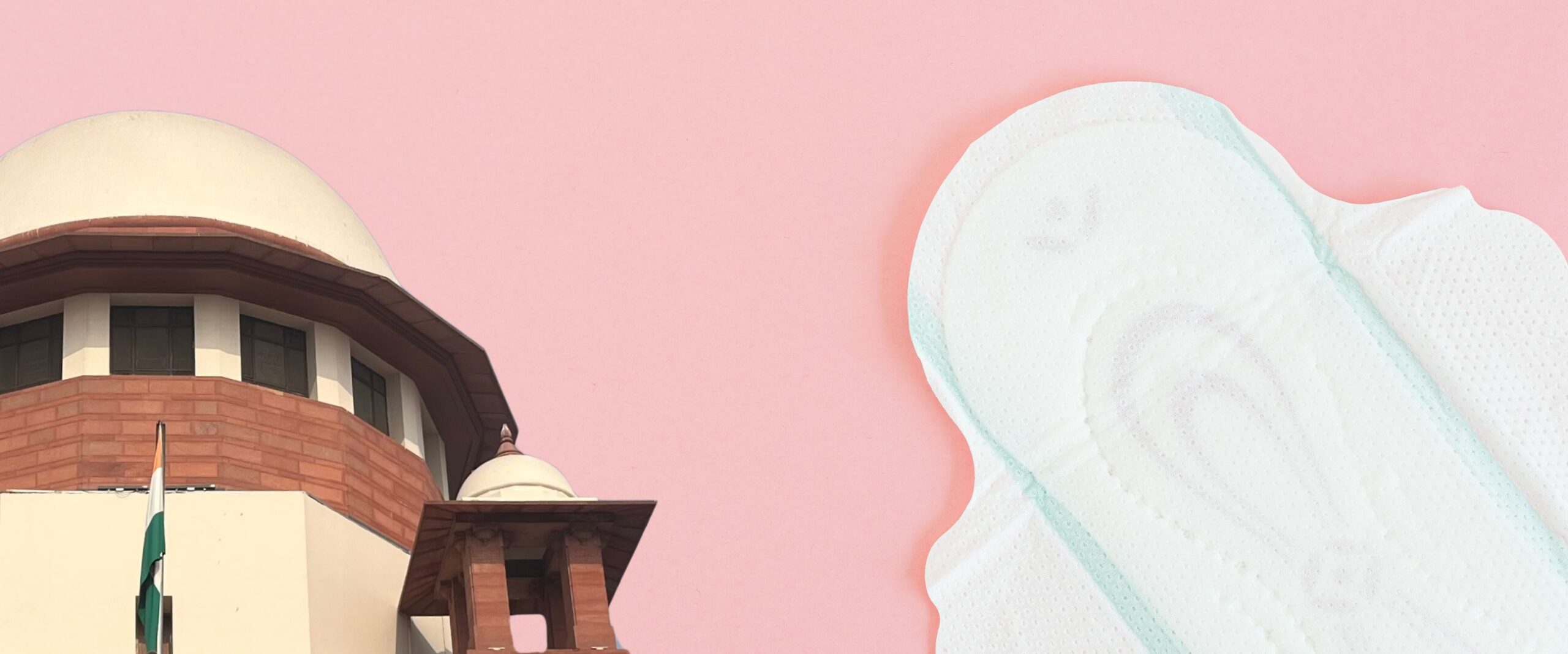
On 30 January 2026, a Bench of Justices J.B. Pardiwala and R. Mahadevan directed the Union government and all states to provide free sanitary napkins and separate toilet facilities for girl students. The writ petition was filed by Dr. Jaya Thakur, a social worker, seeking better recognition of menstrual health and its access to students. The Judgement issued a continuing mandamus to ensure “substantial compliance” of the Court’s directions, citing staggering drop-out rates and absenteeism among menstruating girl students.
An analysis revealed that out of 97,070 adolescent girls in India, only 48 percent were aware of menstruation before menarche—the first menstrual period which occurs after the onset of pubertal growth. A report by Dasara informs that nearly 23 million girls drop out of school each year upon reaching menstruation—largely due to inadequate sanitation, lack of menstrual products and stigma. It’s in this context that the Judgement links inadequate access to menstrual hygiene to the violation of the fundamental right to education under Article 21A and the Right to Education Act, 2009 (RTE). It further grounds this in the doctrine of substantive equality under Article 14 and the recognition of dignified menstrual health as a facet of the right to life under Article 21.
Violation of Article 21 and the RTE
A thread of cases dealing with the right to education reveal that the Court engages with identifying barriers that prevent the exercise of the right.
In Devesh Sharma v Union of India (2023) the Supreme Court held that the RTE mandates that free elementary education should be of good “quality”. The Court quashed the Rajasthan government’s notification which excluded B.Ed. qualified candidates from applying to teaching positions.
In Society for Unaided Private Schools of Rajasthan v Union of India (2012), the Court identified that an important objective of the RTE was the removal of financial barriers which prevented a child from accessing education.
In the present case, the Court linked the access to menstrual facilities to Section 3 of the RTE. The provision states that all children between the age of six to 14 years shall have the right to free and compulsory education. The Judgement noted that this right should not be a formal entitlement, and there should be an “effective and continuous access to education”. The lack of menstrual facilities was identified as the barrier preventing it. Referring to Section 3(2) of the RTE, the Court stated that menstruating students have to bear an additional cost to complete their education, which is barred under the provision. In essence, the absence of sanitary napkins and safe disposal mechanisms compels menstruating girls to miss school for several days each month.
Alongside access to menstrual health facilities, the Bench addressed the lack of toilets in schools. The Court reiterated, as it was held in Deepak Rana v State of Uttarakhand (2016) and Radha Shekhawat v State of Rajasthan (2015), that basic toilet facilities form a part of the fundamental right to free and compulsory education. Further, in State of W.B. v Krishnendu Biswas (2025), it was noted that poor sanitary conditions and inadequate infrastructure contribute significantly to school dropouts, particularly among girls.
Substantive equality and the right to health
The Bench held that the lack of menstruation health facilities impeded the equality of opportunity, thereby, violating the principle of substantive equality. It emphasised that substantive equality can only be achieved when the State adopts measures to address structural inequalities. To summarise, the Bench held that the lack of menstrual hygiene measures converted a biological reality into a structural exclusion.
In 2018, the Court in Common Cause v Union of India recognised dignity as intrinsic and inalienable, continuing beyond mere biological existence. For menstruating girl students, the inaccessibility of menstrual hygiene, subjects them to stigma and violates their bodily autonomy, resulting in drop outs. The Court held that access to menstrual health forms an integral part of the right to dignity and privacy, as held in the case of K.S. Puttaswamy v Union of India (2017).
Directions issued by the Court
The Court issued the following directions to all states and union territories to ensure in every school:
- Functional, gender-segregated toilets with usable water connectivity in every school;
- Free sanitary napkins manufactured in compliance with standards, and have safe, hygienic, and environmentally compliant disposal mechanisms;
Alongside the above, the Court has directed National Council of Educational Research and Training (NCERT) and the State Council of Educational Research and Training (SCERT) to incorporate gender-responsive curricula, and the District Education Officer (DEO) to conduct periodic inspections of schools’ compliance with the above directions.
The Registry was directed to notify the matter after three months, along with compliance reports from the states and union territories, before the same Bench.
Although the petitioner had sought relief only for students between Class 6 to 12, the decision of the Court is not class-specific. Menstruation is a biological event that may occur before elementary school, and the recognition of menstrual hygiene as integral to equality, dignity and access to education is not logically limited to a particular grade.
(Sudhiksha Innanje is an intern at the Supreme Court Observer)
Related articles


Analysis
Tick, tock, takedown
Do the new three-hour digital takedown rules undermine the limits Supreme Court decisions have placed on executive power?

Analysis
Trick or treaty
Last month’s ruling in the Tiger Global case has triggered a scramble to revisit legacy structures in cross-border transactions
Analysis
Regulatory hurdles
Earlier this week, an interventionist Bench placed the UGC’s equity rules in abeyance after flagging gaps and ambiguities
Analysis
Republic of symbolism
India’s 77th Republic Day arrives amid new battles over national symbols. We revisit what the Supreme Court has said on the subject.