





Analysis
The 3-Year Practice Rule: A Timeline
A brief history of how the three-year practice rule has evolved since 1924
1924 - 25
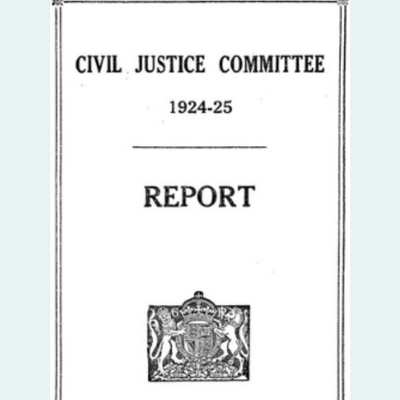
Civil Justice Committee Report
This report was the first to mention the three-year practice rule. Commissioned by the Government of India, the Committee was chaired by British Judge Sir George Rankin and tasked to investigate the manner of case disposal followed by the British-Indian Civil Court system. Featuring testimonies from the Bar and judiciary, the report notes that it was general practice for candidates to complete three years of practice before being appointed as subordinate judges.

1958
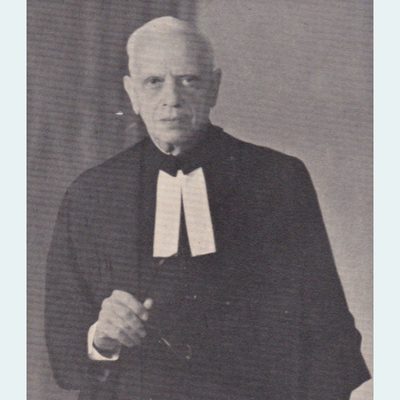
14th Law Commission Report
Chaired by former Attorney General of India, M.C. Setalvad, the 14th Law Commission noted that “It is difficult, if not impossible” to gain any experience or training “worth the name” within three to five years. It observed that candidates are often those who have failed to make a living at the Bar. The report suggested recruitment of young graduates with two years of training instead.
1986
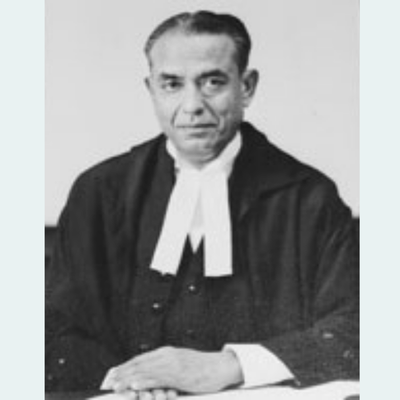
118th Law Commission Report
Chaired by Justice D.A. Desai, the 118th Commission centred its report on the method of appointment to the subordinate judiciary. The report suggested enactment of a law to mandate a degree in law and “if considered advisable”, a minimum practice at bar, not exceeding three years as a minimum eligibility criteria.
1991
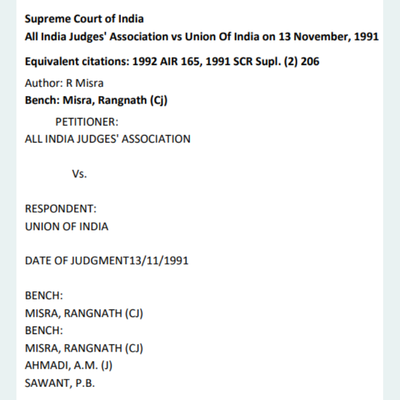
All India Judges Association v Union of India (First Judges Case)
Deciding an Article 32 petition, a three-judge Bench of Chief Justice Ranganath Misra and Justices A.M. Ahmadi and P.B. Sawant held that the recruitment of judges at the lowest rung of the judiciary must be uniform and must include the three-year practice rule.
1993
All India Judges Association v Union of India (Second Judges Case)
Following the 1991 decision, review petitions were filed by the Union and multiple states. The three-judge Bench of Justices Ahmadi and Sawant noted that only some states mandated a three-year practice criteria while others had completely dispensed with the practice rule altogether. The Judgement reiterated the necessity of the three-year criteria and directed the States to prescribe three years’ practice as an essential qualification for recruitment.
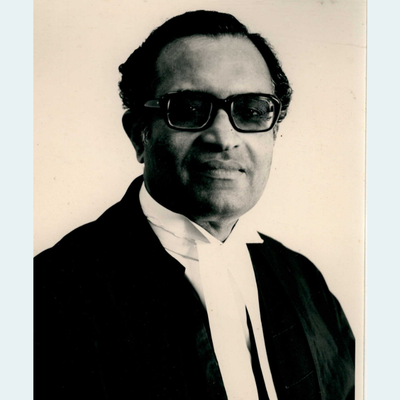
1999
Shetty Commission Report
The First National Judicial Pay Commission, chaired by Justice K.J. Shetty, was constituted in 1996 pursuant to directions issued in the Second Judges case to examine the pay structures of judicial officers in the subordinate judiciary. On qualifications for entry into judicial service, it recommended that the three-year practice rule be done away with.
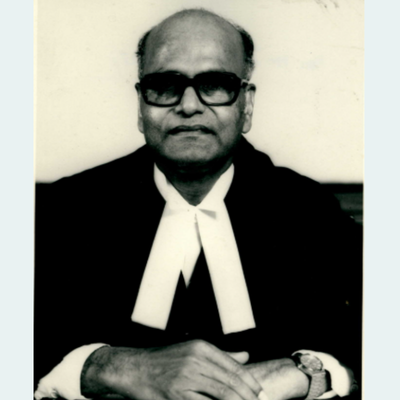
2001
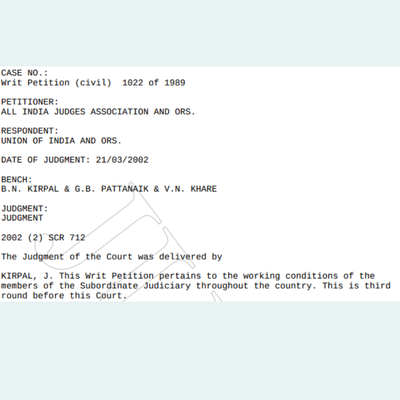
All India Judges Association v Union of India (Third Judges Case)
Examining fresh writ petitions filed by the All India Judges Association, the three-judge Bench of Justices B.N. Kirpal, G.B. Pattanaik and V.N. Khare adopted recommendations of the Shetty Commission. It noted that due to the three-year practice rule, the most qualified candidates were not being attracted to judicial service. The Court revised eligibility and did away with the rule.
2025
All India Judges Association v Union of India
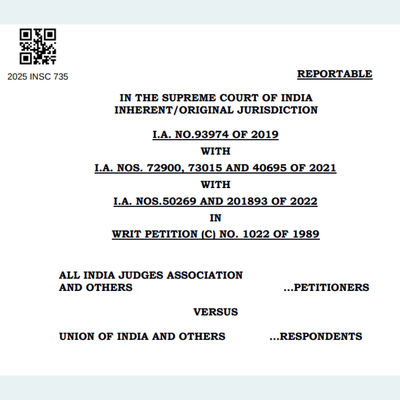
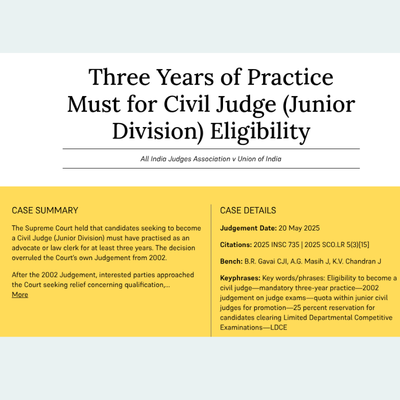
On 20 May 2025, a Bench of CJI B.R. Gavai, and Justices A.G. Masih and K.V. Chandran restored the three-year practice rule. It did so while considering affidavits from the original matter which were submitted by various high courts in 2023 to express their agreement with the criteria.
2026
Bhumika Trust v Union of India
Bhumika Trust, an entity representing several hundred persons with disabilities approached the Supreme Court via a Writ Petition, seeking clarification on the 20 May 2025 judgement. It was tagged with three review petitions and Interlocutory Applications seeking directions that the period spent for higher education in law ought to be included in the three-year practice requirement.
In a 2:1 ratio, the Bench of CJI Surya Kant and Justices A.G. Masih and K.V. Chandran held that the rule has affected an entire generation of law graduates. It directed that candidates applying under notifications between May 2025 and March 2027 would be eligible to apply irrespective of their prior experience. Candidates applying after April 2027 must have one year of experience at the Bar and two years of training at the judicial academy and as law clerks to be eligible.
Related articles

Analysis
SC scales three-year rule for judges down to one
Two years of training and clerkship will count as practice at the Bar, with a transitional arrangement until March 2027
Analysis
Supreme Court hears review petitions challenging three-year practice rule for entry-level judges
The review petitioners proposed training-based alternatives to the three-year Bar practice requirement.

Channel
Progression of Judges in the District Judiciary: Arguments
Since 1989, the All India Judges Association v. Union of India case has remained open before the Supreme Court under a continuing mandamus.

Analysis
From Bar to Bench
In the recent Constitution Bench case, a wider concern about the quality of the district judiciary lies behind the semantic wrangling