


Analysis
“The Chief Justice and I were broadly aligned”: Justice S.K. Kaul on marriage equality
Comparing the structure of High Courts and the Supreme Court in his memoir, Justice Kaul highlights the need for dialogue within the bench

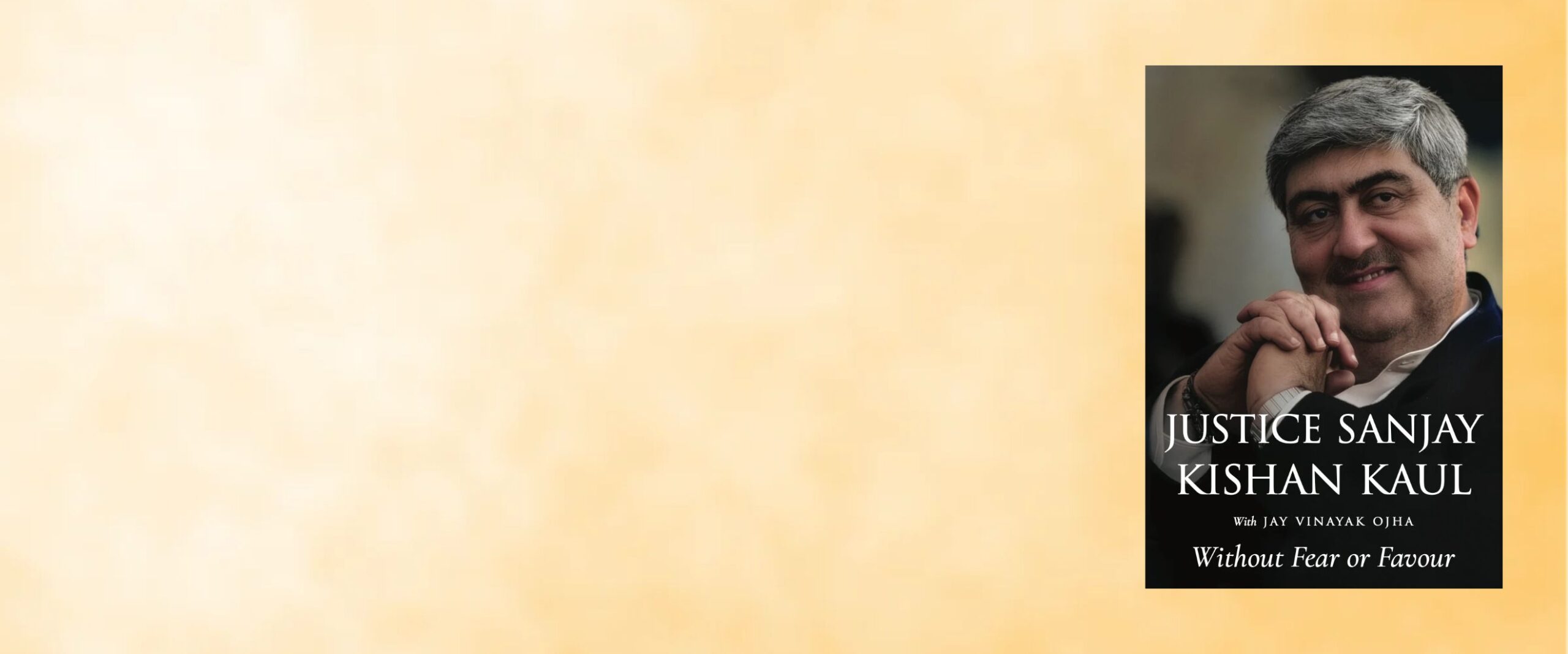
The marriage equality case – Supriyo v. Union of India – was perhaps the most publicly anticipated constitution bench matter of my time and, in its outcome, the most complex and the most personally affecting.
The bench comprised Chief Justice Dhananjay Chandrachud, and I, Justices Ravindra Bhat, Hima Kohli and P.S. Narasimha. The question was whether same-sex couples should have the right to marry under the Special Marriage Act.
I was sympathetic to the petitioners’ cause. When the bench searched for a middle path, I supported civil unions – a framework Justice Chandrachud also developed in his judgment.
The case did not quite unfold as many had anticipated. Following the decriminalization of consensual same-sex acts and a string of judicial victories for the LGBTQ community, many had expected this judgment to be the capstone to the project of LGBTQ equality in India.
Justice Bhat wrote a separate opinion rejecting the petitioners’ claims. His reasoning was detailed and, I must acknowledge, carefully argued. Justice Hima Kohli ultimately signed on to Bhat’s opinion. This tipped the bench from what had been expected as a three–two majority in favour into a three–two majority against. There were people who were surprised that Justice Kohli came down on the side she did. Ultimately, the majority got stuck on the question of relief, and, as many of the petitioners have themselves acknowledged in subsequent appearances, it was a question that they did not give sufficient attention to during the proceedings.
They did not guide the majority to the answer to the all-important question: ‘What do you want us to do?’ Granting relief would have involved navigating a thicket of legislation based on the idea that marriage is only between one man and one woman. The majority remained unconvinced that there was an institutionally appropriate way around this problem.
The composition of that bench had been settled by the chief justice with some input from me, and we thought that there would be, broadly speaking, a meeting of minds. Justice Bhat’s eventual view was of some surprise to me, and Justice Kohli’s concurrence with him more so. Had we found a way to grant some measure of relief, I believe it could have carried. But to give these unions the full status of marriage would have required Parliament to recast a great body of law built upon the premise that marriage is between a man and a woman, and we could not really see a way around this.
The final days before pronouncement were frantic. There was a period of intense activity with furious amendments to opinions on both sides, last-minute additions and revisions as each camp tried to shore up its position. There were times when strong views were put to some members of the bench in private settings about ‘whether the country was ready’.
The chief justice and I had been broadly aligned throughout, and our opinions reflected a shared sympathy for the petitioners, even if we differed on certain of the analytical frameworks. I had drawn on historical and mythological references to same-sex relationships in Indian culture: material from our epics, from temple architecture and from the long history of a civilization that had been far more accepting of sexual diversity than its colonial legal inheritance suggested. I felt the weight of Indian civilization was on the side of inclusion, and that saying so from the bench was an important marker.
I do not know, however, whether the ultimate result could have been avoided. The enquiry under Article 14, which is what the challenge to the Special Marriage Act was based on, runs in two main parts: whether the classification rests on intelligible differentia and whether the differentia bear a rational nexus to the object of the statute. The first gave us no trouble. The Special Marriage Act does create intelligible differentia, no doubt, between men and women and, for example, in its table of prohibited relationships.
The contest was really over whether the object of this differentiation vis-à-vis same-sex couples was legitimate. The majority view read the statute as designed to enable heterosexual marriage alone. To my mind, this conflated the differentia with the object, as it took the classification itself as the object – a sort of circularity.
Giving remedy, though, was the harder task. The entitlements of marriage lie scattered across a spider’s web of statutes built upon the concepts of ‘husband’ and ‘wife’. To read words into the Act would have been an exercise in legislation, not in interpretation, and one could not simply strike down a beneficial statute on which millions of couples had built their lives. Hence, I held in favour of some form of civil union, though I said in terms that the course was exceptional, forced on us by the limited institutional capacity of a court and not by any weakness in the constitutional claim. Benefit-conferring statutes should, meanwhile, be read, so far as language allows, to take such unions in. I added a plea for an anti-discrimination law to treat disadvantage as intersectional and to bind private parties as well as the state.
My main lament was institutional. The judges should have spoken to each other more – and engaged in the kind of open, collegiate dialogue that I was always in favour of but that the Supreme Court’s working structure made difficult. In a High Court, you sit together daily, you discuss in the corridor and you build consensus over cups of tea. The Supreme Court’s architecture – each judge working from home, with opinions exchanged only in their final form – made it too easy for gaps to turn into unbridgeable gulfs. If we had talked more, if we had been more willing to compromise on the precise contours of relief, perhaps the outcome might have been different.
(This is an excerpt from ‘Without Fear or Favour’ published recently by Juggernaut Books)
Related articles

Analysis
Marriage Equality Judgement: Overlooking fundamental rights
Justice Bhat’s refusal to uphold the directions to protect LGBTQIA+ persons seems inconsistent with his own understanding of Part III Rights
Analysis
A Long Road to Nowhere: On the Many Disappointments of the Marriage Equality Case
The Court undertook a selective reading of its own jurisprudence while upholding the constitutionality of the Special Marriage Act
Analysis
Marriage Equality: The courts were not the right forum to approach
The marriage rights of sexual minorities involve a polycentric dispute that falls squarely within the legislative domain
Analysis
Going Beyond Marriage: A Case for Relational Equality
Some of the petitions in the marriage equality case argue for more than the right to marry. They ask for the right to a chosen family.