





Analysis
The week that was
While the Court’s not mandated to intervene in the protests, its response at the first instance shaped the public perception towards it

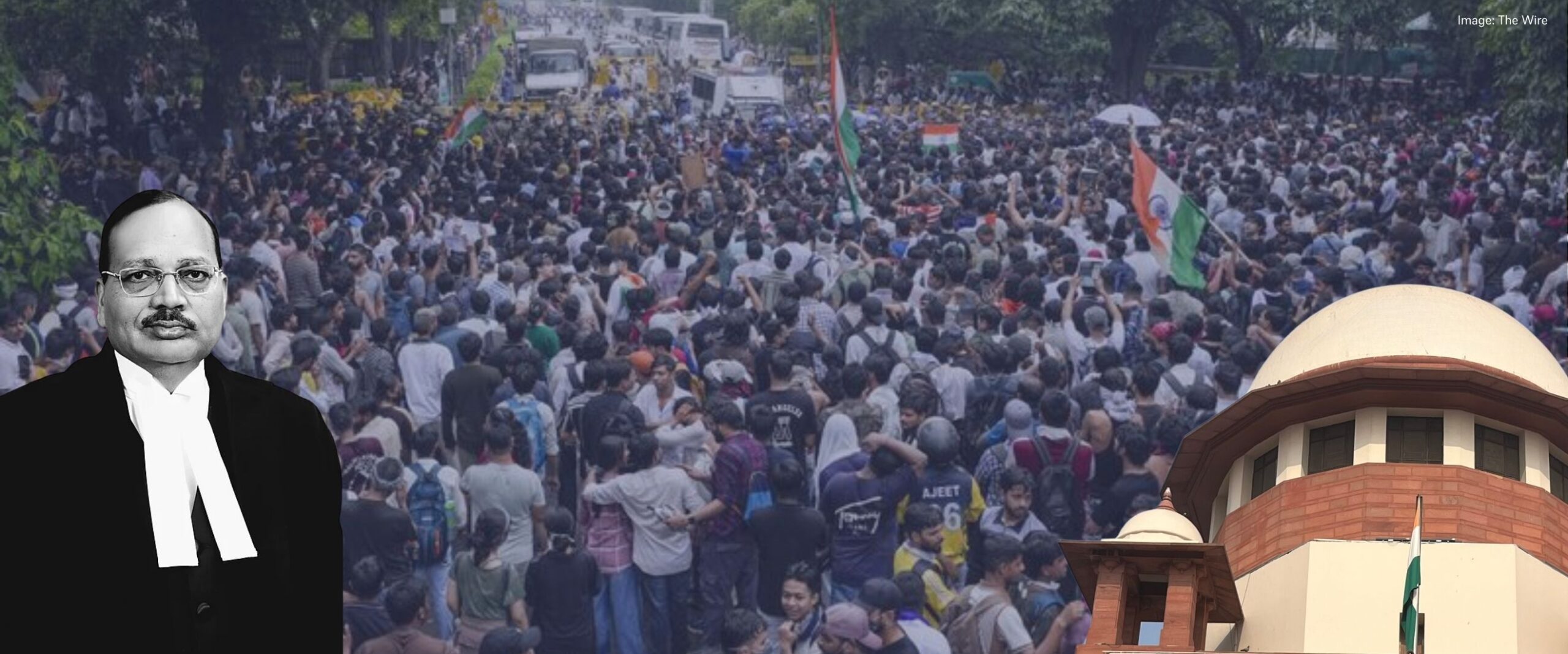
On Wednesday, leading news portals reported that Chief Justice Surya Kant had denied an urgent listing for a ‘petition’ challenging excessive police action against student protestors who participated in Delhi’s recent ‘Sansad Chalo’ march. The reports carried a quote that was hard to miss: “Don’t waste our time. We are not interested in videos, we don’t have time to watch”—a remark that drew significant criticism online.
The CJI later clarified that the media falsely reported his refusal to list the matter, explaining that no formal petition had been filed, making an urgent listing procedurally impossible. Later, on Friday, a Bench led by the Chief Justice agreed to list a petition alleging police excesses against students on Monday. This is not the first time the CJI has had to explain his off-the-cuff remarks following a media storm; earlier comments regarding “cockroaches” and “parasites”—in context of those holding fake degress—resulted in a youth group that initiated the protests which now demand Supreme Court intervention.
Public scrutiny of the judiciary has soared in the era of live-tweeting and live-streaming Court proceedings. In our previous newsletter, we asked: how long would it be before content creators began stitching together out-of-context clips, trading accuracy for likes and shares? An interim order by the Supreme Court on Friday directly addresses that concern, ruling that no audio or video recording of proceedings can be shared or uploaded without the Registrar’s prior permission. The Order came in a petition alleging that viral clippings from proceedings have eroded public confidence. The order arrives at a time when public trust in the Court faces strain from the news cycle and social media coverage.
The CJI’s remarks came amid massive protests organised by the Cockroach Janata Party (CJP)— a group formed in direct response to his earlier remarks. Videos showing alleged police brutality on student protestors angered many who participated during demonstrations over the NEET-UG 2026 paper leak, demanding not only the resignation of former Education Minister Dharmendra Pradhan, but also a court-monitored CBI probe, the complete scrapping of the National Testing Agency (NTA), and a systemic overhaul of national entrance exams.
The CJI’s refusal to view came when counsel requested the Bench to watch footage of police violence, perhaps hoping to prompt suo moto intervention. Not long ago, the Supreme Court had taken cognisance of the R.G. Kar and Lakhimpur Kheri cases, even live streaming the R.G. Kar hearings “in public interest”, as doctors took to the streets in protest over the rape and murder of a woman doctor in the Kolkata hospital. Taking the matter by its own motion was deemed necessary to restore public confidence. Pointing towards strict filing rules here creates an awkward double standard: which public crises merit immediate intervention, and which ones get passed?
The fallout from the ‘Sansad Chalo’ protest remains largely unchecked while we await the Court’s first formal intervention in the matter. While the Delhi High Court did order the preservation of all CCTV footage from the protest, it listed the hearing next in September. Meanwhile, facts remain fiercely disputed: the Delhi police denied using pellet guns, yet protesters told the media that they required surgeries for pellet injuries. Resolving this credibility contest urgently requires a neutral judicial forum.
Splitting hairs over procedures misses the larger point. While the Court is not obligated to step into every political row, this movement demands a different response. Some may argue that an urgent suo moto intervention by the Court was necessary as the raw sensitivities of the past week demand a public-facing institution to extend a reassuring hand. It is unlikely the Court will live-stream Monday’s hearing. Yet, while live-streaming of proceedings carries the risk of remarks being taken out of context, it also provides the Court a vital tool to maintain transparency and manage its reputation. While off-the-cuff remarks by judges may be clarified, debated, criticised, or disseminated, it is always the Court’s judicial opinion that determines its legitimacy.
This article was first featured in SCO’s Weekly newsletter. Sign up now!
Related articles

Analysis
Trending: #SupremeCourt
Two years after the top court began livestreaming hearings, concerns about institutional posturing and performative justice remain relevant
Analysis
The NEET-UG lacks institutional memory
The Union’s assurance that the Prime Minister was supervising the re-test does not answer questions on institutional failure
Analysis
Kolkata rape and murder case | Women doctors want equal opportunities, not concessions, says Supreme Court
Junior doctors informed the bench that they would return to work if “confidence-building” measures are undertaken by the state government
Analysis
Supreme Court confronts student suicide “epidemic”
After the vague mental-health guidelines of July 2025, the SC’s latest directions to educational institutions are more sharply focused