





Shree Chandrashekhar

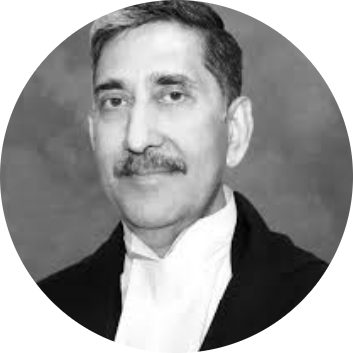
Shree Chandrashekhar
Sitting Judge of the Supreme Court of India
Assumed Office2nd Jun, 2026
Retires On24th May, 2030
Previously
Chief Justice of Bombay High Court 5 September 2025- 1 June 2026
Judge at Bombay High Court 21 July 2025- 4 September 2025
Judge at Rajasthan High Court5 July 2024- 20 July 2025
Acting Chief Justice of Jharkhand High Court29 December 2023- 4 July 2024
Permanent Judge of Jharkhand High Court27 June 2014- 28 December 2023
Additional Judge of Jharkhand High Court17 January 2013- 26 June 2014
Enrollment 1993
Profile
Early Life and Education
Justice Shree Chandrashekhar was born in Ranchi, Jharkhand, on 25 May 1965. In 1993, he completed his LL.B from Campus Law Centre, University of Delhi, and got enrolled as an Advocate with the Delhi State Bar Council on 9 December 1993.
Career as a Lawyer
Justice Chandrashekhar began his practice in Delhi, appearing in both Criminal and Civil matters. During his career as an advocate, he appeared in about 3500 cases, before the Supreme Court of India. There are about 140 reported judgements of the Supreme Court in which he appeared as counsel.
In the course of his 19-year-long practice, he represented various parties, including All India Council for Technical Education, the State of Jharkhand, Bihar State Housing Board, Bihar State Pollution Control Board, Jharkhand State Electricity Board, Indian Council of Agricultural Research and various other Corporations/Institutes.
According to his official biography, he was also retained as counsel for private companies.
Career as a Judge
On 17 January 2013, Justice Chandrashekhar was appointed as an additional judge of the Jharkhand High Court. He became a permanent judge at the same High Court on 27 June 2014. He was appointed as the Acting Chief Justice of the Jharkhand High Court on 29 December 2023.
In 2024, he was transferred to the Rajasthan High Court, where he took oath on 5 July 2024. He was then transferred to the Bombay High Court on 21 July 2025.
Justice Chandrashekhar served as the Acting Chief Justice of the Bombay High Court after the elevation of Justice Alok Aradhe to the Supreme Court. Subsequently, on 5 September 2025, he was appointed as the 49th Chief Justice of the Bombay High Court.
Importantly, during his tenure as the Chief Justice of Bombay High Court, Justice Chandrashekhar was part of the Parliamentary Judges Inquiry Committee constituted to examine allegations against Justice Yashwant Varma.
On 27 May 2026, the Supreme Court Collegium recommended the appointment of Justice Chandrashekhar to the Supreme Court. The Department of Justice notified his appointment on 1 June. He took oath alongside four other judges on 2 June.
Justice Chandrashekhar is expected to serve a tenure of 3 years and 11 months. He will retire on 24 May 2030.
Notable Judgements
In Rajendra Choudhary v State of Rajasthan (2025), a Division Bench of the Rajasthan High Court of Justices Shree Chandrashekhar and Sandeep Shah dismissed a petition challenging the establishment of a sewage treatment plant (“STP”). The petitioners contended that the STP, abutting a Gram Nyayalaya near Jodhpur, could cause deleterious implications on the health of the lawyers and Nyayalaya staff. The High Court held that the setting up of an STP was an executive function and that it was “not for the Court to decide. . . which site would be more suitable for setting up the sewage treatment plant.”
In State of Rajasthan v Sunita, (2024) a Division Bench of Justice Chandrashekhar and Justice Kuldeep Mathur of the Rajasthan High Court rejected a batch of appeals filed by the State government challenging a Single Judge decision favouring meritorious disabled nursing candidates. The state government had disqualified the nursing candidates on the ground that they did not qualify within the “40% or more disability in one leg” category due to deformities in other body parts. The nursing candidates had scored higher marks. The Division Bench held that: “if a person is suffering from disability to a certain extent in other leg or body part, the same by any stretch of imagination cannot be construed to mean that the candidate shall not be fit to perform his/her duty.”
In Rubabuddin Shaikh v Central Bureau of Investigation (2026), a Division Bench led by then Chief Justice Chandrashekhar of Bombay High Court upheld the 2018 special court judgement acquitting all 22 accused, including 21 police officers, in the alleged fake encounter killings of Sohrabuddin Shaikh, his wife Kauser Bi, and Tulsiram Prajapati. The appeals filed by Sohrabuddin’s brothers. The CBI had accepted the decision of the trial court and decided not to appeal. The High Court held that the trial court was correct in finding that the prosecution failed to prove the alleged abduction, illegal detention and fake encounters beyond a reasonable doubt. It found the trial court’s conclusions reasonable and supported by the evidence.
In Rajendra Chaudhary v Union of India, (2026) a Division Bench of Chief Justice Chandrashekhar discharged the last four remaining accused in the Malegaon Blast case. It quashed and set aside the order by which a Special Court had framed charges against them. The accused persons were alleged to be involved in the blasts occurring in the vicinity of the Hamidia Masjid in Malegaon on 8 September 2006, just after the Friday prayers. The High Court found that the evidence and material collected by the prosecution, even if truthful and admissible, cannot be considered as incriminating material against the appellants.
Chief Justice Chandrashekhar also led the Division Bench in Shekhar Kakasaheb Jagtap v State of Maharashtra (2026) that quashed the FIRs filed against former Mumbai Police Commissioner and Maharashtra DGP Sanjay Pandey and Advocate Shekhar Jagtap. The FIRs stemmed from allegations by businessman Sanjay Punamiya that Pandey had unlawfully reopened a criminal case against him and pressured him to make statements against Maharashtra Chief Minister Devendra Fadnavis and Deputy Chief Minister Eknath Shinde. Punamiya also alleged that Jagtap forged documents and acted as a Special Public Prosecutor without a valid appointment.