





Analysis
Bench or bias?
From recusal pleas to judicial appointments, litigants and governments have reasons to care who sits on the bench.

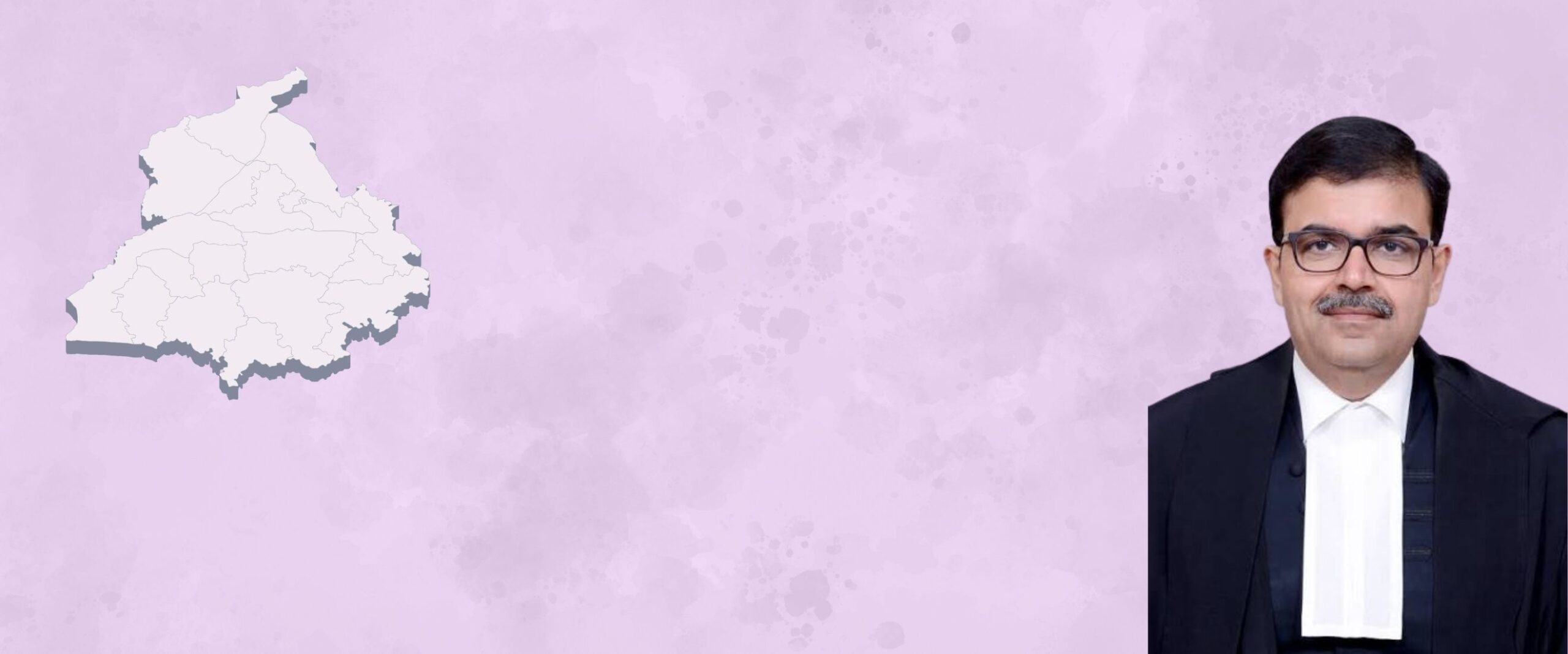
On Monday, Justice Ashwani Kumar Mishra was appointed as Chief Justice of the Punjab and Haryana High Court. The Punjab Chief Minister from the ruling AAP government skipped the swearing-in ceremony. A day prior, the Punjab Cabinet had resolved that Chief Justice Mishra’s appointment and swearing-in should be put on hold, arguing that his appointment was notified without consulting the state government.
Article 217 states that the Chief Justice of a High Court is confirmed after consultation with the CJI and the Governor. Punjab claims that the Union had “hurriedly notified the appointment without waiting for state’s response”. The Union claims that Punjab had sufficient time to send its views. The Collegium had recommended Justice Mishra’s appointment on 6 August, and the letter seeking Punjab’s view was received by the government on 12 August. While Haryana agreed, Punjab was yet to respond. A statement following the resolution claims that the state government and the Governor do not have a prescribed time limit to respond to recommendations for a High Court Chief Justice.
The timing has attracted attention. A month ago, a bench headed by Justice Mishra had directed Punjab to clear approximately ₹14,191 crores in dearness allowance within a fortnight. The Court further directed that the state should not incur “unproductive expenditure”, including large-scale advertising. Punjab has appealed to the Supreme Court, arguing that it is impossible to pay such an amount in so short a time. While the Punjab government has not stated that the order prompted the objection, the coincidence does raise a larger question that is hard to ignore: Why should a government care who becomes a judge?
The answer is obvious: governments are among the most frequent litigants before the courts, and have greater incentives to influence judicial appointments. The concern over executive influence was at the heart of the Judges’ Cases. In the First Judges (1981) case, the Supreme Court held that “consultation” cannot be equated with “concurrence”, holding that the final decision remained with the executive. This view was reconsidered in the Second Judges (1993) case when the Court rejected executive primacy in judicial appointments and held that “consultation” had to be understood in the context of protecting the independence of the judiciary. Punjab says it was cut out of that consultation. In the Third Judges Case (1998), the Supreme Court acknowledged that consultees may sometimes have better information about a candidate’s “antecedents and personal character” and that their views deserve “due weight”.
Punjab’s challenge adds a federal dimension to the executive-judiciary tussle, in which the central machinery has cleared a name which the state machinery does not want to. So far, the Punjab government has not voiced specific concerns regarding Justice Mishra. The controversy might well have blown over had the government stated its grievances. Silence on recommendations risks delay in appointments. While it does not necessarily result in the rejection of a name, it stalls it. Former Judge Zak Yacoob, of the South African Constitutional Court, has argued in the Indian Express that “a transparent process enables public and professional confidence in the system” and that, because judges “perform a public function”, “the public must have confidence in the judiciary”.
While Punjab’s objection is not tied to any particular case, the judges appointed through this process will hear disputes involving the state government. For instance, in 2021, Mamata Banerjee objected to Justice Kausik Chanda’s confirmation as a permanent judge of the Calcutta High Court. Banerjee had previously sought his recusal when her election petition challenging the election results in Nandigram was assigned to his bench. Justice Chanda had said that the petitioner “cannot seek recusal based upon her own consent or objection with regard to the appointment of a Judge”, warning against “Bench hunting”. Though he ultimately recused himself to prevent an “unwarranted squabble”.
It is too early to determine whether the Punjab government’s concern over the appointment will linger and spill into adjudication, leading to a new batch of pleas seeking recusals or challenges against the allocation of cases to benches where the state government is a party. Has the episode reached a logical conclusion, or is there more to come?
This article was first featured in SCO’s Weekly newsletter. Sign up now!
Related articles

Analysis
A “distinguished” anticipation
Discourse on the appointment of distinguished jurists brought back conversations on a balanced judiciary
Analysis
Raising a complaint
Justice Sandeep Mehta’s leaked letters present a unique opportunity for the Supreme Court to reassure public faith in itself
Analysis
Speaking out
The NALSAR row shows how judicial outreach increasingly invites dialogue, dissent and demands for transparency
Analysis
Law, history, and ideas of India
79 years into India’s independence from the British Raj, “Swadeshi jurisprudence” gains traction in courts and colleges