





Analysis
Raising a complaint
Justice Sandeep Mehta’s leaked letters present a unique opportunity for the Supreme Court to reassure public faith in itself

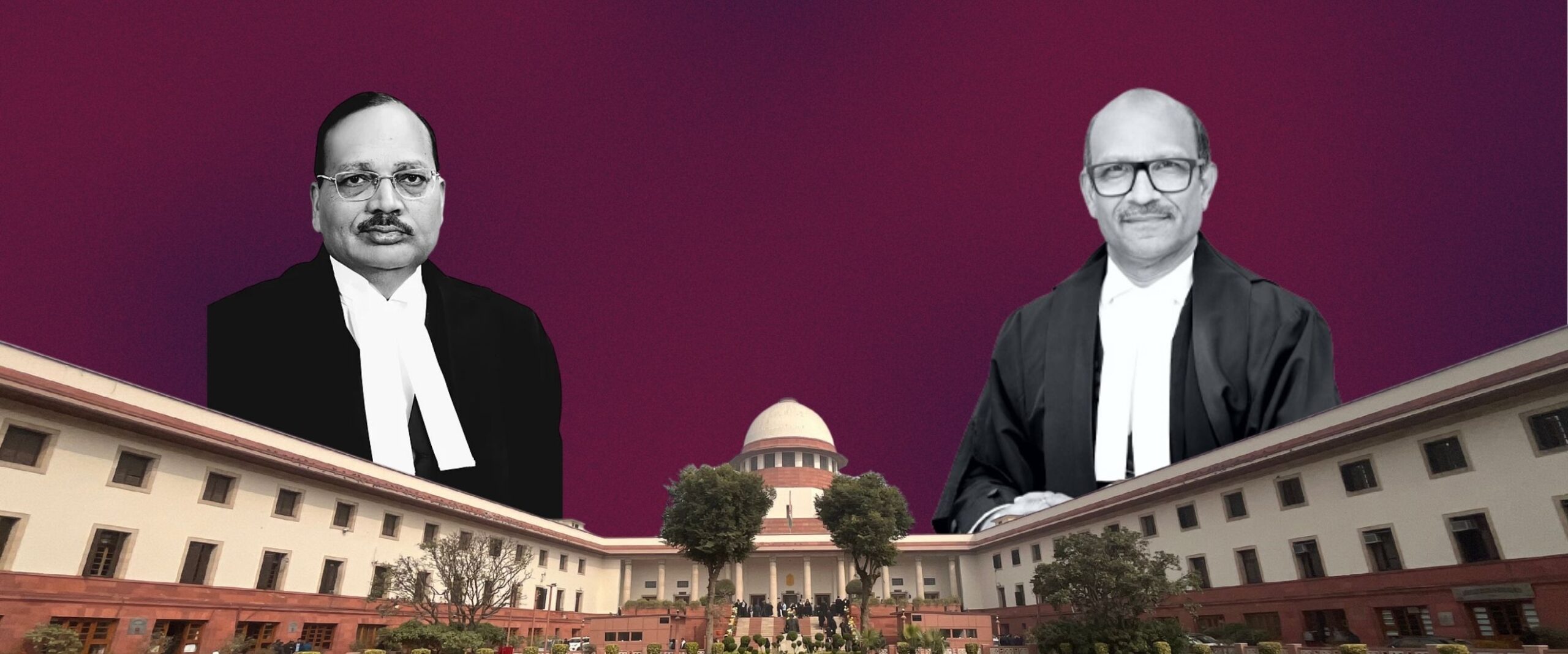
This week, reports emerged that Justice Sandeep Mehta of the Supreme Court addressed three letters to Chief Justice Surya Kant regarding a “grim and disturbing scenario” in the Rajasthan High Court. Justice Mehta claimed that “clear evidence” points to “favouritism” and malpractices by Acting Chief Justice (ACJ) Sanjeev Prakash Sharma, adding that the CJI has “ignored” his appeals seeking the ACJ’s transfer.
Justice Mehta, hailing from the Rajasthan High Court, reportedly received grievances from judges and advocates regarding ACJ Sharma’s poor administrative decisions, malpractices in rostering, and misbehaviour towards other sitting judges. Appointed as a judge to the Rajasthan High Court in 2016, Justice Sharma was transferred to Patna in 2022. His request for repatriation was rejected in 2023, resulting in his transfer to the Punjab and Haryana High Court. In May 2025, the Supreme Court Collegium led by former CJI B.R. Gavai recommended his return to Rajasthan, where he has remained since. Justice Mehta alleges that maladministration began once Justice Sharma took over as ACJ in September 2025. In the absence of a Collegium recommendation for a permanent Chief Justice, ACJ Sharma is likely to remain in charge until his retirement on 25 September 2026.
Reportedly, a recent press release from the top court states that the CJI and Collegium members have taken note of the concerns and that ACJ Sharma must be given a fair opportunity to respond. The release cautions against determination of individual complaints through competing media claims. Notably, the media has only published selected extracts of the letters. ACJ Sharma is yet to respond publicly, and there is no record of Supreme Court Justice Vijay Bishnoi, also hailing from Rajasthan, having received similar complaints.
This is not the first time that discourse within the Court has been leaked to the media. In 2024, sitting judges of the Court anonymously critiqued former CJI D.Y. Chandrachud’s conduct in full-court meetings and in 2025, the Hindustan Times gained access to Justice B.V. Nagarathna’s Collegium dissent over Justice V. M. Pancholi’s elevation. While the media leaks could be a symptom of failing internal mechanisms, the existence of dissent and correspondence within the top judiciary could also be read as evidence of active and healthy functioning of the Court.
Afterall, addressing written communications to the CJI is not an unusual practice. Justice A.S. Oka told the Supreme Court Observer that approaching the Chief Justice with suggestions is entirely proper. “What is unusual is that it leaked in the media”, he said while observing that leaks are “easy” in today’s day and age as documents move through multiple administrative hands. Adding that Justice Mehta is a “disciplined judge”, Justice Oka noted that there must be “compelling reasons” for him to write not one but three letters to the CJI. In his view, the “real worry” is this: why was ACJ Sharma repatriated to Rajasthan in the first place, and why has the post of Chief Justice been left vacant for so long?
With ACJ Sharma’s retirement fast approaching, a workable solution at this stage remains doubtful. In February 2026, the Collegium adopted a policy whereby a new Chief Justice should be appointed at least two months before a vacancy arises. The Collegium has already missed this two month window. With partial details of Justice Mehta’s letters already in the public domain, this is an opportunity for the Court to be completely transparent with its handling of the allegations; and reassure public faith in the institution.
In 2018, four senior judges gathered on the lawns of the Supreme Court to address the media directly about rostering decisions under then-Chief Justice Dipak Misra. That episode resulted in the publication of the official Supreme Court Judges Roster. The event remains a watershed moment as the first instance of sitting Supreme Court judges publicly airing administrative grievances while engaging with questions from the media. Today, internal friction persists, but it primarily surfaces through anonymous quotes and media leaks, leaving little room for public dialogue. Publication of the letters and details of the Collegium’s response to them is prudent considering that the Collegium itself is under question for delaying the recommendation of a regular Chief Justice in Rajasthan since 2025. Such an approach would replace much of the speculation that has arisen from this controversy.
Related articles

Analysis
A crack in the Collegium’s wall of secrecy
Justice Nagarathna’s reported dissent against a recent recommendation highlights the lack of transparency around Collegium deliberations
Analysis
What’s new in the Supreme Court’s latest transparency initiative?
We examine whether the documents released by the Court earlier this week reveal information that was not already in the public domain
Analysis
Chief-in-waiting: New door opened by Collegium in its Justice Bagchi recommendation
If ‘in-line-to-be-CJI’ is now a relevant consideration for SC elevation, we examine how the Collegium might have picked Justice Bagchi
Analysis
How the Emergency birthed the Collegium system
The Emergency left deep scars on the judiciary—it took until the 1990s for the Supreme Court to acknowledge and respond to those compromises