





Analysis
Bhutan: Constitutional guarantees come up against resource constraints
Declining press freedom and two recent incidents highlight how institutional capacity continues to lag behind constitutional aspiration

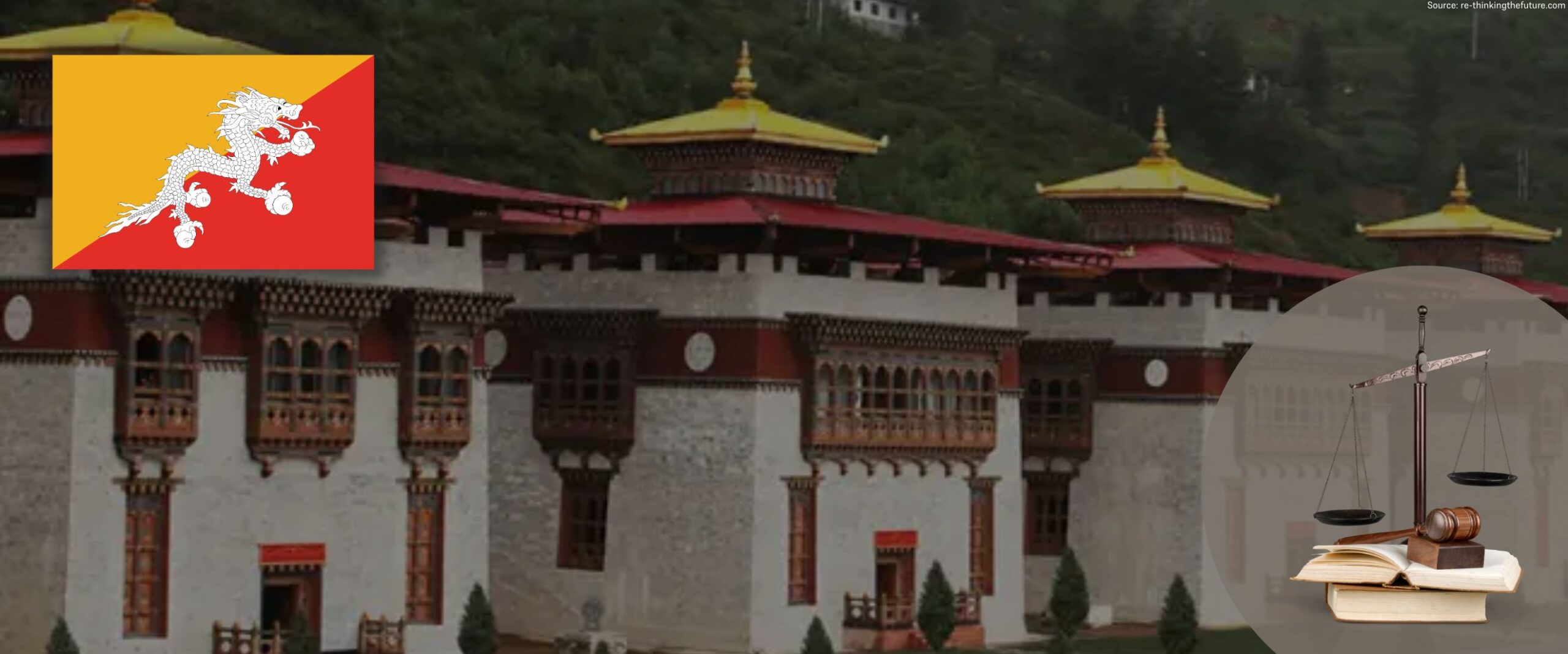
Bhutan’s Constitution, adopted in 2008 following a royal initiative, is among the most unique in South Asia. It provides for a vote of no confidence against the monarch, mandates abdication at the age of 65, expressly separates powers, and guarantees a broad catalogue of fundamental rights, including freedom of speech and of the press. It also entrenches environmental and socio-economic commitments—requiring 60 percent forest cover in perpetuity, universal free healthcare and education, and strict disqualifications from electoral participation even for minor criminal offences.
The events of 2025 unfolded against this architecture and revealed the strains involved in translating legal guarantees into institutional practice. While the year saw progress in areas such as gender equality legislation, it was also marked by declining press freedom and two deaths—one in police custody and another in a public hospital—that raised serious questions about accountability, capacity and access to rights. Together, these developments underscore a persistent challenge: the gap between expansive guarantees on paper and the State’s ability to realise them in practice.
GNH and the GMC
Last year saw a flurry of developments around the proposed Gelephu Mindfulness City (GMC), an economic zone that aims to blend “traditional Bhutanese values of spirituality and harmony with nature” with “innovation, technology and economic vibrancy.” The initiative has been described by Prime Minister Tshering Tsobgay as “Gross National Happiness 2.0”, an attempt to apply Bhutan’s unique and much-publicised sustainable development philosophy in a “modern urban environment.”
The GMC was established under the GMC Royal Charter of 2024, issued pursuant to Article 2, Section 16(e) of the Constitution, which empowers the King to exercise residual authority over “matters which are not provided for under this Constitution or other laws.” As special administrative zones are not expressly contemplated by the constitutional text, this power was used to constitute the GMC.
GMC, which is part of Bhutan’s effort to become a ‘10x economy’ by 2040, occupies a space at the convergence of several constitutional domains, including equality and non-discrimination in access to opportunities, environmental stewardship, decentralisation and local participation, as well as economic rights within a dynamically evolving labour market.
To attract investor confidence, the GMC has gone down the ‘one country, two systems’ model, and has already adapted 18 Singaporean laws and 10 Abu Dhabi Global Market regulations. In the coming years, GMC is likely to raise questions around how constitutional protections affect or constrain large-scale development projects within a sensitive ecosystem.
The law catches up
In June 2025, the Parliament amended the Marriage Act of Bhutan 1980 to set a uniform minimum age for marriage—18 years for both men and women. Previously, the Act set the minimum age for women at 16 years, creating a statutory inconsistency that persisted for 45 years. This disparity conflicted with Bhutan’s international human rights obligations and the constitutional guarantee of non-discrimination under Article 7. While a High Court order had ensured parity in practice, the adjustment of statutory language reflects a long-awaited reconciliation.
Speaking out
Matters were bleaker on the press freedom front. The country slipped five further places to 152 (out of 180 countries) in the Reporters Without Borders World Press Freedom Index. The publication identified self-censorship as a primary obstacle, observing that journalists often refrain from addressing sensitive subjects due to concerns about disrupting the social order or being viewed as disloyal. The Minister of Information, Commerce and Employment, on his part, has raised concerns regarding the methodology of the index.
The discourse around the reliability of the index has nevertheless brought to light a fact that is hardly contested: it is not easy to access information held by the government. In informal discussions, the mainstream media has pointed out that the Standard Operating Procedures—initially designed to ease information flow—have come to function as an additional barrier to obtaining information from State agencies. At the same time, Bhutanese media confronts internal constraints of its own, notably an entrenched culture of deference and persistent questions about professionalism and ethics.
A man in a van
An unprecedented event occurred on 14 November 2025. A man suspected of a drug offence died after a fall, while being transported in a van by the Royal Bhutan Police (RBP). The RBP’s explanation is that he opened the rear door and attempted to escape, but that still doesn’t satisfactorily explain why the suspect was unaccompanied in a rear compartment—especially given his existing criminal record—and how he was able to break open a securely bolted door in a jail van.
While the RBP has acknowledged procedural lapses, members of the suspect’s family allege that he could have been tortured in the detention centre and that the RBP may have staged the event to escape accountability. Article 7(17) of the Constitution prohibits any form of torture and cruel, inhuman or degrading treatment. The incident calls for enquiries into the safety of individuals in custody, the standards governing the application of reasonable force and the extent of the State’s duty of care.
The medical examination did not conclusively determine whether the fatal injuries were solely the result of the fall or if antecedent events played a role. RBP issued a press release stating that it had commenced an internal inquiry and has pledged to submit evidence and eyewitness accounts to the court. A possible civil suit, the first of its kind, could lie against the RBP under Bhutan’s newly enacted Civil Liability Act 2023.
A death in a hospital
Article 9(21) of the Constitution mandates the State to provide free access to essential public health services. Bhutan’s entire healthcare system is publicly run, and even if a patient is referred to another country, the expenses are borne by the government. In recent years, however, the country has seen an exodus of doctors and other medical professionals to greener pastures like Australia or Europe, sparking discussion on the sustainability of Bhutan’s healthcare model.
The conversation has intensified following a tragic incident in November: the death of a five-year-old girl. The family alleged that it was caused by the absence of a doctor; the Ministry of Health says that the reason was severe pneumonia, and that the child was in a critical state beyond doctors’ control. A review of the country’s healthcare system by the National Council has highlighted the extent of cracks in the system.
From idealism to realism
The deaths of a suspect and a young girl could come across as isolated incidents, but it is telling that they have sparked a wider conversation around the translation of constitutional rights in Bhutan’s new democracy. Going forward, the disconnect between legal guarantees and the ability or willingness of institutions to uphold rights will continue to be a talking point in Bhutan.
Despite the challenges, Bhutan exhibits several constitutional advantages and opportunities. Over the course of four electoral cycles, several political figures—including cabinet ministers and a Speaker of Parliament—have been convicted of criminal charges and removed from their positions. This has not been a consistent trend in neighbouring countries.
Further, Bhutan has not yet banned or restricted any social media channels (including large groups of anonymous accounts), with the effect that citizens still have an outlet to voice their views, and State authorities still fear backlash and criticism. One hopes that this sense of responsibility will continue to hold as Bhutan moves towards the third decade of the Constitution’s operation.
Looking ahead, the future of Bhutanese constitutionalism will depend on whether its moral-ethical vision of governance—rooted in Buddhist compassion, balance and non-violence—can coexist with institutional competence and bureaucratic efficiency. The next decade may require a move from idealism to realism, and ensuring that the framework of rights and duties embedded in the Buddhist ethos is aligned to resources, systems and political will.
Bhutan’s Constitution is an unusual experiment: democratisation from above, ethical governance rooted in Buddhist thought and expansive socio-economic commitments. If these aspirations can be reconciled with institutional limits, Bhutan’s small but principled democracy may offer a powerful model of culturally grounded constitutionalism in an era when rules-based orders are increasingly under strain.
Sonam Tshering is an Associate Professor at Jigme Singye Wangchuck School of Law. He is certified by the Bar Council of Bhutan to practise in all courts in Bhutan. He writes a legal column for Bhutan’s oldest and largest newspaper. He has previously worked as a broadcast journalist, legal officer, public prosecutor and Parliamentary Committee Secretary. He has been a delegate of the Royal Government at major international forums, including the Conference of Parties (COP) on Climate Change and Tobacco.
Related articles

Analysis
Bangladesh: A year of unprecedented constitutional upheaval
The referendum on the July Charter and a Supreme Court decision on caretaker governments raise questions of legality and legitimacy
75 Years of SC Articles
Justice In Circles
How architecture, history, and tradition inform the duality of Indian courts
75 Years of SC Articles
The First Eight
As part of our special series on the Supreme Court’s 75th anniversary, we take a brief look at the lives and times of the first eight judges
75 Years of SC Articles
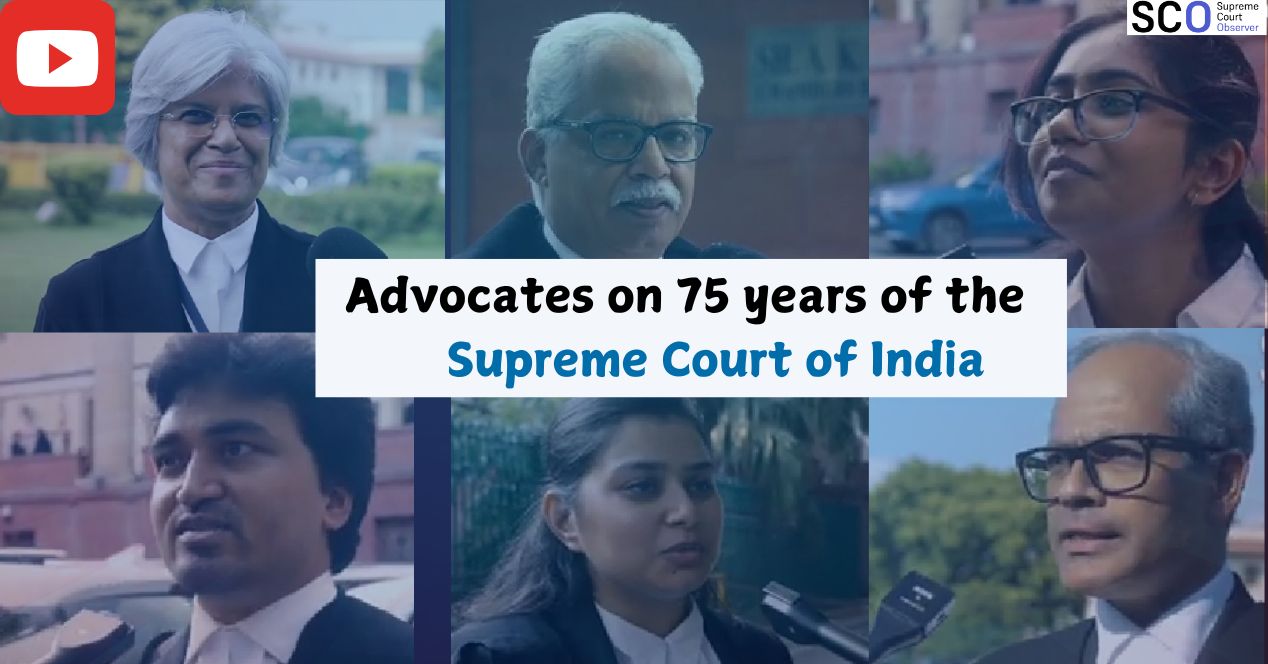
Advocates on 75 Years of the Supreme Court of India
Over the years, the Court has seen several changes and its lawyers have adapted to them. What do they have to say about it?