


Analysis
Caste status after conversion: Did the Supreme Court overlook a balancing approach?
When the Supreme Court strikes down a sub-ordinate legislation, the question of whether there could have been a balancing approach arises

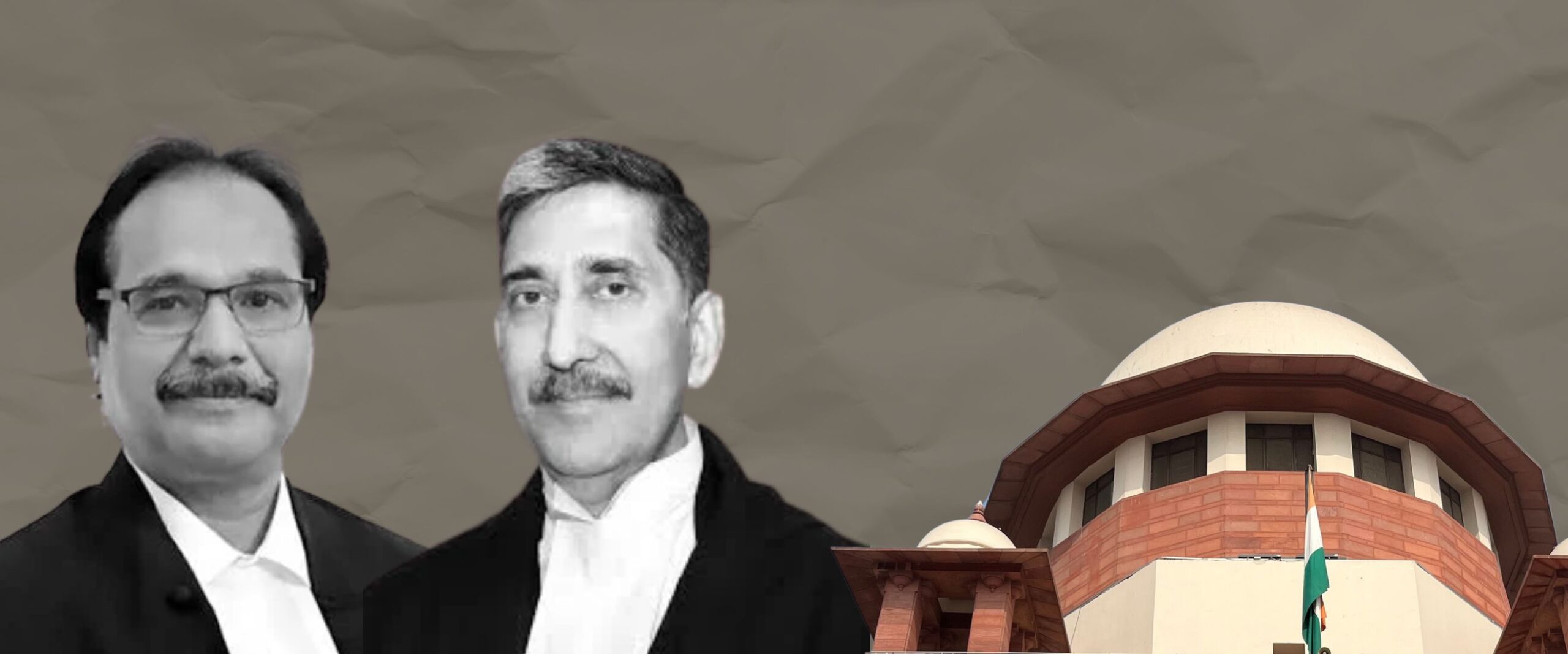
On 15 October 2026, in The Secretary to Government v Sameer Ahamed N., the Bench of Justices P.K. Mishra and Shree Chandrashekhar delivered a judgement which held that conversion to Islam does not, by itself, entitle a person to claim membership of a Backward Class Muslim community. Conversely, it was held that entitlements to persons belonging to Backward Class ceases to exist on conversion.
The issue originally arose as an appeal from a judgement of the Madras High Court holding that the membership to a notified sect is conferred only by virtue of one’s birth. The Bench not only denied the entitlement sought by the petitioner but also examined the legality of the source of such entitlement—a subordinate legislation in the form of a Government Order (G.O.), eventually holding it to be ultra vires Article 14.
While the Judgement may appear to be clarificatory one on the aspect of caste status after conversion, it makes a larger statement on the legal validity of legislations as the Supreme Court upheld the decision of the Madras High Court to strike down the G.O.
The question looms: In striking down a beneficial legislation, did the Court overlook a balancing approach?
Personal relief and the question of constitutionality
At the genesis of the matter is the Original Petitioner, a person who was born Hindu at birth and converted to Islam in 2016. The petitioner claimed to follow the faith of Lebbai Muslims and sought a community certification from the Tehsildar. On the application being rejected, he filed a writ petition before the Madras High Court relying on the G.O. to establish his plea.
The G.O. identified 7 sects, including Lebbai Muslims, as Backward Class Muslims under Section 3(a) of the Tamil Nadu Act, 1994, providing 3.5 per cent reservation in education and public employment.
It is noteworthy that there was no challenge to the G.O. by the petitioner. In fact, the petitioner had relied on the G.O. to claim the entitlement. However, the Bench of the Madras High Court noted that the plea of the petitioner is inseparable from the legality of the G.O. The Madras High Court, in its judgement notes that the case is one in which the Court converted an ordinary dispute into a constitutional challenge, examining issues which the parties neither pleaded, nor submitted.
The State of Tamil Nadu was impleaded as a party to submit its response on the G.O. The Division Bench of the High Court noted that the Additional Advocate General “appeared to strongly espouse the cause of the petitioner.”
After the G.O. was set aside, the State of Tamil Nadu filed an appeal against the decision of the Madras High Court, submitting that the impugned Judgement “travels beyond the pleadings and relief sought.”
In this context, it is important to look into how the High Court proceeded on to adjudicate the G.O. to see if the Court’s decision travelled disproportionately to the relief sought.
On the application of law
At present, the scrutiny of the Supreme Court decision can be made on two grounds: First, on the ground of relief granted out of issue. Second, on the grounds of presumption of constitutionality of legislation.
In Union of India v Manjurani Routray, a Division Bench of the Supreme Court restricted the Court from granting relief on grounds which have “neither been pleaded, nor put in issue.” However, the judgement clarified that the principle is not a “mechanical prohibition upon a Constitutional Court” on taking on the examination of the instrument.
This would mean that the Court can take up any issue involving a question of law, irrespective of whether the same has been pleaded by the parties, provided that the parties have been given adequate notice and fair hearing. The Division Bench in Sameer Ahmed relied on Manjurani Routray to substantiate the Court’s decision to convert the “ordinary dispute” into a “constitutional challenge”.
Manjurani Routray clarifies the position on what it takes to strike down the provisions of a trite law. It holds that unless provisions are specifically challenged, it cannot be declared ultra vires. In the present case, the Court read the judgement selectively, carving out an exception with reliance on the principles of fair hearing. The Bench notes that the impleadment of the State in this matter satisfies fair hearing without engaging on the aspect of specific challenge to the G.O.
While the Court sees a constitutional challenge when no party pleads against the constitutionality of the G.O., it may be legitimately tested against doctrine of presumption of constitutionality, which applies while deciding the vires of a Statute.
This doctrine was developed in a 1958 judgement in Ram Krishna Dalmia S.R. Tendolkar. Despite the Court having the discretion to examine the constitutionality of an enactment, the party that claims transgression in constitutionality must discharge the proof of such transgression.
In the present matter, the State of Tamil Nadu defended the G.O., submitting that the G.O. is a result of “detailed deliberation” with the Backward Classes Commission and must not be struck down as arbitrary. Neither the original petitioner, nor the State claimed transgression of constitutionality. Keeping in mind that the prayers in the matter were narrow, the G.O. could have survived the adjudication on merits.
Doctrines of judicial restraint and reading down
The critique of the Supreme Court’s decision is stronger when read against the doctrines of judicial restraint and reading down. In the landmark decision of Bachan Singh v State of Punjab (1980), Justice R.S. Sarkaria stated that judicial review is limited by the presumption of constitutionality and the doctrine of judicial restraint.
Further, in Kedar Nath v State of Bihar (1962), the Supreme Court, illustrated the doctrine of reading down and noted that if certain provisions of law constructed in one way would make them consistent with the Constitution, and another interpretation would render them unconstitutional, the Court would lean in favour of the former construction.
Both doctrines are applicable to subordinate legislations. This was affirmed by the Supreme Court in St. Johns Training Institute v Regional Director (2003), which held that if the vires of subordinate legislation are open to two constructions, the courts must adopt that construction which makes the legislation valid. It is to be noted here that neither the High Court nor the Supreme Court kept this rule in mind and consequently, there was no attempt by the courts to save the G.O.
The Supreme Court’s decision leaves gaps in its own reasoning. While the Court rightly relied on Manjurani Routray to assert that constitutional courts can examine issues that parties did not plead, it did not justify overlooking a balancing approach.
In that position, the presumption of constitutionality and the doctrine of reading down would have been a reason to save the G.O. while declining relief. The Judgement does not say why that route was not taken and the decision leaves a fair bit of questions open.
(Smruti Ranjan interned at the Supreme Court Observer in October 2026)
Related articles

Analysis
Hum Do, Hamare Do?
The top court was asked about a birth certificate and has now reopened its 2003 ruling on the two-child rule
Analysis
Memories from the Collegium
Justice S.K. Kaul’s memoir offers a glimpse into the Collegium, but our data reveals that there is more to the story
Analysis
Bar as informant
The SCBA’s contempt petition tests how the Court distinguishes institutional criticism from threats to the administration of justice
Analysis
Sequel Season
Recent challenges to the ECI’s exercise of plenary powers has left onlookers anticipating a legal sequel