





Analysis
Delhi protests: No immediate relief on contempt and Habeas Corpus petitions
The Supreme Court directed restoration of services in New Delhi and will hear compliance reports from State authorities on Tuesday

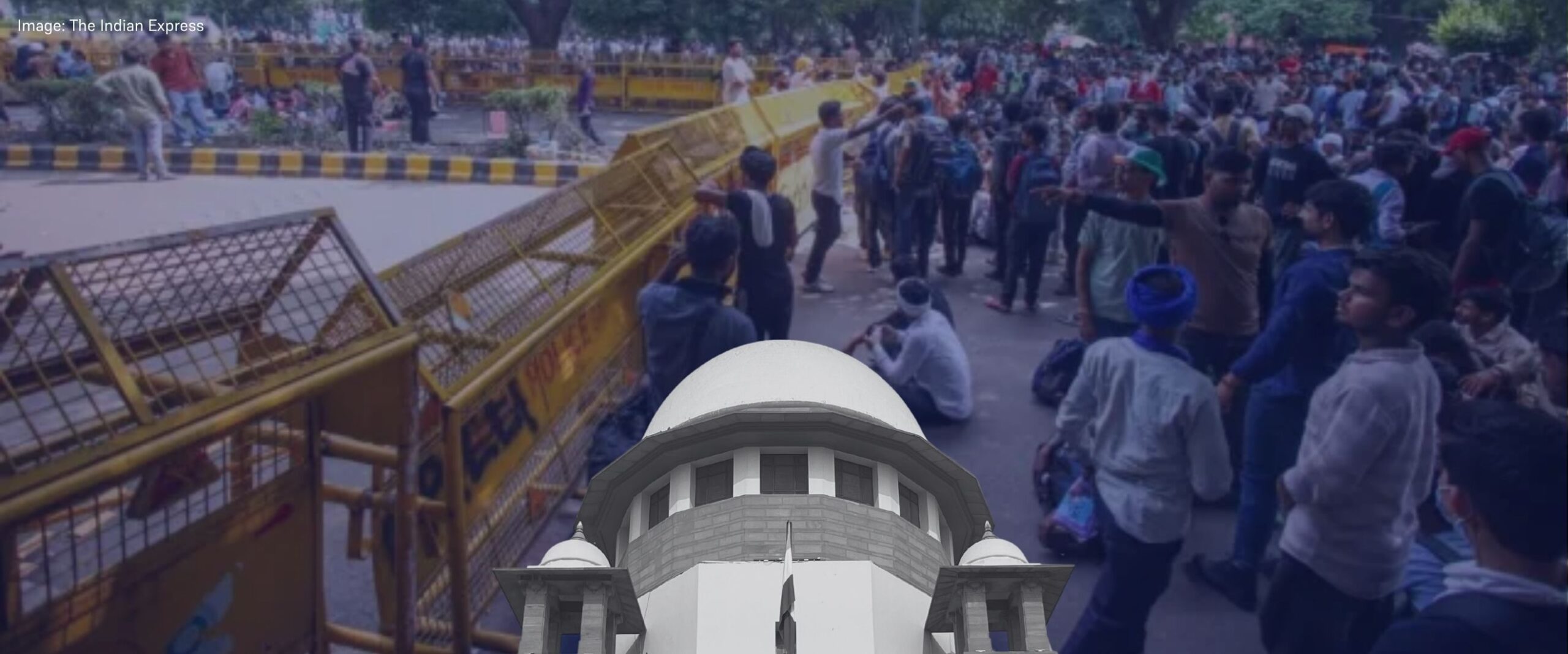
In a special Sunday sitting at the Supreme Court, a Bench of Justices Joymalya Bagchi and V. Mohana heard petitions on yesterday’s developments in New Delhi over protests against Chief Election Commissioner Gyanesh Kumar. A contempt petition alleged violation of the Court’s prohibition on complete shutdown of transport services and a habeas corpus petition sought release of persons detained.
On 9 October, the Court had directed against total closure of metro and rail services, noting that a “prudent decision” may be taken to reduce frequency instead. It recorded assurances from Solicitor General Tushar Mehta that authorities would reconsider the restrictions.
Several related petitions were filed but not listed today. The Court directed that these pleas be tagged to the contempt petition.
On Delhi Metro and railway restrictions
Filed in Advocate Shailendra Mani Tripathi’s name, the contempt petition states that gates at key stations remained locked or closed, resulting in a blanket shutdown of metro stations in the capital without issuance of any advisories. It claims that this is a deliberate violation of the right to freedom of movement as “essential public mobility was brought to a standstill”. The petition contends that this “deliberate recalcitrance” amounts to an “intentional attempt to bypass and undermine the authority and majesty of this Hon’ble Court”.
Seeking initiation of contempt proceedings against state authorities, the petition further prays for an interim order directing restoration of transport services. The Bench directed authorities to submit a compliance report by Tuesday, 13 October.
Senior Advocate Menaka Guruswamy argued that the Court should summon the alleged contemnors to show cause as to why they should not be punished. She stated: “Why give them time till Tuesday to disobey… The disobedience is not just to you but to the spirit and text of the Constitution.”
Senior Advocate Gopal Sankaranarayanan argued that the 9 October hearing was regarding the shut down of 56 metro stations. On 10 October, 47 metro stations were closed with no alteration to the restrictions on rail services.
Appearing for the Union government, Mehta submitted that there were no curtailments to any metro services on 10 October. He argued that trains were inducted as per standard schedule while 303 metro stations remained open and only 45 stations—15 per cent—restricted. He added that 4157 trains were running on that day.
Justice Bagchi noted that regular metro services should continue until a public order situation arises. He sought a map of the Delhi metro routes depicting which stations were closed to aid the Court’s understanding of access and the nature of regulations imposed.
On detentions and the right to protest
Filed by Guruswamy, the habeas corpus writ petition sought release of over 7000 persons detained across Delhi. Among the detainees are three former Chief Ministers, leaders from the opposition party and from the Cockroach Janta Party. She submitted that no official figure was confirmed by the authorities on the total number of persons detained. Internet restrictions further hampered access to the number of “illegitimate” detentions, explained Guruswamy, claiming that 45 detention centres were reported to have been set up in the city. She argued that fundamental freedoms under Article 19 can only be restricted during an emergency and asked, “Is the state saying that they have brought in an unofficial emergency?”
Another petition filed by the Supreme Court Advocates-On-Record Association (SCAORA) questioned the detention of counsel and lawyers in Delhi. Yesterday, the Delhi Commissioner was asked to release detained lawyers after SCAORA and the Supreme Court Bar Association sought the Chief Justice of India’s intervention. Senior Advocate Shadan Farasat submitted that he too was detained in a police van, describing the situation as “remarkably suppressive”. He added that people were not even allowed to stand on the street, stating that the right to peacefully protest was “destroyed”.
Senior Advocate K.K. Venugopal informed the Bench that one of his juniors was picked up by the police outside the Court premises and dropped off 11 kilometres away. The police authority had no badge, he argued, stating that there were “multiple violations”. Another counsel present in Court submitted that she was detained by a police woman who had no badge on her.
Sankaranarayanan stated that Senior Advocates Dinesh Dwivedi and Uttara Babbar were also detained. “Even right now Section 163 [of the Bharatiya Nagarik Suraksha Sanhita, 2023] has been imposed outside the Supreme Court”, he submitted, adding that the detention of peaceful, unarmed protestors was utterly uncalled for.
Senior Advocate Sanjay Hegde argued that the “access to justice” includes access to lawyers. “If they are prevented from doing their duty, it is this court that is directly impacted”, he exclaimed. Several lawyers visiting police stations to meet their clients were detained, he said while stating that a board had been put up outside the Court premises imposing Section 163.
Justice Bagchi acknowledged the “gargantuan magnitude of detentions”. Senior Advocate Kapil Sibal sought an interim order prohibiting arrests and barricades outside the 4 kilometer radius within which Section 163 has been imposed. He submitted that nobody can regulate the right to peaceful protest. Justice Bagchi responded that this would need deliberation and stated that the Union government must be given an opportunity to respond regarding the circumstances and manner of detentions made.
On internet restrictions
Guruswamy argued that she was unable to file her habeas corpus petition due to internet restrictions and blocking of physical access to the Supreme Court. Counsel informed the Bench that the internet shutdown affected their ability to argue before virtual courts and some lawyers were unable to address any courts that were sitting on Saturday.
When Justice Bagchi suggested that the restoration of internet facilities be added to the Court’s order, Mehta quickly clarified that the internet had been restored last night.
Directions from the Supreme Court
The Supreme Court directed the following:
- Metro and rail services shall operate normally across all stations as per their schedule, subject to public order conditions under Article 19(2).
- Free movement of people and traffic in the city shall be permitted subject to the traffic regulations. Barricades imposed in the city shall be reviewed, keeping in mind law and order conditions under Article 19(2).
- Internet facilities throughout the city shall remain undisturbed.
- Advocates, journalists and professionals shall not be impeded or prevented from discharging their professional duties.
- There can be no detention save and except by procedure established by law, particularly with regard to peaceful unarmed assemblage of people beyond the
- Boards imposing restrictions under Section 163 of the BNSS around the Supreme Court premises have to be removed. There cannot be any apprehension with regard to the access to justice to the Supreme Court and any other court of law.
The Court did not provide any immediate relief with regard to the alleged contempt allegations and the release of the persons detained during the protests. It will consider a compliance report of its 9 October directions on Tuesday.
While parting, Justice Mohana stated that everyone present in Court must undertake that they will protest peacefully and not instigate any other person. Sankaranarayanan responded that the other side should also submit an undertaking on how they will “behave with peaceful protestors”.