





V. Mohana

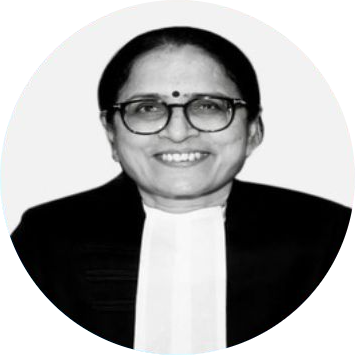
V. Mohana
Sitting Judge of the Supreme Court of India
Assumed Office2nd Jun, 2026
Retires On26th Jun, 2031
Previously
Senior Advocate at the Supreme Court of India23 April 2015 - May 2026
Advocate-on-record9 May 1996 - 22 April 2015
Profile
Early life and education
Justice Venkita Subramanian Mohana was born on 27 June 1966 and hails from the Coimbatore District of Tamil Nadu. She completed her legal education at Coimbatore Law College between 1983 and 1988. The five-year law course had just been introduced at the time. She comes from a family of non-lawyers.
Career as an Advocate
After completing her legal studies, she enrolled at the bar and began practicing before the Supreme Court and the Delhi High Court. She became an Advocate-on-record (AOR) on 9 May 1996. After practicing for 19 years as an AOR, Justice Mohana was designated as a Senior Advocate of the Supreme Court on 23 April 2015.
Most recently, Justice Mohana appeared as one of the petitioners in Sucheta EDN v Union of India (2026), which held that women serving as Short Service Commission officers cannot be denied Permanent Commission after qualifying eligibility.
In Sharmila Velamur v V. Sanjay (2025), Justice Mohana appeared for the appellant mother, to whom the Supreme Court granted custody of a 22-year old US citizen suffering from Ataxic Cerebral Palsy. The Court held that the opinion of qualified medical experts should be given significant weight in determining a disabled person’s capacity to make independent decisions.
Justice Mohana also appeared in Revanasiddappa v Mallikarjun (2023), where the Supreme Court held that children born of marriages that are null and void under the Hindu Marriage Act, 1955 are entitled to inherit a share in their parents’ ancestral property or coparcenary property. She had argued that the legitimacy and inheritance rights for children from void or voidable marriages are confined to parental property and excludes ancestral property.
The Supreme Court’s split verdict in Aishat Shifa v State of Karnataka (2022) concerning the Hijab Ban in Karnataka institutions, saw Justice Mohana appearing for the respondent teachers supporting the ban. The teachers had argued in favour of a uniform policy for students.
Career as a judge
On 27 May, the Supreme Court Collegium led by CJI Surya Kant recommended the appointment of Justice Mohana to the Supreme Court. Her appointment is a historic moment as she is only the second woman to be elevated directly from the Bar, following Justice Indu Malhotra in 2018.
Notably, this is the first time since August 2021 that the Collegium has recommended a woman judge to the top court. Justice Mohana is expected to serve a tenure of 4 years and 11 months, and is due to retire on 26 June 2031.