


Analysis
Freedom without justice: The Court’s incomplete effort in Nithari
Koli’s death lays bare the system's own shortcomings in cases of alleged custodial torture and wrongful incarceration

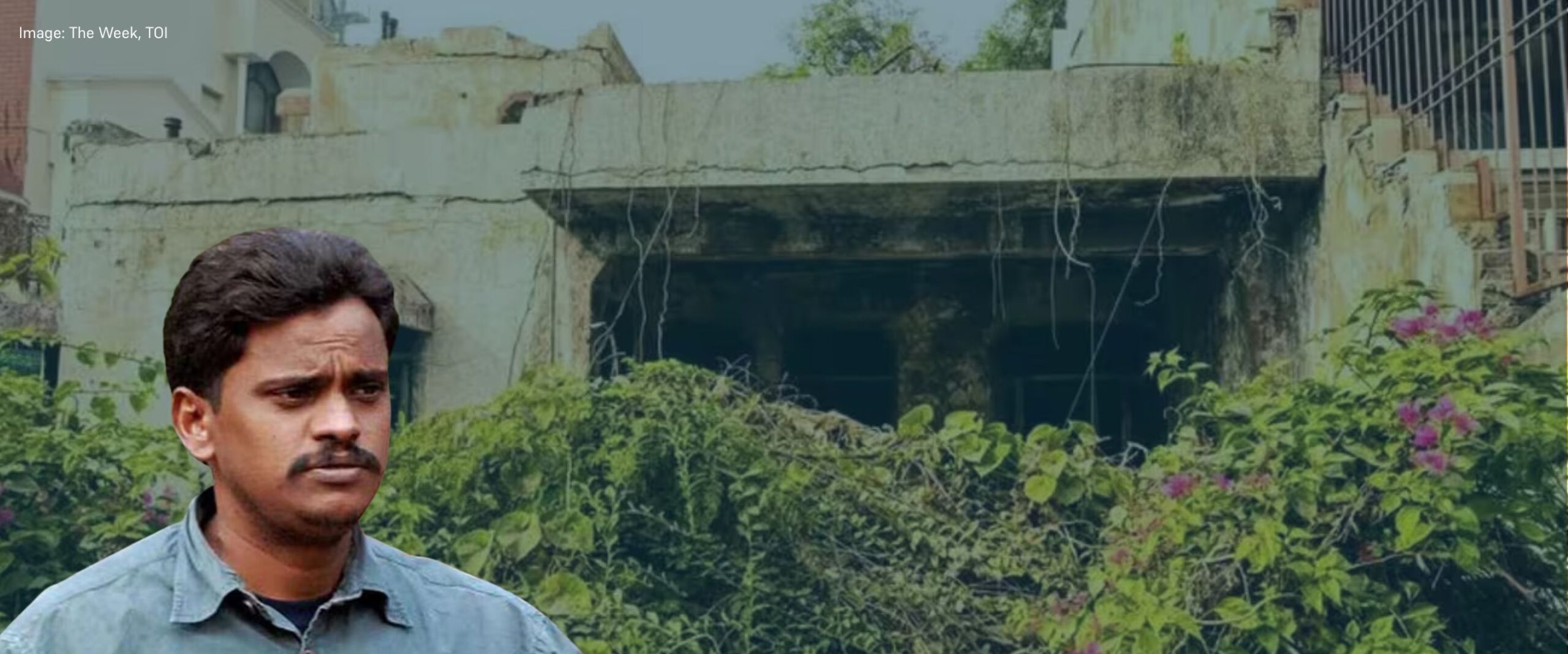
On 18 September 2026, Surendra Koli was found dead in his tea stall in Haridwar, Uttarakhand. Koli was one of the two accused in the 2006 Nithari killings and was acquitted by the Supreme Court on 11 November 2025 after nearly two decades in prison. The post-mortem report confirmed his death as a case of suicide.
Koli was arrested in 2006 and tried for 13 cases of murder. In 2009, he was convicted and sentenced to death in one case. The death penalty was affirmed twice by the Supreme Court in appeal (2011) and review (2014). In 2023, the Allahabad High Court acquitted him in the remaining 12 cases, pointing to serious deficiencies with the investigation. Two years later, the Supreme Court acquitted Koli in a curative petition. The Bench was led by former Chief Justice B.R. Gavai along with Justices Surya Kant (as he then was) and Vikram Nath. The Court held that the evidence against him was involuntary or inadmissible. It provided no explanation for the basis of its previous decisions.
Koli’s case points to serious concerns regarding the impact of prolonged incarceration on persons accused in criminal trials and their return to society upon acquittal. It raises questions about the Court’s handling of custodial torture, procedure for financial compensation and inability to secure justice for the families of those murdered in Nithari. It is a moment to scrutinise the media’s responsibility in coverage of criminal justice trials.
Monetary loss and compensation
When Allahabad High Court acquitted Koli, it found that the prosecution had failed to prove his guilt beyond reasonable doubt. Koli was thus incarcerated for 19 years on the basis of a flawed decision. He was released in 2025 without any measures to facilitate his return to society. Having argued the case on his own and with the help of pro bono lawyers, his financial situation was dire and as per his brother Chandan, his widespread infamy made it difficult for him to secure a job. Unable to secure an Aadhaar card or police verification, Koli used a fake identity to find employment as a security guard and then again to run his tea stall. An acquaintance reported that he needed to borrow money the night before his death.
Article 21 of the Constitution recognises the right of all persons to life, liberty and dignity. Compensation is a civil law remedy for violation of these rights but has often been granted by the Court as a public law remedy as well. A majority of such cases deal with illegal detention by state authorities, i.e., detention despite orders for release or bail, or detention that flouts due process. When a person who has been incarcerated for a long period of time is eventually acquitted, their incarceration is not automatically considered “wrongful”. However, in certain cases, the Court has considered malicious prosecution, damage to reputation and faulty investigations as grounds for compensation.
In the famous case of S. Nambi Narayanan v Siby Mathews (2018) for instance, the Court distinguished the ISRO scientist’s 50 days of custody as triggered by malicious prosecution because of the “catastrophic effect” it had on his career and the “irremediable loss” to space research in the country. It noted that “criminal law was set in motion without any basis” and that the State took a “lackadaisical attitude” with his arrest. Although Narayanan had already filed a civil suit for compensation, the Court directed the State of Kerala to pay him ₹50 lakhs as a public law remedy.
In July 2025, the Court acquitted a man who was previously sentenced to death on the basis of “faulty investigation, shaky evidence and non-examination of material witnesses.” One of the three judges on the Bench was Justice Nath who emphasised the need for the man to be compensated by Parliament. The man has now initiated proceedings for compensation along with two co-accused who were acquitted. A Bench of Justices Sandeep Mehta and Nath will hear their case and have sought the assistance of the Attorney and Solicitor General to decide on compensation for persons wrongfully convicted.
No action on allegations of custodial torture
The primary evidence against Koli was his confession. It was widely publicised by the media which resulted in him being branded as a cannibal, butcher and monster of Nithari. The confession was recorded after Koli spent 60 days in custody. It was later deemed inadmissible under Sections 24-26 of the Indian Evidence Act, 1872. These provisions bar confessions made to police in order to prevent custodial torture. Koli had previously alleged such torture before the Magistrate and repeatedly wrote letters to the courts detailing the physical and mental agony he was subjected to. While the High Court and the Supreme Court held that Koli’s confession had lost its probative value, neither made any move to direct investigation into Koli’s allegations. Nor was any attempt made to identify the officers responsible for keeping him in police custody beyond the 15 day period permitted under the Code of Criminal Procedure, 1973.
In July 2025, a Bench of Justices Nath and Mehta directed ₹50 lakh compensation to a serving police constable who was tortured by the Joint Interrogation Centre (JIC) in Kupwara, Jammu & Kashmir. They came down hard on the J&K High Court for failing to uphold Lalita Kumari v State of U.P. (2013) which mandates immediate registration of FIR where allegations disclose cognisable offences. Notably, Justice Nath was on the Bench that acquitted Koli by barring his confession without directing inquiry into his allegations.
Acquitted by court, but not society
In Chandan’s words, Koli was “acquitted but could not prove his innocence in society.” In June 2026, the Delhi High Court addressed this concern by recognising the right to informational privacy and “right to be forgotten” of a person acquitted after trial. It directed the de-indexing of names from search engine results and legal databases. Multiple petitioners have sought clarity on where to draw the line between right to privacy, right to information and freedom of the media.
On one hand, like the judicial system, the media too has a responsibility to report with the presumption of innocence in mind. Particularly so with the rise of true crime entertainment and the age-old popularity of sensationalised criminal coverage. Widespread reportage of allegations of serial killings, cannibalism and necrophilia followed by severe under-reportage of acquittals can have serious consequences on mental health, familial relations and a person’s ability to secure a dignified and honest means of livelihood.
On the other hand, the media is an independent pillar of accountability in a democratic republic and often steps in when the judicial system may have committed grave errors or lapses. For instance, regarding serious inconsistencies in the investigation against Jayanandan, the High Court’s acquittal of Bishop Franco Mulakkal or the apex court’s settlement for the Sandesara brothers. It is important to note here the distinction between a media trial (wherein guilt is determined by the public) and the media’s role in ensuring that due process is followed, that rigorous investigations are conducted and that judicial lapses are scrutinised.
An unresolved crime
There is another angle to this case. Families of the victim allege that Koli was about to divulge crucial information on the murders. While the basis for their claims is unclear, Koli certainly may have played an important role in facilitating reinvestigation of the matter. While the forensic material can no longer be considered, several other loose ends may have been pursued.
An expert committee set up by the Union Ministry of Women and Child Welfare to look into the killings had observed that the bodies were found to be cut with “surgical precision” with the torso missing, giving rise to the possibility of organ trade rather than cannibalism. Despite this, investigation for suspected organ trade was not pursued. Similarly, other workers employed at the residence were never questioned and nothing was done to follow up on a letter from Nepal allegedly sent by one of the victims.
The criminal justice system must evolve
Over centuries, human society has evolved diverse methods of combating crime and delivering “justice”, progressing from arbitrary corporal punishment inflicted at the whim of kings to the rule of law and advent of prisons. While there has been significant progress in development of fundamental principles of criminal justice over time, Surendra Koli’s death and the unresolved case of the Nithari killings reveal where the system falls short. A system that presumes innocence must also strive to restore it.
Related articles


Analysis
Bones, belief and the burden of proof
Revisiting the Nithari killings and the Supreme Court’s curative turn

Analysis
When a name becomes a sentence
After acquittal, search results can punish for life; the Delhi High Court frames a calibrated remedy.

Analysis
A decade in incarceration: How justice failed Professor G.N. Saibaba
Saibaba speaks about how bail for the marginalised is a major blind spot for the Courts

Analysis
The right to life and personal liberty under Article 21: A timeline
50 years since the Emergency, SCO traces the Court’s gradual expansion of the right to life and personal liberty