





Analysis
Mining lease first, forest clearance later
The Supreme Court allows Karnataka to grant leases covering virgin forest before authorities approve mining there.

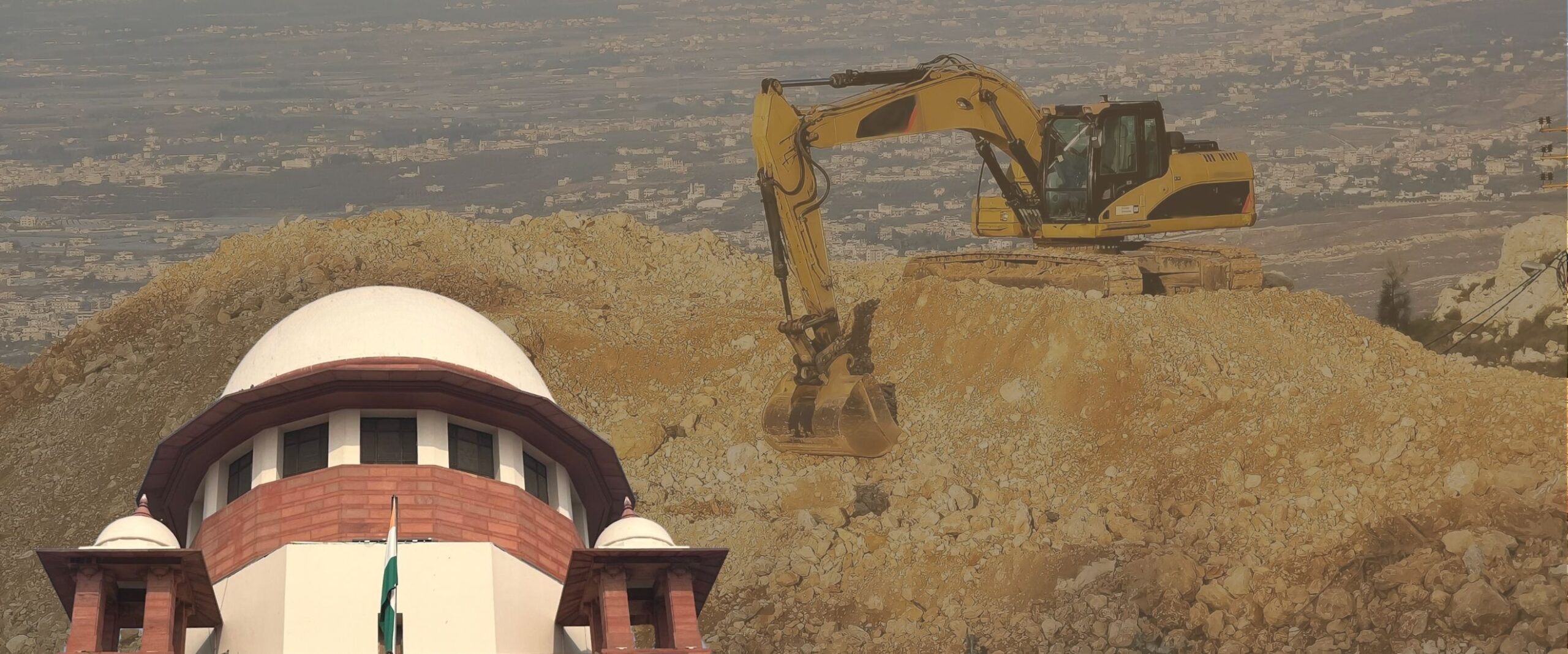
A mining auction begins with the State demarcating the land it wishes to offer. Companies then compete for a lease to gain mining rights over the land subject to approvals under different laws.
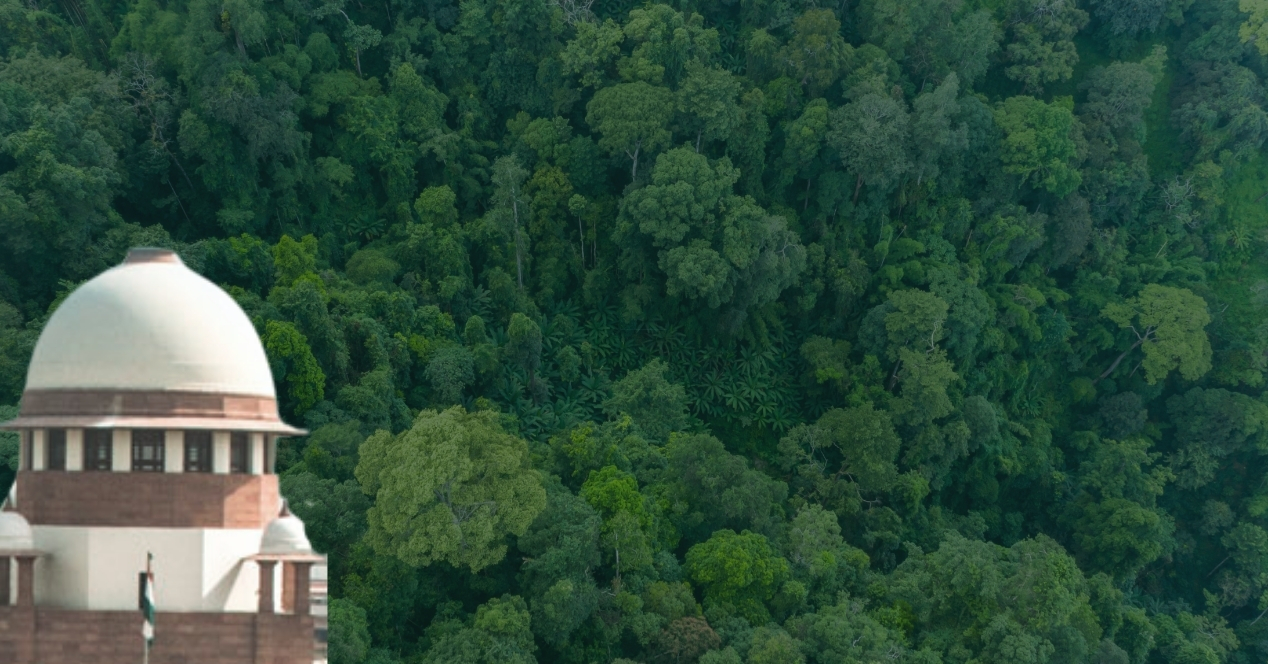
On 8 September 2026, the Supreme Court permitted the State of Karnataka to auction and lease different categories of land for mining, including “virgin forest land”, the order’s expression for forests thus far undisturbed by mining. A Bench comprising Chief Justice Surya Kant and Justices Joymalya Bagchi and V. Mohana held that the successful bidder must undertake to leave the virgin forest land alone until approval under the forest-conservation law is obtained.
In other words, Karnataka may now auction and lease an entire block of land to a mining company and the Union government will decide later whether the virgin forest portion of that land may be used for mining or not. Approval remains compulsory, but it will be considered after the bidder has paid for the block, prepared an integrated plan and acquired a financial interest in the whole area.
Why were the mines divided into categories?
The Order was passed in Samaj Parivartana Samudaya v State of Karnataka, a public-interest case filed in 2009 over widespread illegal iron-ore mining. After surveys found forest encroachment and extensive environmental damage, the Supreme Court stopped mining in Ballari district in July 2011 and later extended the restrictions to Tumakuru and Chitradurga.
The Court-appointed Central Empowered Committee (CEC) classified mining leases according to the seriousness of the violations. Category A covered leases where no major illegality was found or encroachment was marginal. Category B covered extensive encroachment within the limits fixed by the CEC, and Category C contained the most serious cases.
In its 2013 judgement, the Court allowed Category A and B mines to reopen in stages after approved reclamation and rehabilitation work. Category C leases were cancelled and their mineral-bearing areas were to be auctioned. Now, Karnataka can place all three categories of leased land and virgin forest land inside one commercial boundary, while retaining the legal conditions attached to each portion. Accepting amicus curiae Shyam Divan’s proposal for compact and workable blocks, the 2026 Bench called this “operational rationalisation”. Neighbouring parcels of land can consequently be planned as a single mine instead of several small or irregular units.
What may the successful bidder actually mine?
The bidder’s ability to begin mining will depend on the status of each part of the block. For “broken-up” forest which has already been disturbed by mining or related activity, valid approvals held by the previous lessee may pass to the auction winner under Section 8B of the Mines and Minerals (Development and Regulation) Act, 1957.
Mining in virgin forest land must await approval under the Forest (Conservation) Act, 1980. The Court directed compliance with auction conditions, mining rules and the reclamation and rehabilitation plans for older mining areas. As one block may now contain several zones, work may begin in a disturbed portion with transferable approvals while other portions may require separate permissions. Operations on the virgin forest land portion can commence only if diversion for mining is approved. If diversion is not permitted, the portion remains within the lease boundary but cannot be used for mining.
This arrangement seeks to simplify mine planning, access and infrastructure, but it brings the forest into the commercial process at an early stage. This gives the bidder an economic interest in that portion, although authority to mine it will depend on subsequent approval.
The forest-clearance authority must independently examine the forest’s value, the likely damage and the available alternatives. By that stage, however, the successful bidder may have designed the surrounding mine on the assumption that the combined area will eventually function as one unit.
This commercial commitment may create practical momentum in favour of approval, although the law still requires an independent decision. The safeguard’s strength will depend on whether the later appraisal remains a genuine choice between protecting and diverting the forest, rather than the final signature for a project already in motion.
Opposition from the State Forest Department
In 2020, The Wire Science reported that the State Forest Department advised against mining in virgin forest land. Regarding Sandur’s Swamimalai block in particular, the Department estimated severe impact on about 99,330 trees and diverse wildlife including leopard, sloth bear, four-horned antelope, jackal, pangolin, monitor lizard and star tortoise. Archeologists further pointed out the impact of mining on eight century temples in the region.
In February 2025, the Times of India reported that the Forest Department rejected mining proposals in Ballari and Vijayanagar, and argued that companies should first use 14 Category C blocks already fragmented and damaged by earlier operations.
Appearing for the petitioner organisation, advocate Prashant Bhushan argued that only a few companies might have the financial capacity to operate enlarged composite blocks, allowing them to secure a disproportionate market share.
The Court recorded these concerns but decided to leave block size and bidder concentration to the auction framework.
What about blocks auctioned before this order?
The 8 September Order establishes a general framework for amalgamation, but compliance in each previously auctioned block remains a factual question to be decided on merits.
On 9 September 2026, ToI reported that Samaj Parivartana Samudaya had filed a contempt petition against three Karnataka officials. SPS founder, S.R. Hiremath alleged that Karnataka had altered and merged court-approved mine boundaries, added 87.9 hectares of virgin forest and auctioned five blocks in 2023 without first obtaining the Supreme Court’s permission. He asked the Court to declare the auctions void.
The September 8 order was passed in applications seeking approval and operationalisation of these already auctioned blocks. By permitting their amalgamation and allowing leases over the entire area subject to safeguards, the Court appears to have granted post-facto approval to the arrangement. The separate question of whether officials breached the Court’s earlier orders before obtaining that approval remains part of the contempt dispute.
A second part of the Order concerns iron ore that was excavated while a lease was valid but left at the mine after expiry. The rules give a former lessee up to six months to remove it. If Karnataka issues a notice and the mineral remains for another month, it becomes State property.
Some stocks remained because earlier Supreme Court orders required sales through the Monitoring Committee’s e-auction system, preventing lessees from selling independently. In May 2022, the Court ended compulsory sales through that system and allowed direct sales and exports under Union government policy.
The latest order approves 11 cumulative conditions under which an eligible former lessee may sell the ore or claim its proceeds. The lease must belong to Category A or B, the operator must have approached the Court before expiry or immediately afterwards, and Indian Bureau of Mines must record the stock. The required rehabilitation work must be completed, with valid environmental and forest clearances in place at the time of lease expiry.
Processing waste or overburden dumps is excluded because it would involve a fresh operation rather than removal of excavated ore. Since every condition is mandatory, any relaxation requires another Supreme Court order. Most claims have gone to the CEC for fresh examination, while Karnataka must respond to four applications.
A ceiling for finite resources
The CEC proposed 57 million tonnes as the ceiling for annual iron ore production across the four districts of Ballari, Vijayanagara, Chitradurga and Tumakuru. In August 2022, the Court set the ceiling at 50 million tonnes. Justice B. Sudershan Reddy, the Court-appointed Oversight Authority, calculated that the proven reserves would last only about 20 years at this ceiling and recommended reducing it to 20 million tonnes instead. The Court recorded the suggestion but went ahead with its 2022 ceiling as an intermediate ceiling.
At a press conference in Hubbali on 9 September, Hiremath pushed for Justice Reddy’s recommended ceiling and warned that this is essential to conserve mineral resources for at least three future generations. Conserving finite resources is central to internationally recognised principles of sustainable development and intergenerational equity.
From environmental repair to operational consolidation
Lease of forest land is governed by forest-conservation law. Tender and lease documents will need to accurately describe each different portion of land in the composite block and state the conditional nature of the forest portion. The bidder’s undertaking must reiterate this conditional status, so that inclusion in the block carries no assurance of future mining permission. Reclamation duties must remain enforceable after differently classified areas are combined.
If these protections operate rigorously, Karnataka may create workable mining blocks without weakening the separate assessment of forest land. If commercial planning turns the later clearance into an expected outcome, the legal safeguard will be reduced to a dead letter.
The order therefore leaves its most important environmental test to the clearance stage: whether the Union government can assess the forest portion independently after the block has been auctioned and the winning company has acquired a commercial interest in mining it.
The main matter has been listed for further hearing on 29 September.
Related articles

Analysis
2026 Supreme Court mid-year review: Environmental and animal rights
The Supreme Court restructured decade-old litigations and delivered a range of firm environmental rulings in the first-half
Analysis
Proving the polluter: What the Yamuna floodplain verdict demands of environmental liability
The Supreme Court holds that the polluter pays principle presupposes a proven polluter and a documented ecological baseline.
Analysis
From questionnaire to committee: Himachal’s ecology case turns a year old
A year after warning Himachal Pradesh could vanish, the Court handed its ecology case to the Central Empowered Committee.
Analysis
Vanashakti III restores rule and exception
A three-Judge Bench declares prior clearance mandatory, corrects the precedent record, and forgives every project already in the pipeline.