





Analysis
Regulatory hurdles
Earlier this week, an interventionist Bench placed the UGC’s equity rules in abeyance after flagging gaps and ambiguities

The Supreme Court’s stay on the University Grants Commission (Promotion of Equity in Higher Education Institutions) Regulations, 2026 has created a Court-mandated pause in what was shaping up to be a politically fraught confrontation. In Thursday’s hearing, the Bench of Chief Justice Surya Kant and Joymalya Bagchi stayed the rules on the ground that they were “vague” and “easy to misuse”. The Bench even raised questions that had not been pressed by the petitioners during their oral arguments.
Outside the courtroom, the Regulations have generated considerable backlash. Student groups and commentators have argued that the framework offers no safeguard against false complaints. They also contend that the new rules fail to recognise that discrimination is not “unidirectional”—that it can also be experienced by students from the General category.
Early in the proceedings, petitioners questioned why “caste-based discrimination” against Scheduled Castes, Scheduled Tribes and Other Backward Classes had been separately articulated as a definition in Clause 3(c), when a wider, Article 15–modelled definition—explicitly mentioning “caste”—already existed in Clause 3(e).
Senior Advocate Indira Jaising, who was present in Court, pointed out that the 2026 Regulations were framed pursuant to the Court’s directions in Abeda Salim Tadvi v Union of India, where she is representing the petitioners, the mothers of two students who committed suicide after alleging caste-based discrimination in their institutions. As she began to explain why the two definitional clauses were compatible, she was drowned out by counsel for the petitioners and then cut short by the Bench, which noted that the issue could be addressed at the merits stage.
On its own volition, the Bench raised concerns about how the Regulations address discrimination within reserved categories. The judges queried whether the framework accounted for sub-classification, particularly the vulnerabilities of the most backward groups within the SCs, STs and OBCs. The petitioners were quick to seize the opening and submit that the Regulations offered no such protection. This is one of the questions the Court expects the UGC to answer at a later stage.
The Court’s identification of the issue suggests that it is open to consider the inclusion of most backward classes within the meaning of caste-based discrimination. Moreover, it could mean that it is not opposed to Clause 3(c). However, the Bench, during oral arguments, had inquired whether Clause 3(c) is redundant in light of Clause 3(e).
Another concern emerged around Clause 7(d), which refers to “selection, segregation, or allocation” of students in hostels and classrooms. Unprompted by the petitioners, the Bench drew an analogy to the “separate but equal” doctrine once used to justify racial segregation in the United States. While Clause 7 requires that such measures be non-discriminatory, the Bench appeared uneasy with the breadth of the language. Once again, an explanation was sought from the UGC, with the answer expected only later.
The omission of “ragging”—which features in the 2012 equity regulations—also drew attention. Jaising clarified that the 2009 Anti-Ragging Regulations continue to operate independently.
Overall, the proceedings offered a rare glimpse of a passive Union government. Solicitor General Tushar Mehta, typically forceful in defending Union action, was mostly silent. When the Bench sought his assistance, he informed the judges that he was unaware of the present petition and sought to lower the temperature in the courtroom. This restraint from Mehta—who eventually accepted notice on behalf of the Union and the UGC—stood in sharp contrast to the Bench’s Order, which raises new questions around sub-classification and segregation.
This dynamic of an interventionist Bench and a restrained executive invites attention to the question of what the Union government stands to gain from its strategic silence. Defending the Regulations as drafted would require it to publicly take sides in a sensitive debate on caste discrimination in higher education, leaving little room to manoeuvre across competing political constituencies.
This article was first featured in SCO’s Weekly newsletter. Sign up now!
Related articles

Analysis
Supreme Court stays 2026 UGC equity regulations
Challenged for being “unfair” to general category students, the Bench found that the Regulations were prima facie vague and easy to misuse
Analysis
Supreme Court confronts student suicide “epidemic”
After the vague mental-health guidelines of July 2025, the SC’s latest directions to educational institutions are more sharply focused
Analysis
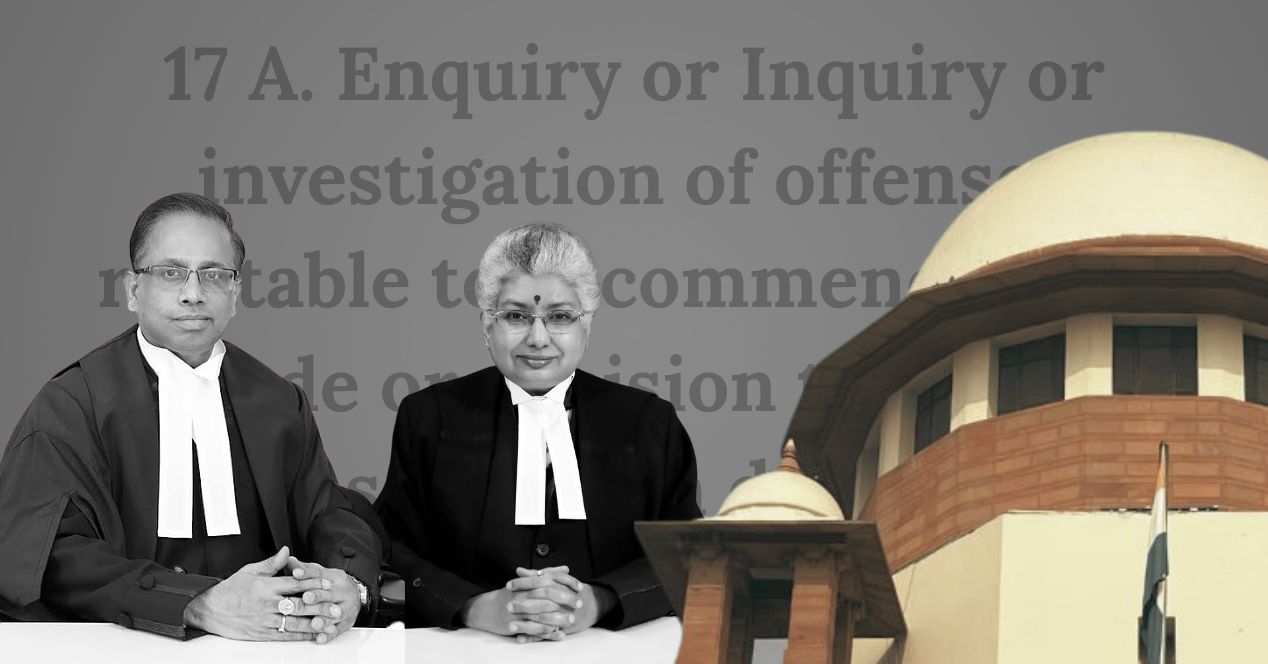
Strike down or read down?
Justice Nagarathna says Section 17A of the anti-corruption law stifles inquiries; Justice Viswanathan finds that it protects honest officers
Analysis
Republic of symbolism
India’s 77th Republic Day arrives amid new battles over national symbols. We revisit what the Supreme Court has said on the subject.