





Analysis
SC quashes Jantar Mantar protest FIRs across India, permits fresh FIR against 2873
CJI said the order would provide a “healing balm” to protesters while preserving the State’s right to prosecute alleged offenders

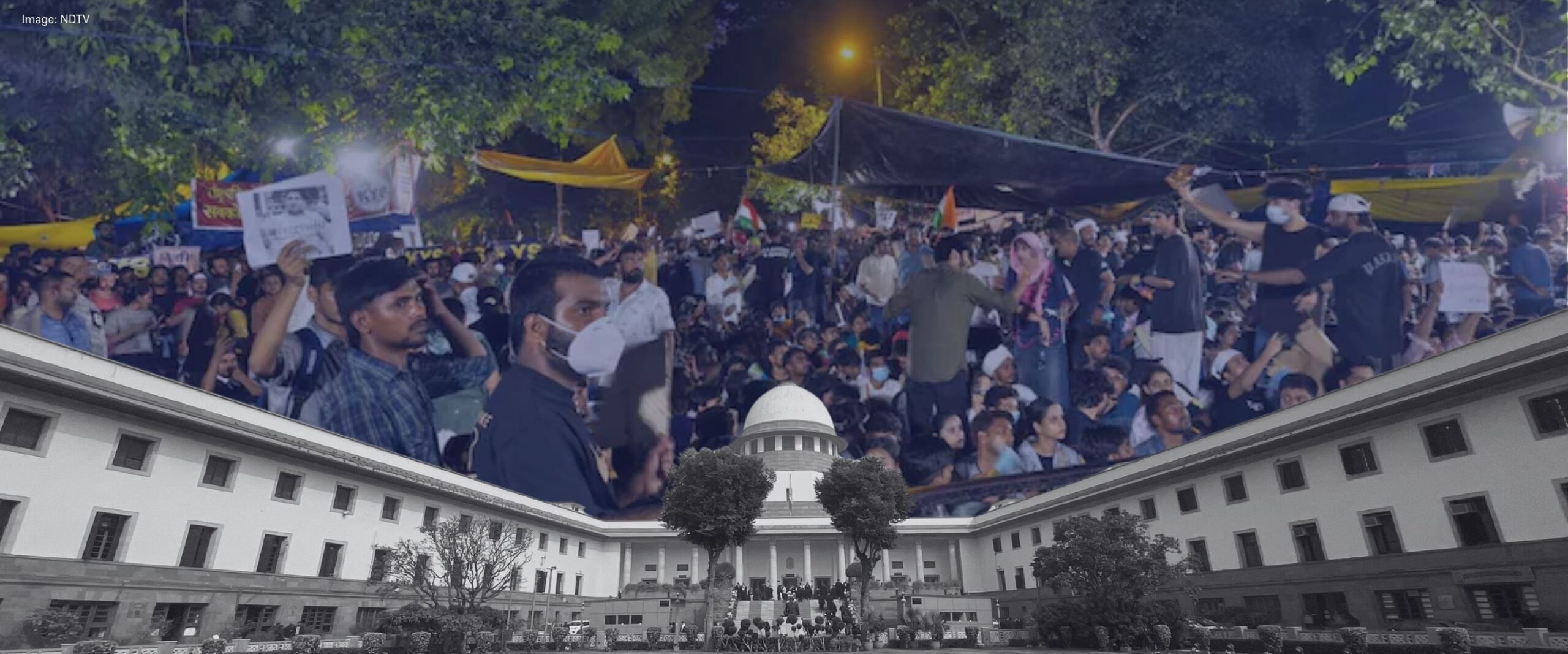
Today, a Bench of Chief Justice Surya Kant and Justices Joymalya Bagchi and V. Mohana invoked Article 142 to quash FIRs registered in the 20 July Jantar Mantar student protests. The Order came after the Union and the state governments assured the Court that cases against protesters would not be pursued and that no fresh FIRs would be registered over the same incidents. The Court further recorded the Union’s commitment to formulate a pan-India compensation policy for students who died by suicide in connection with NEET-UG 2026.
Mehta: Government stands committed to three assurances
Solicitor General Tushar Mehta told the Court that the applications had been filed pursuant to a meeting between the Union and leaders of the protest, during which three assurances were given: FIRs registered between 20 and 25 July would not be pursued, no fresh FIR would be filed in relation to the incidents, and that compensation would be paid to students who had died by suicide. He referred to the Delhi Police affidavit stating that it no longer wished to pursue the FIRs listed in its application. The applications filed by Maharashtra, Bihar, Assam and West Bengal, he said, were “verbatim the same”, with only the charts of FIRs differing.
The Delhi Police, however, sought permission to register a fresh FIR against 2873 individuals who, according to the National Crime Records Bureau (NCRB) database, had serious criminal antecedents and were prima facie reported to have been present at the protest site. Mehta clarified that the proposed investigation was not for being part of the protest, but only for offences involving bodily harm or destruction of property. When CJI asked whether a fresh FIR had already been registered against the 2873 individuals, Mehta said it had not.
CJI: We don’t say they are offenders
Mehta said the Government had learnt “yesterday” that a few FIRs concerning the same incidents had been registered in two other States and that there could be others. He urged the Court to extend the order nationwide. The CJI asked whether it should cover “all the states and Union Territories”, including non-affected States and Union Territories. Mehta agreed. The Court directed that any FIR concerning the same incidents between 20-25 July registered in any other state or Union Territory and not formally brought before it, “shall not be pursued or investigated and shall be treated as closed for all intent and purposes”. The Bench clarified the exception for the 2873 individuals. The CJI said the State’s right to prosecute “the allegedly provoking elements” had to be preserved while providing “the healing balm to the main body of protesters”. “We don’t say they are offenders. Allegedly,” he said.
The CJI also said the Court did not have sufficient material to conclude that there had been infiltration into the entire body of protesters. Mehta reiterated that being part of the protest was not an offence and that the proposed FIR was confined to bodily harm and destruction of property. Justice Bagchi explained that the Court was exercising Article 142 to prevent people from being subjected to prosecution merely because of their participation in the protest. “We want to put these matters to rest and not keep the pot boiling,” he said.
Senior Advocate N. Hariharan sought copies of the FIRs and the list of the 2873 individuals, arguing that the numbers alone did not disclose who had been named or what allegations were made against them. The CJI directed that the list be filed. Justice Bagchi observed that once an FIR was quashed, it would become “completely obsolete, completely academic and completely a part of history” because “the FIR is completely erased. It does not remain a legal document.” Advocate Vrinda Grover pointed out that the 2873 individuals were only “prima facie present” at the protest site and not prima facie involved in an offence.
Three months for compensation policy
Mehta sought three months to work out the modalities for compensation to be given to families of students who had died by suicide in connection with NEET-UG 2026. The CJI asked, “What about those unseen victims, those who have not been able to bring their claims? There has to be some scheme”.
The Court directed the Union to formulate a pan-India policy for payment of compensation within three months and circulate it to the state governments and implementing authorities. Compensation to the families of students who died by suicide in connection with NEET-UGG 2026 would be paid after the policy was formulated.
CJP withdraws 5 September march
Saurav Das, co-convener of the CJP, told the Court that the organisation was withdrawing its call for the 5 September march. “In view of the positive assurances of the Government of India and the judicial sanctity bestowed upon them today, and in view of the order being passed by this Court, the CJP deems it appropriate to withdraw the call for the march on September 5 and looks forward to compliance with today’s order,” he said. The CJI said the remaining issues could be resolved through continued engagement. “If both sides show good faith, then all issues can be resolved one by one. There is nothing in the world which is too complicated that it cannot be discussed with an open mind,” he said. Mehta said both sides had been “very constructive and positive”. “Our side was also very constructive and positive. We are not adversaries,” he said.
In its concluding directions, the Court said the invocation of Article 142 was based on the “peculiar facts and circumstances of the case” and would not be treated as a binding precedent. The CJI also made a “persuasive appeal” to the parties to resolve the remaining issues. “We would prefer that you concentrate on the academic part and, at the same time, on building your careers in this competitive world,” he said. “Life is otherwise not easy to establish and create a space for oneself.”
Das thanked the Court for the decision, calling it “historic”. The CJI responded, “The credit goes to all of you.”
Related articles

Analysis
SC says Jantar Mantar protest FIRs cannot define students’ futures
The Court said Article 142 can clear FIRs involving students, cases against those accused of grave offences will continue separately
Analysis
SC to hear plea challenging composition of Jantar Mantar protest inquiry committee
Petitioners flagged a “common concern” over the committee as SG Mehta described the application “very mischievous”
Analysis
SC: No coercive action against students accused of minor criminal offences
The Court said states may close or withdraw FIRs against students in accordance with law.