





Analysis
Supreme Court puts the 2026 UGC Regulations in abeyance
The Bench observed that the 2026 Regulations were prima facie vague and easy to misuse

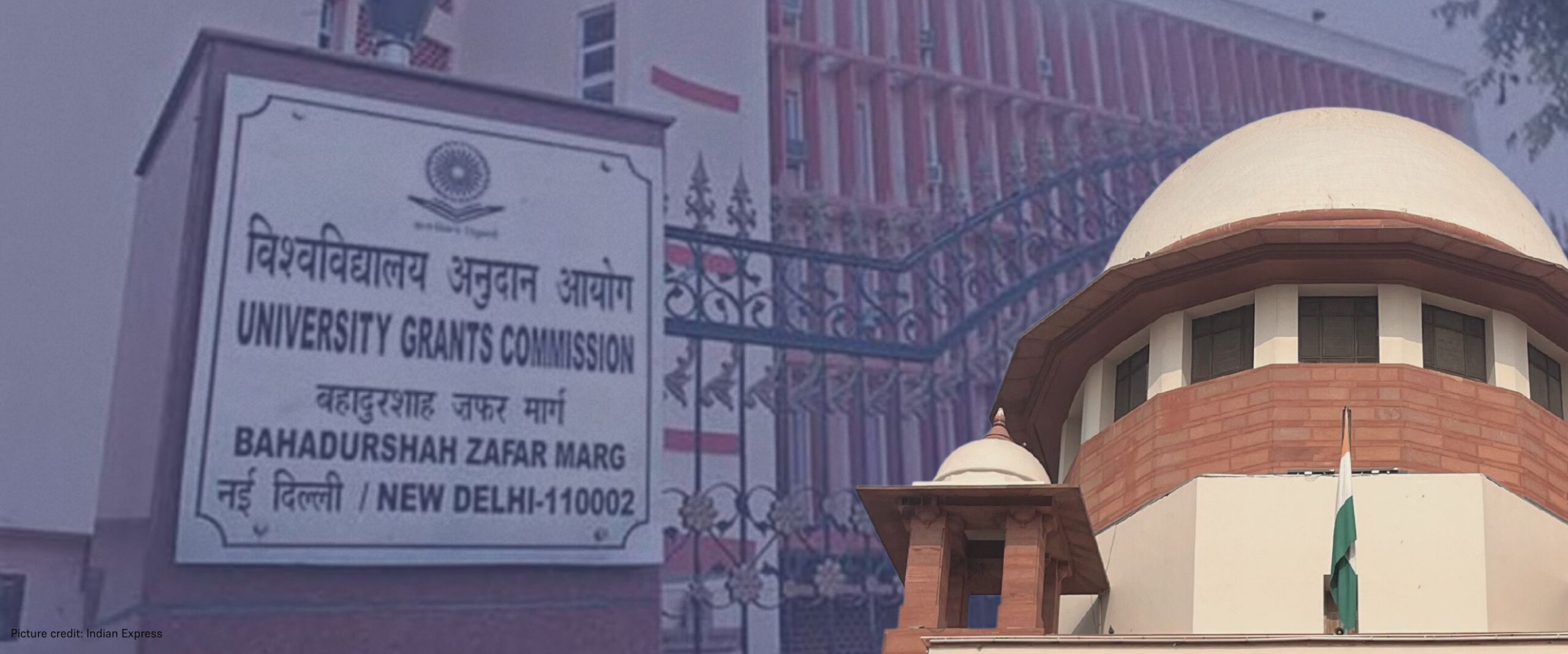
On 29 January, a Division Bench of Chief Justice Surya Kant and Joymalya Bagchi put in abeyance the University Grants Commission (Promotion of Equity in Higher Education Institutions) Regulations, 2026. The 2026 Regulations, which were notified on 13 January 2026, had stirred a controversy for allegedly being “unfair” to students belonging to the general category.
The heart of the outrage is found in the definition clause of the 2026 Regulation. Clause 3(c) defines “caste-based discrimination” as discrimination only based on caste or tribe against the members of the scheduled castes, scheduled tribes and other backward classes. Petitioners have argued that the exclusion of the general category from the definition would lead to harassment. Moreover, the Regulations contain no mechanism to penalise “false complaints” against them.
The 2026 Regulations came in the backdrop of the pending case of Abeda Salim Tadvi v Union of India. A Bench of Justices Surya Kant and Ujjal Bhuyan had directed the UGC to notify new regulations to address caste-based discrimination and student suicides in higher education institutions. The case was registered in 2019 by parents of two students who had committed suicide, allegedly after facing caste-based discrimination. The petition assailed the failure of authorities to implement the 2012 UGC Regulations.
Petitioners: General category students excluded
Advocate Vishnu Shankar Jain, opposing the 2026 Regulations, stated that Clause 3(c) was “completely exclusive”. He referred to Clause 3(e) in the new regulations, which defines “discrimination”. This is a wider clause including discrimination on grounds of “ religion, race, caste, gender, place of birth, disability, or any of them”.
“What is the need for Clause 3(c)?” Jain asked, stating that the provision presumes that only a particular section of society faced caste-based discrimination. Referring to the proceedings in Abeda Salim Tadvi, Jain stated that the Court did not intend fto provide an exclusionary provision in the 2026 Regulations. “This will create further divisions in society”, he stated. He suggested that the Abeda Salim Tadvi petition had only provided a one-sided picture on caste-based discrimination in institutions. He remarked that there were other instances that countered those claims.
Interestingly, today’s matter was not tagged with Abeda Salim Tadvi. In effect, Jain was responding to a petition filed in a parallel proceeding. CJI Surya Kant stopped Jain to state that the 2026 Regulations will only be examined on the threshold of constitutionality and legality. Jain stated that Clause 3(c) violates the equality clause under Article 14 and had “no reasonable nexus with the object, and no intelligible differentia”. He pressed for a stay on the 2026 Regulations.
Supreme Court raises concerns over segregation and a regressive society
At this juncture, the Chief inquired whether students belonging to different geographical backgrounds such as those from North and South India, would be protected under the regulations. The petitioners responded that Clause 3(e) will cover it, since it includes discrimination on the basis of place of birth.
A counsel took the opportunity to address the Bench by stating that “ragging” was not found in the 2026 Regulations. He claimed that ragging is the most prevalent form of discrimination in institutions. Attempting to paint a picture, he submitted that a fresher student who resists ragging from a senior belonging to a scheduled caste background may face false accusations of caste discrimination. Since there is no provision for anticipatory bail in SC/ST cases, the student could be imprisoned. He concluded that this hypothetical student’s career would come to an end on his “first day, first month and first year”.
CJI Surya Kant asked the counsel if the 2026 Regulations cover caste-based discrimination by reserved categories that are better situated than other reserved groups. The counsel stated that there was no protection under the regulations. The Chief asked, “Has anybody examined this aspect…are we going in a regressive policy?” On the aspect of separate hostels the Chief stated, “For gods sake, please don’t do that”. The CJI was referring to Regulation 7(d) which states that “any selection, segregation, or allocation for the purpose of hostels, classrooms, mentorship groups, or any other academic purposes is transparent, fair, and non-discriminatory.” Notably, the petitioners had not touched upon this aspect. The petitioners jumped at this observation: “We can propose a [sic] better draft than this…this entire regulation must be quashed”.
Justice Bagchi reminded that Article 15(4) empowers the state to make special laws for scheduled caste and scheduled tribes communities. However, he stated, the petitioner’s point was well-taken. “If the 2012 Regulations spoke for a more widespread and all-inclusive discrimination…discrimination in the nature of ragging. Why should there be a regression in a protective or ameliorative legislation? We should not go to a stage where we go to segregated schools as in the United States…”. At this point, Solicitor General Tushar Mehta stated, “It is a constitutional question”. The stance of the Bench and the Solicitor was to approach the issue dispassionately and on constitutional grounds.
The petitioners, however, continued on a different footing. They went on to add that certain political parties have favoured the 2026 Regulations. “What is the future of the general category?” one counsel asked with great diction. CJI Surya Kant stopped him by stating, “You are wrong to some extent…but you are right also…seems to be”. The Chief then asked Mehta to file a response and directed him to constitute a committee of eminent jurists approved by the Court to examine the issues raised.
Jaising: An attempt to overreach the Abeda Salim Tadvi proceedings
As calls for staying the 2026 Regulations grew louder, Senior Advocate Indira Jaising, who appeared for the petitioners in Abeda Salim Tadvi, requested to make submissions. The petitioners immediately stated that Jaising was not a party in the case. CJI Surya Kant was quick to shut down the protests.
Jaising stated that the matter cannot be heard without taking into account the directions and the issues determined in Abeda Salim Tadvi. She added that the objective of the 2026 Regulations was to create an all-inclusive society. CJI Surya Kant disagreed, stating that the 2026 Regulations are prima facie vague and capable of misuse. Jaising stated that she can argue on merits of the provisions once the matter was tagged with Abeda Salim Tadvi.
She attempted to show the relationship between caste-based discrimination under Clause 3(c), with “discrimination” under Clause 3(e). This prompted the petitioners to interrupt, with mixed voices stating that the provision has already been read. The Bench was quick to chastise these comments, with Jaising adding that she was prepared for the “heckling”.
Justice Bagchi stressed that Jaising only focused on the concerns by the Bench, asking whether Clause 3(c) was redundant in light of Clause 3(e). He added that the definition should be studied on the basis of its impact. The impact would determine if the constitutional vision of Article 15 is achieved. The impact would be under Regulations 7 and 8 which deal with “measures” to promote equity and “procedure” when dealing with discrimination. He observed that excluding ragging reduced the scope of discrimination addressed by the Regulations. Jaising stated that there was a 2009 Regulation which deals with ragging. She further submitted that there was a relationship between Clause 3(e) and (c).
2026 Regulations put in abeyance
CJI Surya Kant stated that some aspects were overlooked in the 2026 Regulations. Notably, in September 2025, the Court had directed the UGC to consider specific aspects about discriminatory practices, non-segregation, scholarship disbursal, etc. These, according to Jaising, had been implemented. The Court issued notice to the UGC and tagged it with Abeda Salim Tadvi. The Bench then put in abeyance the 2026 Regulations and directed that the 2012 Regulations continue to operate until further directions. Jaising argued that the stay on the 2026 Regulations was unwarranted.
Interestingly, Mehta, appearing for the UGC and the Union had made no arguments against the petitioner’s submissions. However, Jaising batted for the 2026 Regulations, even suggesting that persons from any quota or any class can file complaints—a contention not accepted by the Bench. CJI Surya Kant clarified that his concern was not the general category but the need for an effective mechanism to protect marginalised candidates. Jaising reminded that the 2012 Regulations were repealed. This prompted an addition to its Order: “In exercise of our powers under Article 142, we further direct that the 2012 Regulations will continue in force till further orders.”
The Chief then turned to the petitioners stating that the matter cannot be turned into a political issue. “We are again warning”, he remarked as the proceedings concluded.
Related articles

Analysis
Supreme Court confronts student suicide “epidemic”
After the vague mental-health guidelines of July 2025, the SC’s latest directions to educational institutions are more sharply focused
Analysis
Strike down or read down?
Justice Nagarathna says Section 17A of the anti-corruption law stifles inquiries; Justice Viswanathan finds that it protects honest officers
Analysis
Republic of symbolism
India’s 77th Republic Day arrives amid new battles over national symbols. We revisit what the Supreme Court has said on the subject.
Analysis
Jail is the rule
Media commentary has been almost unanimous in calling out the Court’s flimsy legal reasoning in its denial of bail to Khalid and Imam