





Analysis
The audit from below
On unrelated facts, both Allahabad and Madras High Courts fault the Supreme Court for ignoring consistency.

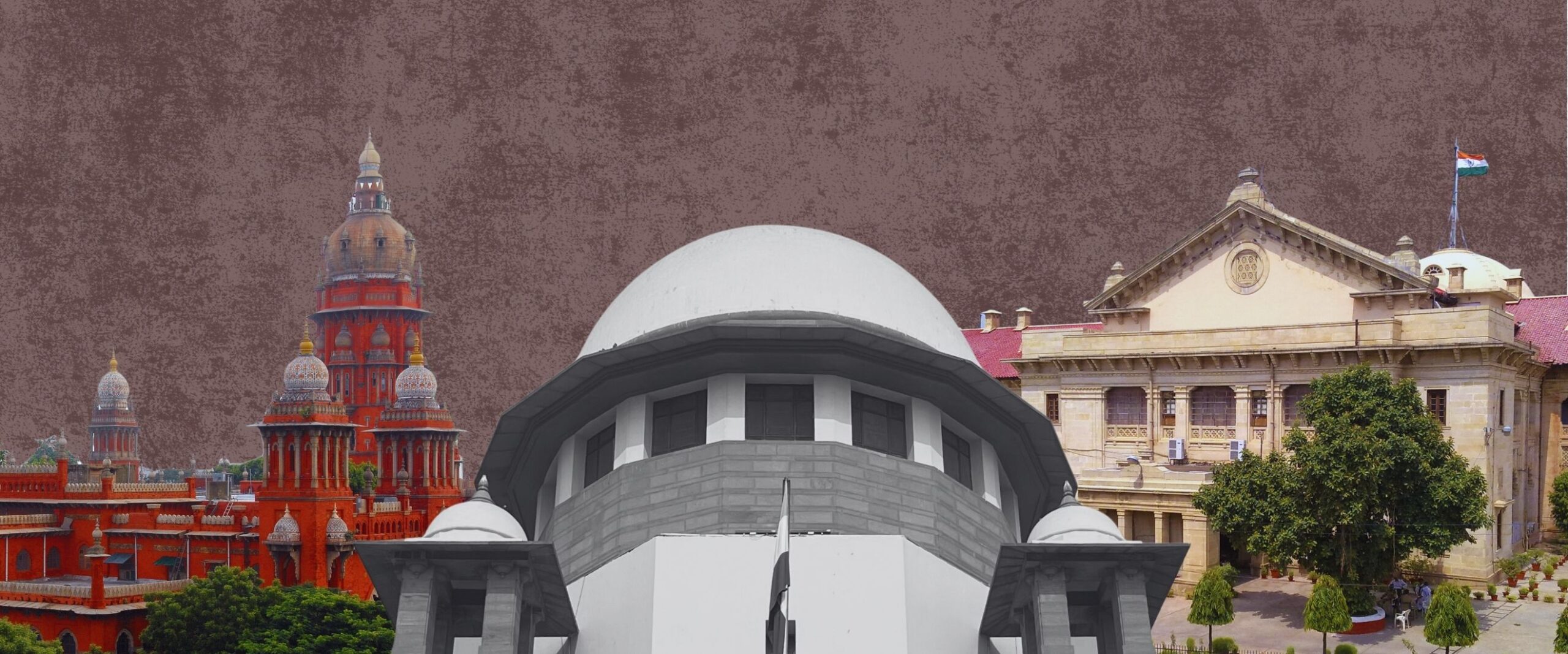
It is unusual for a High Court to tell the Supreme Court that its judgements do not bind. Recently, two High Courts—Allahabad and Madras—implied that the Supreme Court does not consistently adhere to its own precedent. Despite dealing with completely different cases and facts, their underlying message was identical.
On 27 May, a Division Bench of the Allahabad High Court, in Neeraj v State of U.P., held that five recent Supreme Court decisions on illegal arrest were “not binding precedents”. The best known among these is Vihaan Kumar v State of Haryana (2025). Neeraj was on whether an accused could use a habeas corpus petition to challenge an early remand order later in the trial. The five Supreme Court rulings answered in the affirmative. The High Court was unconvinced. In their view, the Supreme Court broke from its own precedents, pointing out that the rulings had ignored larger-bench decisions deciding against it.
The High Court’s message to the Supreme Court was implied: When two of its benches collide, the top court can refer the conflict to a larger bench and settle it. But in this case, it obviously failed to do so. It did not distinguish the judgements from the earlier ones. Consequently, this creates an ambiguity, leaving the High Courts confused due to an absence of clear precedents to be followed.
The High Court’s remedy, however, was flawed. Article 141 binds the High Court to the law laid down by the top Court. It cannot declare a Supreme Court ruling non-binding. In South Central Railway v B. Yashodabai (2014), a three-Judge Bench of the Supreme Court held that High Courts cannot brand such a ruling per incuriam.
A week later, on 3 June, the Madras High Court in M. Appavu v I.S. Inbadurai observed something similar as it declared M. Appavu the winner of the 2016 Radhapuram assembly polls. The election petition was filed in 2016. DMK’s Appavu had lost to AIADMK’s Inbadurai by 49 votes. Appavu argued that 153 postal votes in his favour were rejected. The High Court had ruled in Appavu’s favour. An appeal to the Supreme Court, filed in 2019, had remained pending. It was eventually returned back to the Madras High Court in May 2026, without reversing the High Court’s finding. By then the Assembly’s term had long expired. Ten years later, Justice G. Jayachandran of Madras High Court declared Appavu elected. A court of first instance, he reasoned, could not leave its own finding in limbo because the Court above had let time run out.
The judge’s reproach was pointed. The Supreme Court, he noted, had in Mohd. Akbar v Ashok Sahu (2015) urged that election disputes be decided early. Section 86(7) of the Representation of the People Act, 1951 says the same. Yet this dispute took a decade. He called it a “grave mockery of justice” and warned that such drift can carry a democracy towards autocracy.
The timing gave Madras High Court an unintended ally. On 29 May, days before the judgement, the Supreme Court in Pila Pahan had told every High Court to deliver reserved judgements within three months. The Bench of Chief Justice Surya Kant and Justice Joymalya Bagchi dwelt on the harm that delay does to litigants. Justice Jayachandran was, in effect, holding up a mirror.
There is a lesson in the pairing, and it runs upward. When the courts below begin to audit the court above for consistency, the strain is real. The Supreme Court answers it not by resenting the audit, but by mending its own practice.
This article was first featured in SCO’s Weekly newsletter. Sign up now!
Related articles

Analysis
The first half: A Court under strain
As the Court's strength rises to 38, old cases, open questions and new controversies crowd its attention
Analysis
Five more chairs
With its first set of recommendations, the Collegium has an opportunity to address the religious diversity question in its next cycle
Analysis
Strength and speculation
Speculation surrounds the six vacanies—who will be elevated to the top court?
Analysis
Broken bargain
The NEET-UG 2026 leak unsettles the premise on which the 2024 refusal was decided