





Analysis
The PIL’s “retreat”
The Solicitor General mistakes filing convenience for the social equity PIL was built to secure

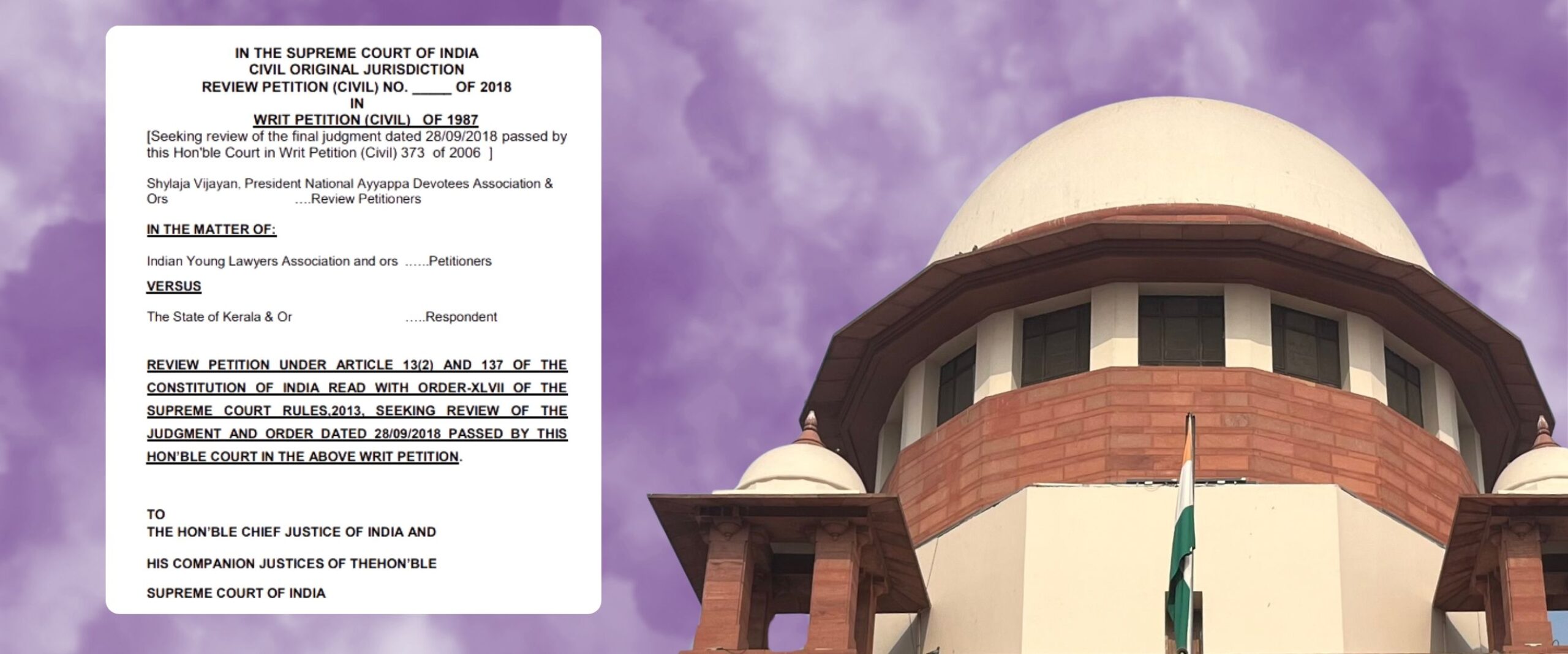
The arguments in the Sabarimala reference have seen an interesting selection of potshots against the Court’s own practices and jurisprudence. Given the nature of the questions that the Court needs to answer, it is perhaps not surprising that we have seen arguments from Solicitor General Tushar Mehta questioning some of the positions taken by the Court on essential religious practices or the relevance of concepts like constitutional morality. It is also not unusual that Mehta challenged the locus of the original petitioners, the Indian Young Lawyers Association, as it had not been filed by members of the religious denomination or a group devoted to the relevant deity.
What is surprising is his submission on how the original rationale of PIL had weakened with time. He submitted that Legal services authorities and e-filing made PIL less necessary. Further, concerns about access to the Court had been addressed since Bandhua Mukti Morcha v Union of India (1984) was first decided. My colleague, Namrata Banerjee, captures this exchange when Justice B.V. Nagarathna raised the maintainability question. She suggested that a civil court would have rejected the Indian Young Lawyers Association’s plaint under Order VII Rule 11(a) of the CPC, as they were not devotees.
Justice P.N. Bhagwati’s opinion in Bandhua Mukti Morcha, which concerned bonded labourers, was clear about why PIL mattered. The workers could not come to court on their own. Access to justice also meant articulating a claim. He wrote that the old locus rules, borrowed from private law, were ill suited to constitutional remedies whose beneficiaries were often diffuse or disabled.
A lot can change in four decades, but it would take an extraordinarily brave person to argue that these foundational issues are no longer concerns in India. Suggesting that every adversely affected person can approach the courts on their own appears naive, considering the country’s stark inequalities still persist.
Now look at what Mehta’s substitutes actually do. The Legal Services Authorities Act, 1987 provides legal aid to individual litigants who meet statutory eligibility criteria. It has no mechanism for diffuse rights. The LSA template does not fit for the commuter breathing polluted air or the tribal family displaced by an environmental clearance. E-filing is no better a substitute, as it offers little to those who lack the vocabulary to describe their own legal injury.
CJI Surya Kant did not agree with Mehta’s submission. He noted that the Court has been cautious and has laid down parameters to test them. He stated that it only issues notice in cases of “substance” and resists those with “agendas”. The CJI’s remarks are backed up by its own practice. The Court has been filtering PIL for decades. Janata Dal v H.S. Chowdhary (1992) distinguished genuine PIL from publicity and private interest litigation. State of Uttaranchal v Balwant Singh Chaufal (2010) set guidelines for weeding out frivolous petitions. BALCO Employees Union v Union of India (2002) held that PIL policy challenges should be entertained sparingly.
These filters operate at the admission stage. They address the concern that frivolous petitioners might crowd the docket. But they do not take away representative standing and replace it with the traditional aggrieved-party rule. A fair critic may say frivolous PIL warrants tighter filters. That is a separate debate from whether the jurisdiction itself is redundant. Mehta advanced the doctrinal claim while pointing at a docket-management symptom. Justice Nagarathna’s Order VII Rule 11(a) analogy also sits uneasily with the nature of cases that PIL is meant to address. Article 32 petitions are constitutional remedies, not private-law suits.
The 2018 majority in Indian Young Lawyers Association v State of Kerala did not engage with the maintainability question. Justice Indu Malhotra’s dissent, however, held that a non-devotee cannot challenge a denomination’s internal affairs under Article 32. That position was far narrower than Mehta’s broadside against PIL. Question 7 of the reference captures exactly this, but his arguments on behalf of the Union of India go much further.
This article was first featured in SCO’s Weekly newsletter. Sign up now!
Related articles

Analysis
Eight years later, Sabarimala is back in the Supreme Court
The Court will start hearing the review petition on 7 April. Here are the key aspects of the 2018 verdict that will be under scrutiny
Analysis
Nine-judge Summer
The much-awaited listing of the two nine-judge cases in the Supreme Court comes with a formal cap on hearing days

Analysis
Essential Religious Practices: Court in Review
The essential religious practices (ERP) doctrine governs which religious practices are protected under Arts. 25 & 26 of the Constitution
Analysis
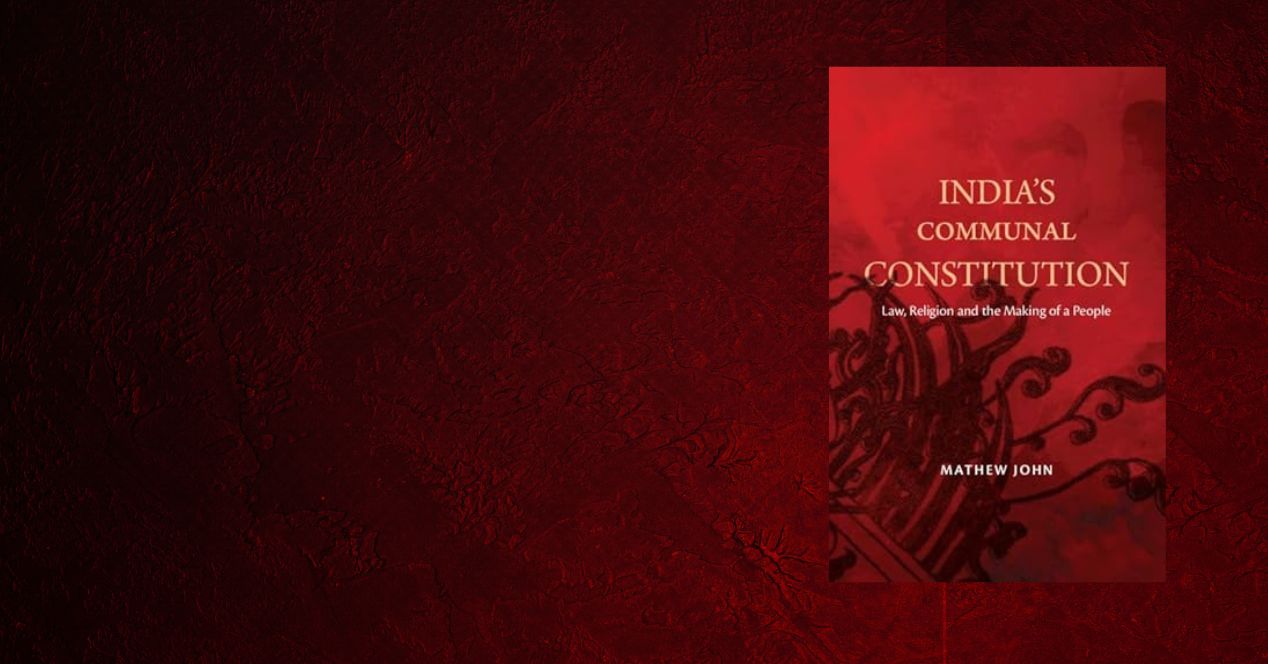
“In choosing the essential practices test, Indian courts have shaded out alternative doctrinal approaches”: Mathew John
The author of ‘India’s Communal Constitution’ on the balance between individual rights, religious identities and the Uniform Civil Code