





Analysis
Umar Khalid bail case: Constitutional abdication, not judicial restraint
By denying bail to Khalid and Sharjeel Imam, the Supreme Court could have precipitated a doctrinal shift with implications for undertrials

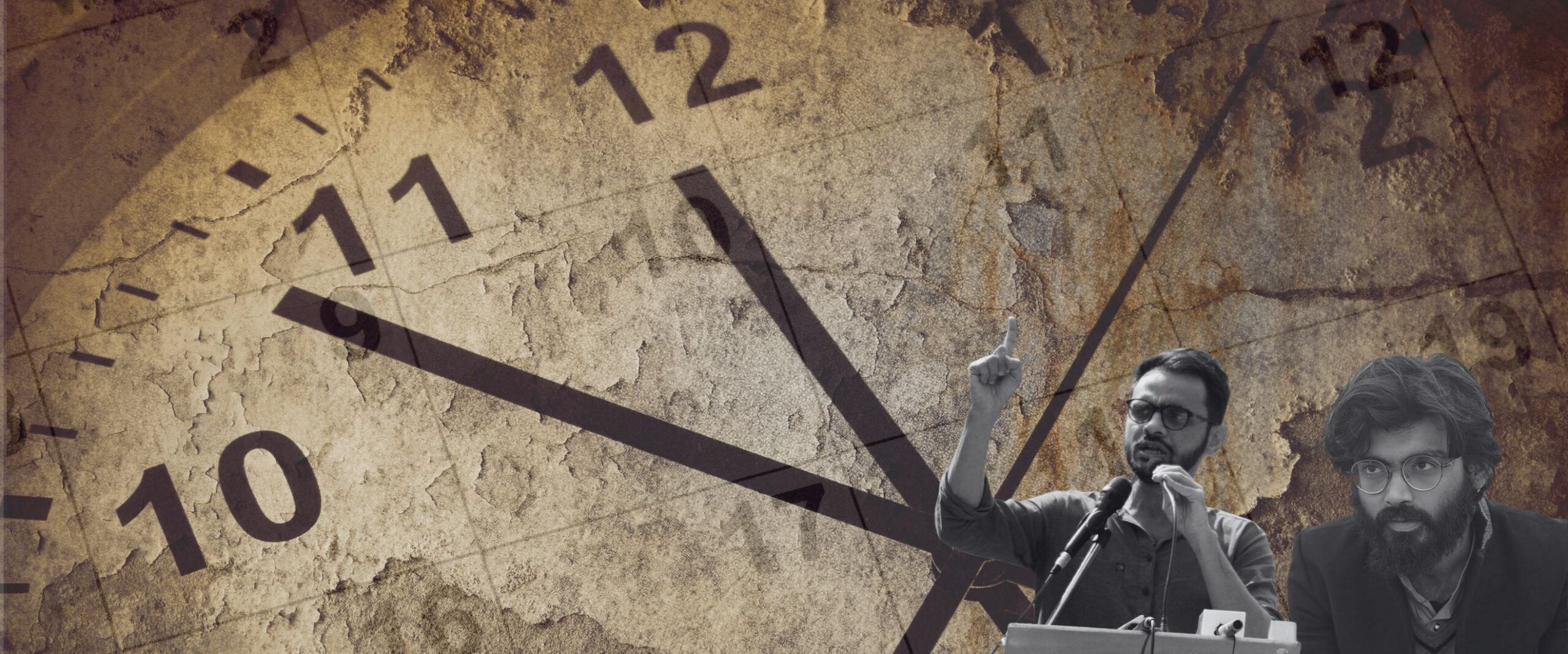
On 5 January 2026, a Bench comprising Justices Aravind Kumar and N.V. Anjaria delivered its verdict in a batch of bail petitions concerning seven individuals accused under the Unlawful Activities (Prevention) Act, 1967 (“UAPA”). The appellants were implicated in the communal violence in North-East Delhi in February 2020, an episode that claimed 54 lives and caused widespread destruction of property.
All seven appellants—Sharjeel Imam, Umar Khalid, Shifa-ur-Rehman, Mohd. Saleem Khan, Meeran Haider, Shadab Ahmed and Gulfisha Fatima—had been in continuous judicial custody for over five years, without charges having been framed. The Court granted bail to five accused and denied it to Sharjeel Imam and Umar Khalid, who were characterised as the “principal architects” of the alleged conspiracy. The Judgement contains 444 paragraphs across 142 pages. A summary is provided here.
This commentary examines the verdict on two interrelated axes. First, it analyses the Court’s treatment of trial delay and its reframing of prolonged incarceration from a rights-based violation into a contextual consideration. Second, it interrogates the application of the bail provision of the UAPA—Section 43D(5).
Distinguishing Najeeb
In Union of India v K.A. Najeeb (2021), a three-judge Bench of the Supreme Court found that prolonged incarceration without reasonable trial progression warrants constitutional intervention. The Court observed that the “rigours of [statutory bail] provisions will melt down where there is no likelihood of trial being completed within a reasonable time and the period of incarceration already undergone has exceeded a substantial part of the prescribed sentence.” In the present Judgement, Najeeb is repositioned not as establishing a presumptive ceiling on pre-trial detention, but merely as recognising a “safeguard against unconscionable detention” to be invoked only in “appropriate cases”.
‘Balancing’ trial delay against other factors
In the present Judgement, the Court acknowledges that “prolonged custody undoubtedly implicates the constitutional guarantee of personal liberty under Article 21 of the Constitution, and such a plea cannot be rejected on the basis of duration alone without a careful and fact-sensitive examination.”
Yet, what follows is not heightened scrutiny but contextual dilution. Rather than treating five years of pre-trial detention as triggering a presumption in favour of bail—as Najeeb suggests—the verdicts converts delay as a factor to be “balanced” against: (a) the gravity of the allegations; (b) the statutory context; (c) the role attributed to each accused; (d) the causes contributing to trial delay; and (e) the risks attendant upon release. This represents a doctrinal shift with profound implications for undertrials. When delay becomes merely one consideration rather than a threshold trigger, the constitutional safeguard loses its operative force.
Whose fault is the delay?
Justice Kumar devotes considerable attention to determining delay responsibility, finding no support for attributing delay to prosecutorial or judicial inaction. This finding rests on three problematic foundations. First, it places the burden of delay on the accused. Constitutional rights should not operate on a fault-finding principle where the accused must demonstrate that the State is responsible for the delay before Article 21 protection attaches. The guarantee of a speedy trial is not conditional upon the accused establishing prosecutorial negligence.
Second, it treats complexity as exculpation. The Court repeatedly emphasises that the prosecution involves “multiple accused persons, voluminous documentary and electronic evidence, and allegations of a structured and continuing conspiracy.” The State’s decision to invoke UAPA, selectively array more than 20 accused via supplementary chargesheets, cite more than 850 witnesses and rely on thousands of pages of material is a strategic prosecutorial decision. Permitting complexity to justify extended incarceration creates perverse incentives: the more expansive and unwieldy the prosecution, the longer the accused may be detained without trial.
Third, it relies selectively on co-accused precedents. The judgement cites Tasleem Ahmed v State (NCT of Delhi) (2023), where the Delhi High Court rejected delay-based bail claims after a detailed examination of the trial court order-sheets. However, the Bench fails to engage with the fact that in the very same FIR, several co-accused (Devangana Kalita, Natasha Narwal, Asif Iqbal Tanha) were granted bail by the High Court, which the Supreme Court declined to interfere with.
The Gurwinder Singh precedent
The Judgement invokes Gurwinder Singh v State of Punjab (2024) to support the proposition that “delay-based pleas must necessarily be adjudicated on an accused-specific footing” and that “delay simpliciter eclipses a statutory regime enacted by Parliament to address offences of a special category.”
The Bench’s reliance on Gurwinder Singh is problematic for two reasons: First, the factual matrix differs materially. In Gurwinder Singh, the accused had been in custody for approximately five years, but 22 out of 109 witnesses had been examined, indicating active trial progression. In the present case, charges have not even been framed after more than five years. The trial has not commenced in any meaningful sense.
Second, Gurwinder Singh cannot be read as eclipsing Najeeb. Najeeb is a three-judge Bench decision; Gurwinder Singh is a two-judge Bench decision. To the extent Gurwinder Singh suggests that delay is never sufficient grounds for bail under UAPA, it cannot override the categorical holding in Najeeb that the “rigours of such provisions will melt down where there is no likelihood of trial being completed within a reasonable time.”
The present Judgement attempts to harmonise these precedents by suggesting that Najeeb applies only in “extreme” or “unconscionable” cases. If five years of pre-trial detention without charges being framed does not constitute unconscionable delay, what quantum of detention would? The Court is silent on the same.
A data set review of Supreme Court bail decisions under the UAPA and PMLA in 2024 and 2025 reveals a consistent judicial pattern: prolonged incarceration, particularly where trials have not commenced, has generally warranted bail. In cases such as V. Senthil Balaji, Athar Parwez, Sheikh Javed Iqbal and Jalaluddin Khan, custody ranging from over two to nine years—often without charges being framed or with minimal trial progress—was held sufficient to justify release, considering the violation of Article 21.
Section 43D(5) and ‘prima facie true’
Section 43D(5) requires courts to be satisfied that “reasonable grounds exist for believing that [the accused] is not guilty of such offence” before granting bail. The Judgement recognises this standard as “accused-specific”, requiring “prima facie nexus” between the accused and the statutory ingredients. However, its application reveals a troubling conflation: the statutory standard of “prima facie true,” which demands some judicial assessment, is collapsed into “prosecution material taken at face value,” which is the phrase used in the Judgement.
The Judgement emphasises that the bail stage does not permit “weighing evidence, testing defences, or conducting mini trial.” This principle is unexceptionable in ordinary bail jurisprudence. However, it becomes problematic when applied to UAPA prosecutions founded primarily on interpretive material.
Consider the evidence types relied upon: Sharjeel Imam’s speech calling for ‘chakka jam’ in Delhi is accepted at face value as terrorist incitement without engaging whether such exhortation constitutes terrorism. Umar Khalid’s attendance at meetings in Jangpura, Jamia and Seelampur is accepted as conspiratorial planning without examining whether discussing protest strategy satisfies the statutory elements in Section 15. Meeran Haider’s WhatsApp group membership becomes evidence of conspiracy through the reasoning that “a conspirator’s role may be inferred from where he is placed in the architecture, not only from what he typed.”
The difficulty is not that courts accept prosecution evidence at face value—this is required at the bail stage. The difficulty is that much of the prosecution’s “evidence” in UAPA cases is inherently interpretive.
Factual allegations amenable to face-value acceptance include weapon recoveries, CCTV footage showing violence and forensic evidence linking the accused to crime scenes. Interpretive allegations require evaluation and interrogation of the prosecution’s framework. The Judgement’s insistence that “issues such as: (i) admissibility of electronic material; (ii) compliance with procedural requirements; (iii) reliability of witness statements; (iv) interpretative nuances of speeches… are all matters to be addressed at trial” becomes (and will become) a formula for indefinite pre-trial detention.
The abandonment of Vernon
The Judgement distinguishes Vernon v State of Maharashtra (2023), noting that it did not dilute the embargo under Section 43D(5). However, Vernon is instructive precisely because it demonstrated how courts can undertake meaningful bail-stage scrutiny even under Section 43D(5). In Vernon, the Court recognised that “prima facie true” requires some threshold scrutiny of whether the prosecution material, even accepted in its entirety, is legally sufficient to establish the offence charged.
The present Judgement pays lip service to this principle but does not apply it. The Court does not ask: even accepting that Imam called for chakka jams, that Khalid attended meetings, that Haider was in WhatsApp groups, do these acts satisfy the elements of Sections 15, 16, 17, and 18 of UAPA? Instead, the Judgement treats the invocation of UAPA as presumptively valid, subject only to final determination at trial.
Article 21 remains a divided promise
The Judgement’s central organising principle distinguishes “principal architects” (Imam and Khalid) from “local executors” (the other five appellants). An entire section addresses “Individualised Role and Differentiation”, emphasising that allegations against the principal accused indicate a central and directive role in the alleged terrorist act, whereas material against certain co-accused reflects conduct of a facilitative nature.
The Judgement sets out multiple grounds for differentiation: evidentiary strength; command authority and mobilisation capacity; proportionality considerations where public interest requires detention of “architects” but not necessarily “minor participants”.
This framework is doctrinally coherent and may represent a genuine individualised assessment attempt. However, it also generates paradoxes that the Judgement never adequately resolves. If five of seven appellants could be safely released after five years without compromising trial integrity or national security, what justification remains for continued incarceration of the other two?
Investigation has concluded and chargesheets filed, yet their alleged “foundational” role justifies continued detention absent any forward-looking investigative purpose. The same witnesses testify against all the accused, yet witness tampering is deemed manageable for five but insurmountable for two. The alleged “ability to mobilise or influence individuals” remains an unproven allegation, yet the Court presumes it translates into continuing danger sufficient to override Article 21.
These paradoxes reveal deeper structural problems. The promise of Article 21 remains formally intact but negotiable and selective in scope. Five years without trial is unconscionable—unless the accused allegedly organised “dissent”. Pre-trial detention violates speedy trial guarantees—unless the prosecution invokes national security. Statutory embargoes must yield to constitutional rights—unless the accused is characterised as “principal architect”. The asymmetries are glaring, and it will now be up to future benches to confront them.
Sarthak Gupta is a New Delhi-based advocate and Researcher at Columbia University, New York, working on a project on free speech, media laws and censorship. He has previously served as a law clerk in the Supreme Court.
Related articles

Analysis
Article 21 remains a divided promise in the Supreme Court’s bail jurisprudence
The selective reading of liberty in UAPA and PMLA cases hinges on the accused’s identity. A ‘Khalid Test’ could offer a course correction
Court Data
The SC on bail under UAPA and PMLA: a dataset from 2024 and 2025
As the Supreme Court considers the bail plea of Umar Khalid, here’s a ready-reckoner of relevant verdicts from the last couple of years
Analysis
The right to life and personal liberty under Article 21: A timeline
50 years since the Emergency, SCO traces the Court’s gradual expansion of the right to life and personal liberty
Analysis
Umar Khalid’s Bail Application Tracker
Tracking activist Umar Khalid's bail applications in the Delhi High Court and the Supreme Court of India