





Analysis
Delhi protest curbs: SC hears contempt petition
The Court on 9 October had stated that a decision may be made to permit Metro trains and other rail services in a regulated manner

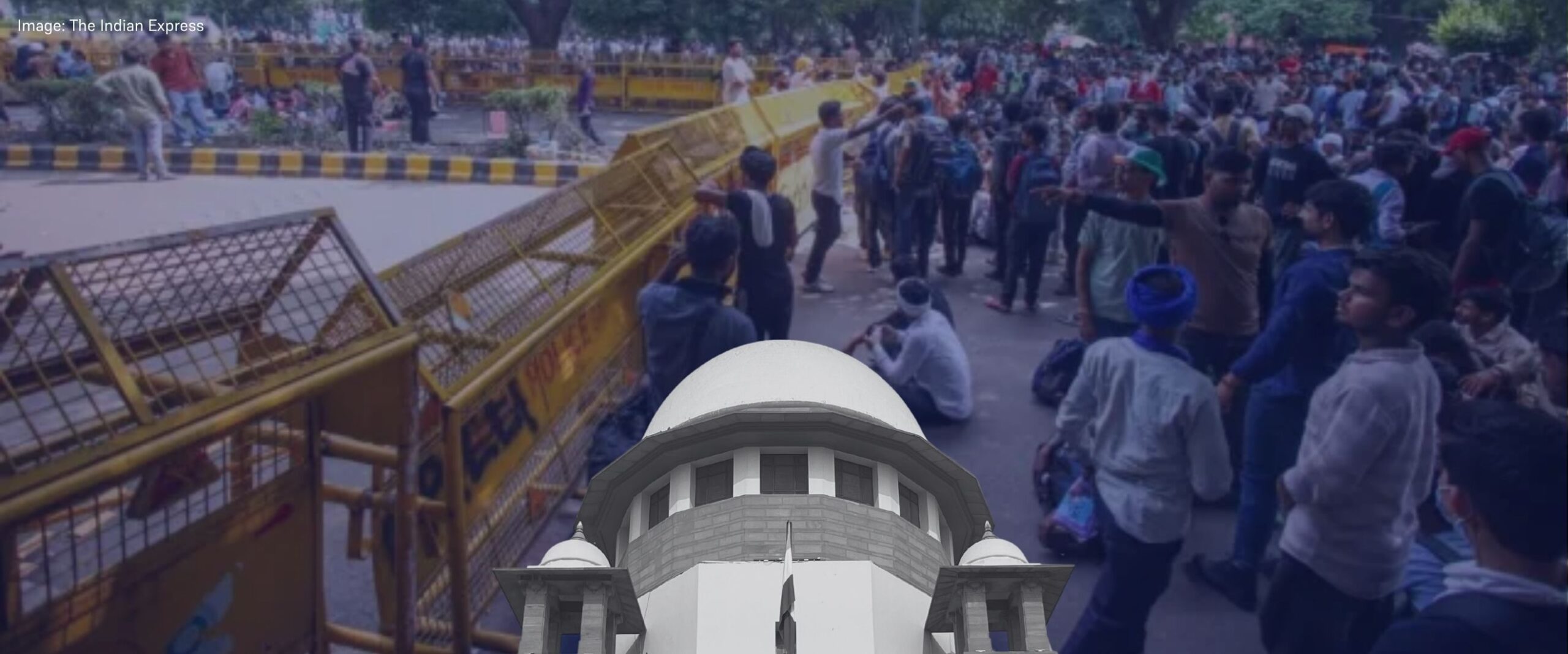
Today, the Supreme Court Bench of Justices Joymalya Bagchi and V. Mohana held a Sunday sitting to hear a contempt petition alleging disobedience of its 9 Oct directions regarding Delhi Metro and rail restrictions, ahead of the 10 Oct protests.
On 9 Oct, the Court had directed that there cannot be a total “prohibition” but a “regulation”. It had stated that a “prudent decision may be made to permit the operation of Metro trains and other rail services in a suitable and regulated manner. Such a decision should be widely publicised to prevent further inconvenience.”
The contempt petition argues that gates at key stations remained locked or closed, despite the Supreme Court’s Order and the assurances given by Solicitor General Tushar Mehta. Further, authorities maintained a blanket shutdown of metro stations in the capital without issuing any advisories. It claims that this is a deliberate violation of the citizen’s right to movement as “essential public mobility was brought to a standstill”. It states that the “deliberate recalcitrance has severely crippled public life across the National Capital Territory, stranding essential travelers, and amounts to an intentional attempt to bypass and undermine the authority and majesty of this Hon’ble Court”. The petition prays for an interim direction “commanding the Respondents to immediately revoke all blanket prohibitory orders against Metro and Railway operations, and enforce a strictly regulated, operational schedule with immediate public notice”.
A habeas corpus petition was also filed by Senior Advocate Menaka Guruswamy. It was argued that 7000 persons were detained across Delhi during the protests and no official figure was confirmed by the authorities on the total number of persons detained. Among them were three former Chief Ministers, leaders from the opposition party and Cockroach Janta Party leaders. The protests were in regard to the functioning of the Election Commission of India, demanding a resignation of Chief Election Commissioner Gyanesh Kumar.
Several other petitions filed by the Supreme Court Advocate on Record Association (SCAORA) and other unlisted pleas will be tagged to this petition.
Directions from the Supreme Court
The Supreme Court heard arguments and directed the following:
- Metro and rail services shall operate normally across all stations as per their schedule, subject to public order conditions under Article 19(2).
- Free movement of people and traffic in the city shall be permitted subject to the traffic regulations. Barricades imposed in the city shall be reviewed, keeping in mind law and order conditions under Article 19(2).
- Internet facilities throughout the city shall remain undisturbed.
- Advocates, journalists and professionals shall not be impeded or prevented from discharging their professional duties.
- There can be no detention save and except by procedure established by law, particularly with regard to peaceful unarmed assemblage of people beyond the
- Boards imposing restrictions under Section 163 of the BNSS around the Supreme Court premises have to be removed. There cannot be any apprehension with regard to the access to justice to the Supreme Court and any other court of law.
The Supreme Court did not provide any immediate relief with regard to the alleged contempt allegations and the release of the persons detained during the protests. The Court directed the alleged contemnors to file an affidavit and a compliance report of its 9 October directions by Tuesday.
(This report will be updated)