





Analysis
SC asks authorities to “regulate” metro, train services ahead of CJP protest
The Bench ruled out a complete Metro shutdown and directed authorities to issue a traffic advisory

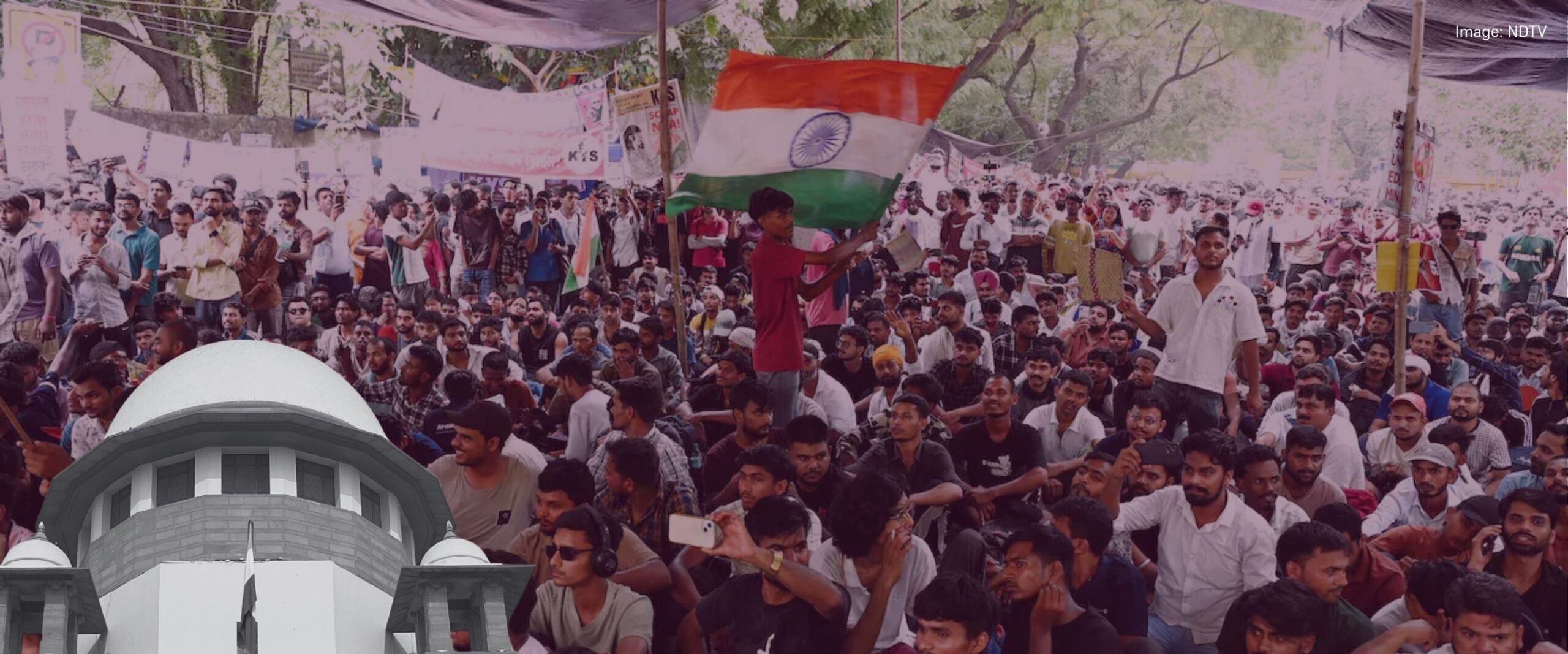
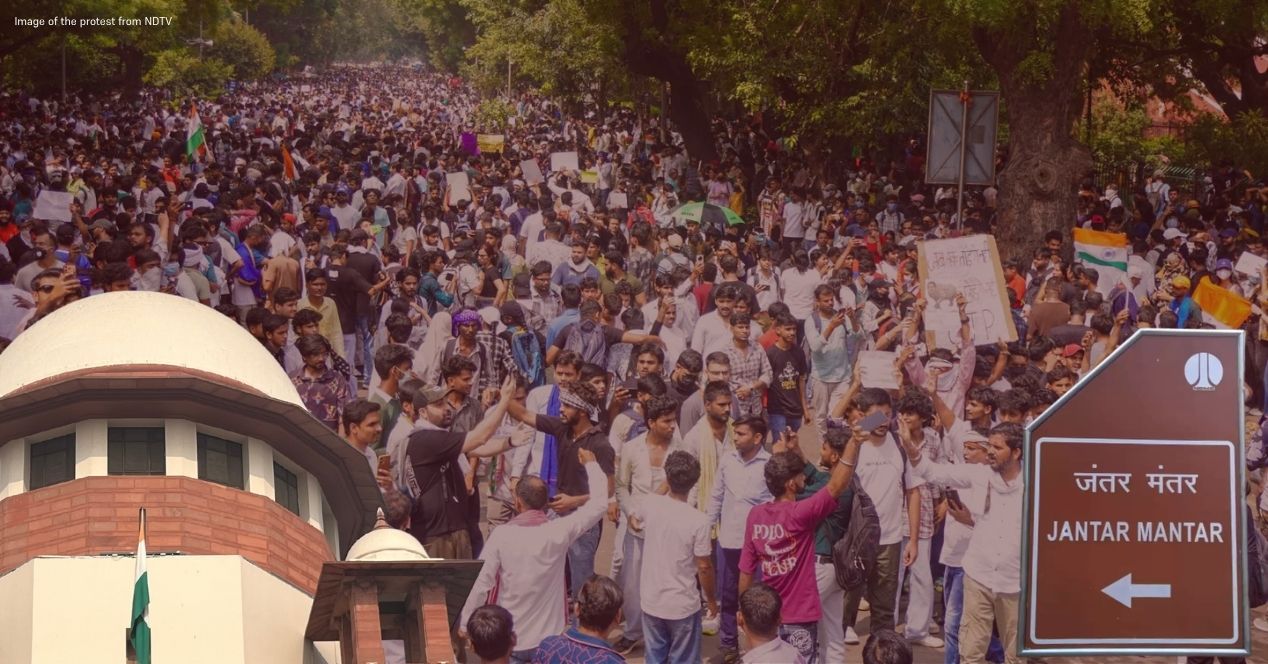
Shortly before lunch break, the Bench of Chief Justice Surya Kant and Justices Joymalya Bagchi and V. Mohana was approached by a battery of counsel. Senior Advocates Kapil Sibal, Gopal Sankaranarayanan and N.Hariharan and Advocates Vindra Grover and Prashant Bhushan told the Bench that the transport restrictions in Delhi made it difficult for residents to move around the city. The restrictions have been put in place ahead of the protests called by the Cockroach Janta Party (CJP) and other groups seeking a resignation of Chief Election Commissioner Gyanesh Kumar and the suspension of the Special Intensive Revision of electoral rolls.
The protest was called after an Indian Express investigation reported that two members of the three body Election Commission of India had objected to several decisions passed by it. Calls for Kumar’s resignation grew, with a protest organised by the CJP. The memories of the NEET-UG protests—organised by the CJP in July 2026—are still fresh. This has birthed a stringent response with transport restrictions in the capital. Long-distance trains are being cancelled at their source, 57 metro stations are set to close and roads are being barricaded. Moreover, unlike the NEET-UG protest, the Delhi police has denied permission for the protestors to gather at Jantar Mantar. .
Sibal showed urgency as he exclaimed, “What is happening to my country?”, to which Solicitor General Tushar Mehta reacted: “It is ‘our’ country.” The Court summoned the organisers of the protest at 2pm. The organisers remained absent when the Bench took up the matter shortly after lunch.
Petitioners: We are the citizenry of Delhi
The counsel clarified that they were not appearing for the protest organisers. Their concern was on the effect of the restrictions on ordinary residents. “We are the citizenry of Delhi who are being affected by decisions which are disproportionate,” Sankaranarayanan told the Bench. Hariharan said barricaded roads were making it difficult even for people with cars to travel between parts of the city. CJI Surya Kant pointed to court clerks, support staff and canteen workers, as well as students, employees and senior citizens travelling from Gurgaon, Noida and other parts of Delhi. He questioned the need to disrupt public transport to prevent possible disorder: “Everybody does not have a car. Everybody does not have access to private transport. People depend on public transport. This cannot be done,” he said.
Counsel questioned whether the restrictions were proportionate, arguing that measures to prevent disorder could not come at the cost of ordinary citizens’ ability to move freely and access public transport. The curbs raised questions about the right to assemble peacefully under Article 19(1)(b) and the right to move freely throughout India under Article 19(1)(d).
Justice Bagchi: Reduction of frequency is regulation, closure is prohibition
The Bench examined a communication from the Joint Commissioner of Police, Transport Range, to the Delhi Metro Rail Corporation (DMRC) and a railway communication dated 9 October. The authorities cited the likelihood of unruly movement towards New Delhi and Hazrat Nizamuddin railway stations. The DMRC announced that entry and exit gates at 57 Metro stations would remain closed from 9 pm today through Saturday, until further notice. Interchange facilities would remain available, except at New Delhi Metro station. The Railways also directed the cancellation at the source of Mail and Express trains scheduled to arrive at New Delhi and Hazrat Nizamuddin during specified hours on Saturday, citing anticipated congestion.
Mehta initially submitted that the Metro communication provided for reduced train frequency rather than a complete shutdown, however, the Bench asked him to read the part directing that station entry and exit be closed until the situation normalised. Questioning the distinction, Justice Bagchi remarked, “Reduction of frequency is regulation. Closure is prohibition.”
Sibal questioned why trains travelling from other parts of the country should be cancelled at their source because their scheduled arrival fell within the restricted hours. Hariharan pointed out that road barricades were preventing movement across the city.
Mehta defended the restrictions by referring to the earlier protest where permission granted for one day continued for 17 days. He said the organisers had undertaken to vacate the site after the permitted period. He referred to the previous march towards Parliament, alleging that more than 200 police personnel had been injured. The government had a responsibility to protect police personnel and the public, he said. Mehta added that internet restrictions were confined to the area around Rashtrapati Bhavan and Raisina Road, within a radius of approximately four kilometres, and were reviewed according to the situation.
The Bench accepted that authorities could take preventive measures, including using CCTV cameras and other security arrangements. But maintaining law and order could not mean cutting off public transport for people who had nothing to do with the protest. The state’s responsibility extended to children, senior citizens and patients travelling through the affected areas. “You have to prevent certain things. Take measures only to the extent necessary to prevent them. But that does not mean you should use a hammer to kill a fly,” the CJI said.
The Bench asked authorities to review road barricading and identify where restrictions were necessary. Senior Advocate Nitya Ramakrishnan separately alleged that police personnel had visited mosques and asked people not to join the protest. She referred to photographs and a video. Mehta objected. CJI Surya Kant said the Court could not comment on the allegations without hearing the authorities concerned.
Centre asked to consider another protest venue
The Bench suggested that the Centre designate an alternative to Jantar Mantar for peaceful protests, with adequate facilities and emergency access. Counsel suggested Ramlila Maidan. The Court asked the Government of India to consider the proposal.
In its order, the Bench recorded Mehta’s assurance that he would ask the authorities to reconsider the restrictions and allow Metro trains and other railway services to operate in a suitably regulated manner. It stated that there shall be no complete prohibition on the movement of metro trains, and directed the authorities to publicise their decisions on Metro and railway services widely, including through newspapers and websites.
The Court also directed the authorities to issue a traffic advisory for people travelling by road in Delhi. It did not decide whether Saturday’s protest should be permitted.
Related articles

Analysis
SC quashes Jantar Mantar protest FIRs across India, permits fresh FIR against 2873
CJI said the order would provide a “healing balm” to protesters while preserving the State’s right to prosecute alleged offenders
Analysis
SC says Jantar Mantar protest FIRs cannot define students’ futures
The Court said Article 142 can clear FIRs involving students, cases against those accused of grave offences will continue separately
Analysis
SC brings Jantar Mantar HPEC under its direct supervision
Bench directs confidential access for vulnerable witnesses
Analysis
SC to hear plea challenging composition of Jantar Mantar protest inquiry committee
Petitioners flagged a “common concern” over the committee as SG Mehta described the application “very mischievous”