




Analysis
Supreme Court stays Delhi HC suspension of Sengar’s life sentence
Sengar argued that the IPC definition of ‘public servant’ does not include an MLA; the CBI contended that it must be looked at contextually

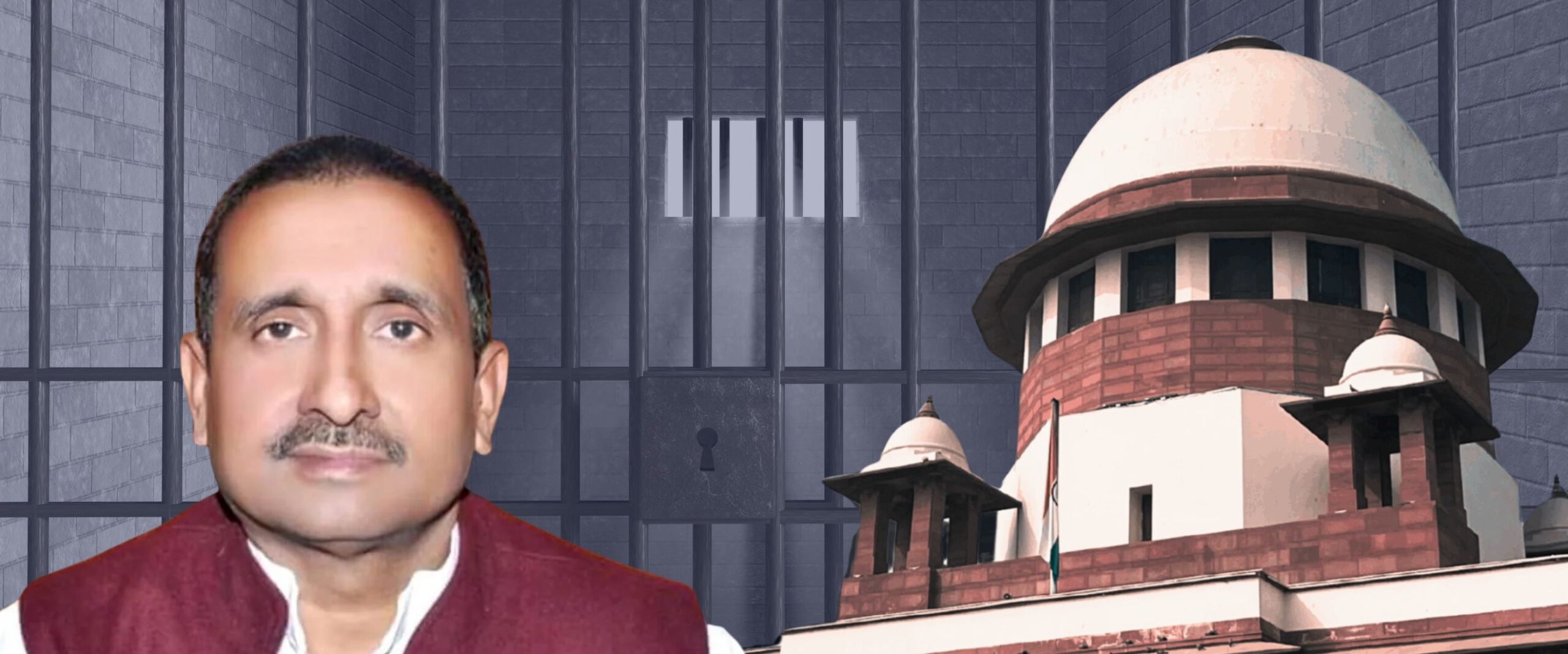
On Monday 29 December, the Supreme Court stayed the operation of a Delhi High Court order which had suspended the life sentence awarded to Kuldeep Singh Sengar, a former MLA of the Bharatiya Janta Party, in the Unnao rape case. A Bench of Chief Justice Surya Kant and Justices J.K. Maheshwari and A.G. Masih found that the matter raised substantial questions of law on sentencing under the Indian Penal Code, 1860 (IPC) and the Protection of Children from Sexual Offences Act, 2012 (POCSO Act).
Background
The case arises from the 2017 Unnao rape incident, in which the survivor, then a minor, alleged sexual assault by Sengar, a sitting MLA at the time. The investigation was later transferred to the Central Bureau of Investigation (CBI) amid allegations of intimidation and the custodial death of the survivor’s father.
Sengar stands convicted under Sections 363, 366 and 376 of the IPC, read with Sections 5(c) and 6 of POCSO. By an order dated 20 December 2019, the Trial Court sentenced him to life imprisonment.
The Delhi High Court holding
While considering Sengar’s application for suspension of sentence under Section 389(1) of the Code of Criminal Procedure, 1973 (CrPC), the Delhi High Court noted that the POCSO Act does not define “public servant” and that Section 2(2) of the Act expressly imports definitions from the Indian Penal Code. Since Section 21 of the IPC does not include a Member of the Legislative Assembly, the Court held that the aggravated offence provision could not be applied to Sengar at the interim stage.
It noted: “For the purpose of suspension of sentence, the Appellant cannot be brought into the ambit of ‘aggravated penetrative sexual assault’ under Section 5 of the POCSO Act, punishable under Section 6 of the POCSO Act, or under Section 376(2) of the IPC, which provides for the punishment of imprisonment for the remainder of his natural life.”
The High Court clarified that this was a prima facie view and declined to examine the merits of conviction. Applying the law as it stood prior to the 2019 amendment to the POCSO Act (which introduced a minimum of 20 years of imprisonment), it held that only an offence under Section 3 of the Act would survive for interim purposes, punishable under Section 4 with a minimum of seven years’ imprisonment. As Sengar had already undergone more than seven years of incarceration, the Court suspended the life sentence pending appeal, subject to strict conditions.
CJI: Is ‘public servant’ definition relevant when victim is a minor?
Solicitor General Tushar Mehta, appearing for the CBI, described the case as “a horrific case of rape of a child.” He submitted that charges were framed under Section 376 of the IPC and Sections 5 and 6 of the POCSO Act. He told the Court that conviction stands on two counts and that the Trial Court recorded a clear finding that the child was “15 years 10 months” old at the time of the offence.
Mehta submitted that Section 376 covers rape as defined under Section 375 as well as rape committed by a person who enjoys a dominant position over the victim. In such cases, he argued, the statute permits life imprisonment. While the minimum sentence of 20 years was introduced by a later amendment, he submitted that even under the unamended provision, life imprisonment applied. “Whether it is twenty years or biological life,” he said, “life imprisonment is there.”
When CJI Surya Kant asked whether the concept of “public servant” becomes irrelevant if the victim is a minor, Mehta responded that penetrative sexual assault under Section 3 of the POCSO Act is an independent offence, with punishment under Section 4. He submitted that aggravated offences under Section 5 apply where the offender enjoys a position of dominance over the child. He argued that the definition of “public servant”, though borrowed from the IPC, must be applied contextually.
Drawing attention to Section 42A of the POCSO Act, Mehta further submitted that the statute has an overriding effect where there is divergence with any other law. He argued that the Delhi High Court did not deal with this provision at all. He also pointed out that Sengar continues to remain in custody for a separate conviction relating to the death of the survivor’s father.
Hariharan: Penal statute cannot import definitions from another statute beyond what’s mentioned
Senior Advocates Siddhartha Dave and N. Hariharan appeared for Sengar. Dave relied on Section 2(2) of the POCSO Act. He submitted that the provision expressly imports definitions from the IPC. The High Court, he argued, proceeded on that basis. Since an MLA does not fall within Section 21 of the IPC, he argued, the aggravated offence provision under Section 5(c) could not apply. Hariharan added that a penal statute cannot import definitions from another statute beyond what is expressly provided.
CJI Surya Kant observed that the interpretation adopted could result in constables or patwaris being treated as ‘public servants’ for aggravated sexual assault, but not elected representatives.
The Bench noted that release orders are not ordinarily stayed once liberty has been granted; however, the present case stood on a different footing since Sengar remains in jail in another case. The Court issued notice, granted four weeks for filing responses and stayed the operation of the Delhi High Court order.
Related articles

Analysis
Can the tragedy at Unnao shape POCSO implementation?
DESK BRIEF: On July 31st, Chief Justice Gogoi tagged the Unnao rape to the POCSO case.
Analysis
“Not a precedent”: Supreme Court holds back from sentencing POCSO convict
In a rare judgement, the Supreme Court held that the imprisoning of the POCSO convict would worsen victim’s life
Analysis
Supreme Court holds that viewing, storing and possessing ‘child pornography’ is punishable under POCSO Act; overturns Madras HC decision
With this decision, India joins an exclusive club of jurisdictions which have explicitly criminalised watching child pornographic material