


Analysis
Supreme Court wants teeth in curbs on courtroom clips
The Bench sought enforcement measures as the Solicitor General flagged violations of restrictions on courtroom recordings.

Today, a Bench of Chief Justice Surya Kant and Justices Joymalya Bagchi and V. Mohana said the Union’s proposed policy on courtroom recordings must provide for action against those who breach the Court’s restrictions on their unauthorised use.
Can technology prevent clipping?
Solicitor General Tushar Mehta told the Court that suggestions received from High Courts and lawyers had been forwarded to the Ministry of Electronics and Information Technology (MeitY). He flagged violations of the existing restrictions and asked the Court to consider directing the removal of content uploaded in breach of its orders.
Advocate Prashant Bhushan suggested hosting authenticated recordings on the Supreme Court’s official website, using digital watermarks and other safeguards to establish their authenticity. Justice Bagchi said the Court was exploring administrative measures to prevent users from extracting clips from livestreamed proceedings, including from High Court YouTube channels. He acknowledged the difficulty of implementing such measures.
Bhushan questioned what would qualify as “commercial exploitation”, asking whether a YouTuber explaining a hearing to the public would need permission to use a clip from the Court’s official website. Justice Bagchi said the purpose of using a recording and the extent of the material reproduced would matter, and indicated that permission from the Supreme Court Secretary General could be required. Mehta argued that YouTubers earned money from their content and were not necessarily using the recordings for a public purpose. Bhushan said requiring prior permission could create difficulties. Justice Bagchi reiterated that the Court would have to consider both the extent of the material used and the purpose for which it was reproduced.
Interim restrictions continue
The Court’s interim restrictions, issued on 24 July, prohibit the extraction, circulation, monetisation, modification and online hosting of audio-video recordings of judicial proceedings without prior permission from the Supreme Court Secretary General or the Registrar General of the jurisdictional High Court. On 9 October the Court granted the Union time to prepare a policy proposal taking into account suggestions from High Courts and interveners. The restrictions remained in force while the policy was being formulated. On 31 July the court had clarified that news outlets could continue reporting on judicial proceedings, provided they did not reproduce audio or video clips of the hearings.
Related articles

Analysis
“No question of gagging…”: Supreme Court seeks guidelines on disseminating courtroom clips
The Bench asked the Union to propose safeguards, while directing social media channels to comply with its order prohibiting circulation
Channel
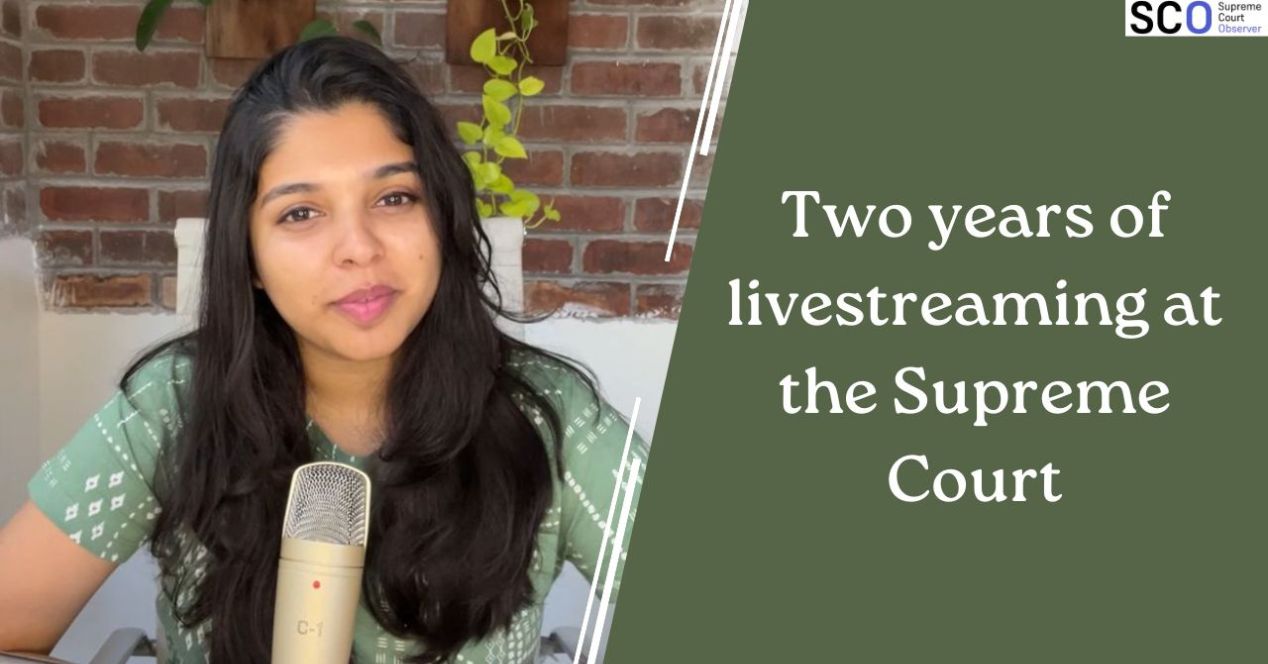
Two years of live streaming at the Supreme Court
As the SC has started livestreaming Division Bench cases, the lines between public interest and institutional posturing have become blurrier

Analysis
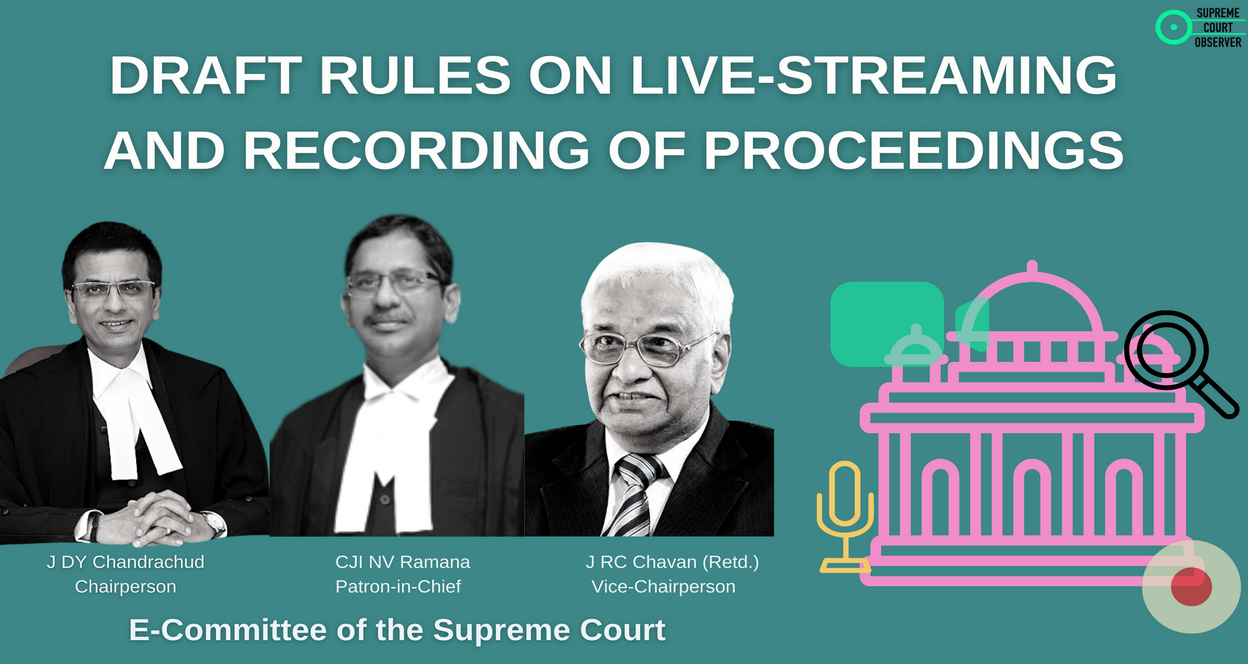
E-committee Releases Draft Model Rules for Livestreaming HC Proceedings
The e-committee of the Supreme Court announce Draft Rules for livestreaming of High Court proceedings.