





Analysis
The first half: A Court under strain
As the Court's strength rises to 38, old cases, open questions and new controversies crowd its attention

The Supreme Court’s six-week long partial working day began with the appointment of five new judges. This increased the strength of the Court to 37 judges, one short of its sanctioned strength. While this is indeed a milestone in the Court’s history, the period inadvertently birthed a novel political phenomenon. A stray comment by CJI Surya Kant about “cockroaches” triggered public pushback, resulting in the satirical Cockroach Janata Party (CJP). The CJI first responded saying he was “misquoted” and that he was never against the country’s youth. Later, in the backdrop of the outrage, he softened and advised a petitioner who sought action against the CJP, to avoid being “sentimental”. While the Court is often remembered for its judgements and doctrines, providing the foundation for a political party was arguably the least expected legacy of its Chief Justice.
The headline-grabbing controversy, however, was merely an eccentric footnote to a more rigorous administrative and jurisprudential agenda. The first half of 2026 was, to a serious observer, defined by a Court rewiring its own internal perations—pendency, house-keeping measures and institutionalising discipline in proceedings. One of CJI Surya Kant’s earliest measures was to put a cap on oral mentioning (later reversed in April), oral arguments and written submission lengths. Next, he listed Constitution Bench matters that had been lying dormant for years.
Yet the Sabarimala Reference, listed in April and May, resisted those ambitions. Arguments before a nine-judge bench took 16 days (57 hours) to conclude, despite the Court setting aside eight days to conclude hearings. A nine-judge bench reserved judgement in pleas revisiting Bangalore Water Supply v R. Rajappa (1978), a decision which provided an expansive definition for “industry” under the Industrial Disputes Act, 1947. Nearly fifty years later, with scores of litigation settled under the definition, the Bench deliberated the definition’s correctness.
Among house-keeping decisions, the Court disposed of an M.C. Mehta petition pending since 1985, with the Chief describing its continued pendency as an “embarrassment”. Similarly in In Re: T.N. Godavarman Thirumulpad (1995)—which had over 800 interlocutory applications—the Court preferred a sorting exercise to segregate the relevant from the irrelevant.
The SIR exercise in Bihar and West Bengal seized the Court’s attention in the early half. The Court upheld the SIR, endorsing the ECI’s powers to purify the electoral rolls. It also upheld the ECI’s authority to assess citizenship for electoral purposes. Meanwhile, the West Bengal SIR saw erstwhile Chief Minister Mamata Banerjee appear in person before the Court. The Court extended timelines, deployed judicial officers and ordered an NIA probe into the Malda incident. A day before the results, it dismissed TMC’s challenge to the counting process at a special Saturday hearing—the first in two years.
The Court’s engagement with personal liberty in bail matters remained unsettled. A Bench expressed serious reservations against the January decision denying bail to Umar Khalid and Sharjeel Imam, where the Court held that Article 21 cannot operate as a “trump card” against statutory restrictions on bail. The Bench stated that the Court was bound by Union of India v K.A. Najeeb (2021), which favoured bail in the face of prolonged incarceration. The question of liberty and Article 21 is now referred to a larger Bench.
Among other consequential decisions, the Court in Tiger Global narrowed the protective scope of the India-Mauritius Double Taxation Avoidance Agreement, holding that a Tax Residency Certificate cannot shield transactions from scrutiny where treaty abuse is alleged. A split verdict from January saw Justices B.V. Nagarathna and K.V. Viswanathan disagreeing on Section 17A of the Prevention of Corruption Act, 1988. Justice Nagarathna viewed the prior-approval requirement as a shield for corruption, while Justice Viswanathan saw it as a safeguard against motivated inquiries. The Court also applied its 2018 Common Cause guidelines for the first time as it permitted the withdrawal of clinically assisted nutrition and hydration for Harish Rana, a 32-year-old who had remained in a permanent vegetative state for 13 years
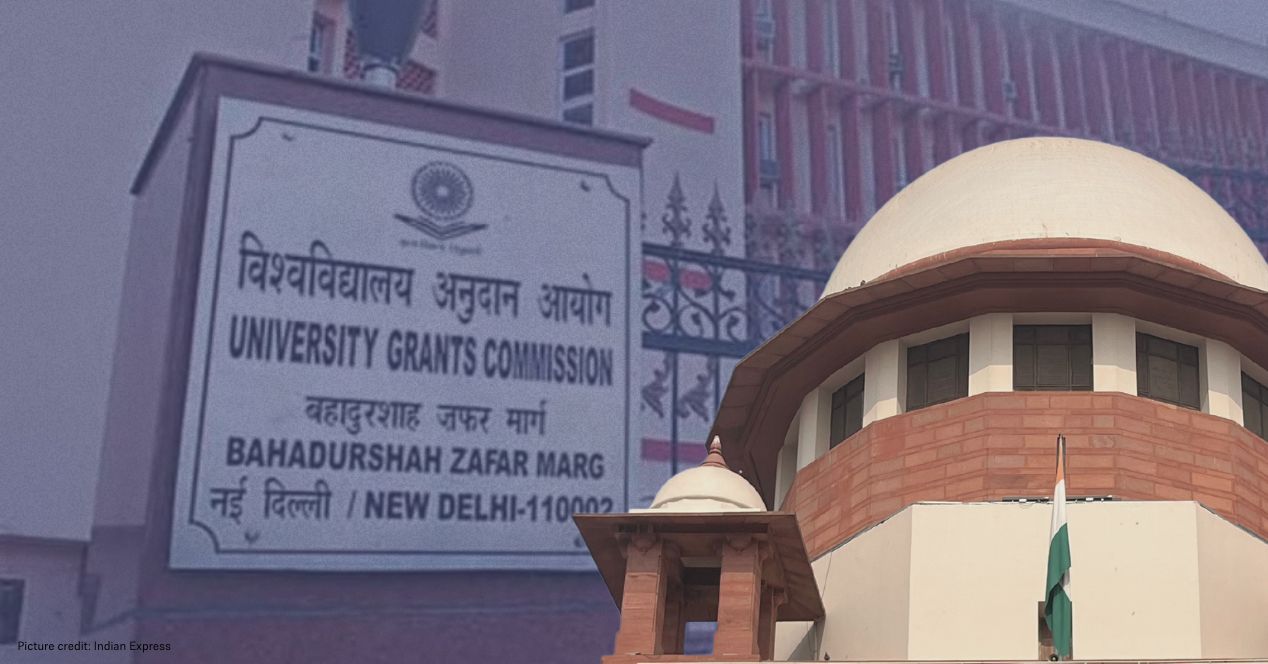
In more public-facing issues, the Court prohibited the circulation of an NCERT textbook that had a chapter on corruption in the judiciary. It later directed that its authors be disassociated from publicly funded curriculum work. It also put a stay on the UGC’s Equity Regulations, 2026 within weeks of their notification. The Regulations, framed in context of a student-suicide litigation, sought to address caste-based discrimination in educational institutions. Petitioners argued that the framework was exclusionary and vulnerable to misuse.
As the Court rises for Partial Working Days, several of the matters that defined the first half remain unfinished, with judgements being reserved and larger benches yet to take shape. On that note, look out for more mid-year reviews on our Analysis page this summer!
Related articles

Analysis
Beyond ‘Special’: How the 2025 Bihar SIR marks a break from the past
As the SC considers its verdict in the roll revision case following 29 hearing days, it must confront the history of electoral safeguards
Analysis
Umar Khalid’s Bail Application Tracker
Tracking activist Umar Khalid's bail applications in the Delhi High Court and the Supreme Court of India
Analysis
“Judiciary” chapter row: NCERT authors blacklisted by SC
The Bench directed the formation of expert panel, including a former judge, to vet the rewritten chapter
Analysis
Supreme Court stays 2026 UGC equity regulations
Challenged for being “unfair” to general category students, the Bench found that the Regulations were prima facie vague and easy to misuse