





Analysis
The year of three Chiefs
From rising pendency to fewer Constitution Benches, from cash-in-an-outhouse to a Collegium dissent, our reporter reviews the year in the SC

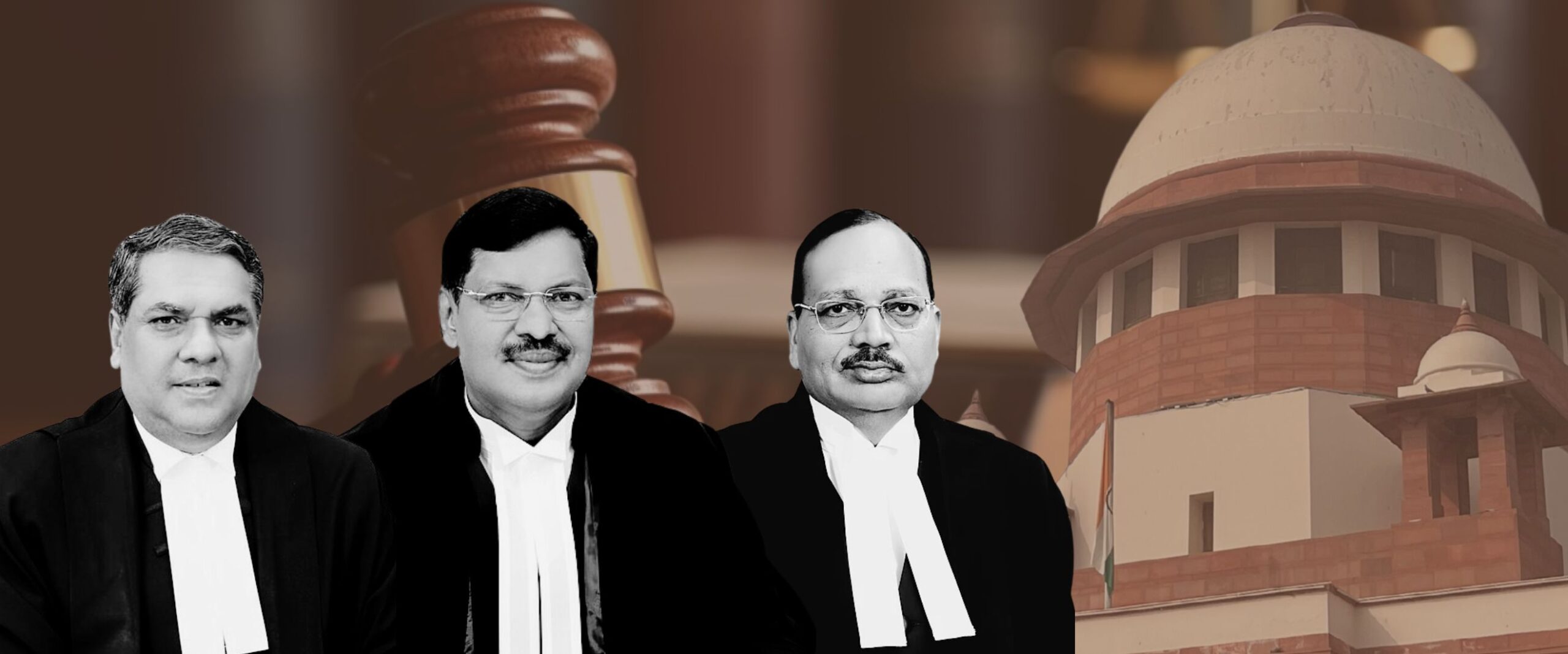
I spent most of 2025 reporting from Court No. 1, tracking headline-making hearings that unfolded incrementally. This year in the Supreme Court, on its various fronts, was shaped less by turning points and more by accretion. Finality and closure were conspicuously absent—a pattern mirrored in the frequency with which the Court reversed its own decisions.
There was the now-customary acknowledgement of stubble burning in the NCR air pollution matter but the Court also had to put out the many fires burning within. By December, what emerged was a Court juggling several pressures: leadership transitions, a rising docket and questions of institutional accountability.
Pendency was spoken about in more alarming terms than usual, in this year when the Court functioned under three Chief Justices—Sanjiv Khanna, B.R. Gavai and Surya Kant. By November, there were 90,694 pending cases, a net increase of over 8200 matters since January. The usual post-summer decline did not materialise. Instead, numbers rose steadily from June through October. This was visible in the daily cause lists. Admission matters dominated listings, while final hearings were fewer.
One of the factors for this may have been the steep decline in Constitution Bench verdicts, which typically dispose of hundreds of tagged matters in a fell swoop. The Court delivered only four Constitution Bench judgements in 2025, compared to 12 in 2024 and 18 in 2023.
In the Presidential Reference on Articles 200 and 201, a five-judge Bench clarified that the grant or withholding of assent by Governors and the President is largely non-justiciable, while leaving open limited judicial intervention in cases of prolonged and unexplained delay. The Bench also set aside timelines imposed earlier in a matter that was representative of the battlelines between the Centre and Opposition-ruled states: State of Tamil Nadu v Governor of Tamil Nadu.
Other Constitution Bench rulings clarified seniority within the Higher Judicial Service, held that in-service judicial officers are eligible for direct recruitment as District Judges under the Bar stream, and revisited the Court’s powers under the Arbitration Act.
Bail matters continued to occupy significant judicial time. The Court repeatedly engaged with prolonged incarceration, delay and the application of stringent laws, often granting relief through interim or conditional orders. However, in one matter that all eyes were on, the Court closed the year without announcing its verdict—the result is that Umar Khalid will spend another uncertain New Year’s Eve behind bars.
One of the year’s most consequential rulings arose from Justice Yashwant Varma’s challenge to the in-house procedure to investigate misconduct. In March 2025, partially burnt currency was discovered in a storeroom at his official residence following a fire. An in-house committee concluded that Justice Varma had “tacit and active” control over the premises. Justice Varma challenged the committee’s report. A Division Bench dismissed the petition, upholding the in-house procedure as a valid mechanism.
Of the seven judges elevated in 2025, Justices Joymalya Bagchi and Vipul Pancholi are in line to become future CJIs. But the Collegium’s functioning came under scrutiny following reports of a dissent recorded by Justice B.V. Nagarathna against the recommendation of Justice Pancholi.
In the aftermath of the Justice Varma episode, the Collegium also released documents disclosing caste identities and familial relationships of candidates approved for High Court elevation. While unprecedented, these disclosures did not extend to deliberations between the Collegium and the Union government.
Concerns about institutional accountability cut across several cases this year. In challenges arising from the Special Intensive Revision of electoral rolls in Bihar, the Court is examining the exercise through questions of procedure and statutory compliance by the Election Commission of India. By the time the Court engaged with the matter in detail, however, Bihar had already voted on the revised rolls, even as similar revision exercises are underway or proposed in other states.
For more colour on these hits and misses, we hope you can spend some time with our year-ender package. We’ve already published thematic reviews on bail, governance, freedom of speech, Constitution Benches and the Collegium. Our much-awaited list of Top 10 Judgements drops on Monday.
We wish our readers a restorative end to the year and a bright start to the new one. Thank you for sticking with us—your support keeps us going.
Related articles

Analysis
Supreme Court Review 2025: Walking the tightrope of jail and bail
The Court served up a mixed bag of bail orders—some baffling for their onerousness and others providing relief before the start of trial
Analysis
Supreme Court Review 2025: Constitution Bench decisions
SCO lists four Constitution Bench judgements pronounced this year by a bench of five judges
Analysis
Supreme Court Review 2025: Governance on trial
This year, the SC asserted its position as the stabilising constitutional actor, promoting representative and institutional legitimacy