





Analysis
ACJ Sharma controversy: Collegium recommends a new Rajasthan High Court CJ
While the SC Collegium acted swiftly to contain the protests; the resolutions left the question of accountability open.

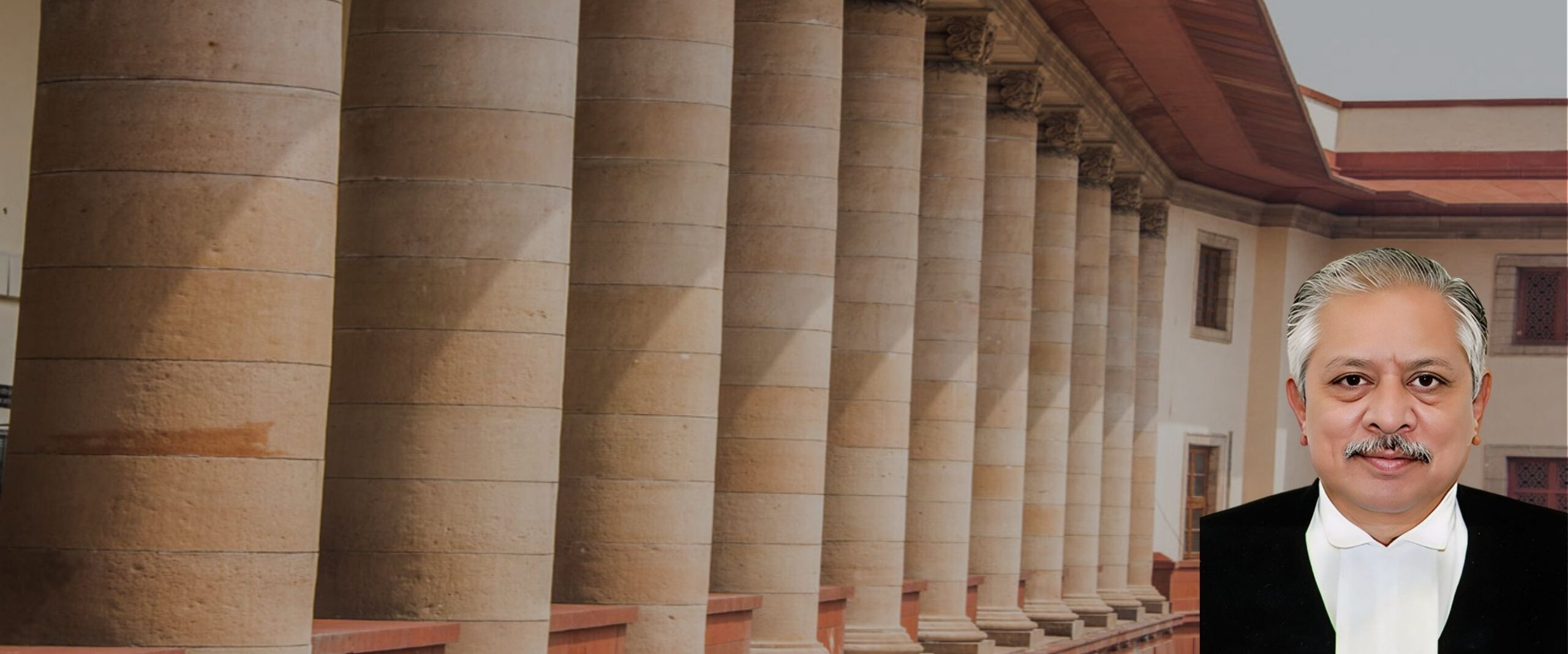
On 31 August 2026, the Supreme Court Collegium recommended the transfer of Justice Sanjay K. Agrawal of the Chhattisgarh High Court to the Rajasthan High Court and, by a separate resolution, proposed his elevation as its Chief Justice.
The decisions came as the controversy around the Acting Chief Justice (ACJ) of Rajasthan High Court, Justice Sanjeev Prakash Sharma, entered a new phase.
Justice Sandeep Mehta of the Supreme Court had written three letters, dated 2, 10 and 17 August, to Chief Justice Surya Kant. The letters alleged misuse of administrative powers and sought the transfer of Justice Sharma and the appointment of a regular Chief Justice in Rajasthan hailing from another High Court. CJI Surya Kant responded on 26 August stating that “established institutional mechanisms” will examine the concerns, and that Justice Sharma will be given a fair opportunity to respond, adding that allegations could not be treated as findings.
By 31 August, lawyers at both the Jodhpur and Jaipur seat of the Rajasthan High Court protested against ACJ Sharma’s continuation in office. The lawyers called for a strike until 6 September and sought his removal from both judicial and administrative responsibilities. The Rajasthan High Court issued a modified roster which included no judicial sittings for ACJ Sharma from 1 to 5 September.
Amidst these developments on the homefront, the Supreme Court Collegium in Delhi met on Monday to recommend Justice Agrawal’s transfer and appointment as Chief Justice. The chronology of events is plain. While it cannot be said that the Collegium’s act was in response to the protest, it can be easily inferred.
The Supreme Court Collegium has published six documents (explained later in this article) on ACJ Sharma. They disclose a pattern when read as a set. The 31 August resolutions settle the question of who will lead the Court. It does not answer or substantiate what happened in the Rajasthan High Court under the leadership of ACJ Sharma.
Two calculated resolutions
A transfer and the appointment of a Chief Justice through two separate resolutions call on the President to act under distinct provisions of the Constitution. The President may transfer a judge under Article 222 and appoint a Chief Justice at a High Court under Article 217. Under Article 217(1), every High Court judge, including its Chief Justice, is formally appointed by the President. For the appointment of a Chief Justice, the Constitution requires consultation with the Chief Justice of India and the Governor of the State. Article 222 separately empowers the President to transfer a judge from one High Court to another after consultation with the CJI. There will be no immediate change in the Rajasthan High Court until the President notifies the transfer and the appointment.
If the transfer is notified, Justice Agrawal will join the Rajasthan High Court Bench before the retirement of ACJ Sharma. This is in tune with the Collegium’s February 2026 policy of appointing a Chief Justice of the High Court in advance before a vacancy arises.
A tale of repatriation requests
The oldest document in this episode is dated 28 March 2023. Justice Sharma, then at the Patna High Court, sought repatriation to his parent High Court in Rajasthan on health grounds. He informally sought a transfer to Punjab and Haryana if Rajasthan was unworkable. The Collegium, then led by Chief Justice D.Y. Chandrachud stated that “it is not possible to repatriate” Justice Sharma and that his health justified a move to Chandigarh’s medical facilities, resulting in his transfer to Punjab and Haryana High Court. No official record explains why it was not possible at the time to transfer Justice Sharma back to Rajasthan.
Twenty-six months later a Collegium resolution dated 26 May 2025 reversed the outcome. The two-paged document published by the Collegium under Chief Justice B.R. Gavai listed the transfer or repatriation of 21 judges. No reasons were provided. One of the 21 Judges was Justice Sharma, who was now back in the Rajasthan High Court. An impossible situation was made possible within two years. On 28 September 2025, Justice Sharma, being the senior most judge in the High Court, took over as the ACJ after the office of the Chief Justice fell vacant. He retires on 26 September 2026.
Justice Mehta’s letters treat the 2023 refusal as due to Justice Sharma’s past conduct. A serving Supreme Court judge, construing the Collegium’s own document, could offer conjecture and nothing stronger.
Eleven months of inaction
On 18 December 2025, the Collegium led by incumbent CJI Surya Kant recommended Chief Justices for five High Courts. The next round was in February 2026, which carried a policy statement: A Chief Justice-designate may now be transferred in advance, “preferably two months before the vacancy arises”. The policy concedes that the leadership gap was an administrative harm worth pre-empting by appointing judges in advance to familiarise themselves with the Court.
The Policy was not, however, visibly applied when the Resolution dated 6 August 2026 covered four more High Courts. No explanation was provided for the recommendations in any of these rounds.
While the Collegium treated leadership gap as a serious issue, the Rajasthan High Court continued to operate under its older arrangement with an ACJ since September 2025. This made Rajasthan the system’s most acute case. The 31 August resolutions came 11 months after a vacancy and 25 days after the previous round of appointments. Additionally, it occurred five days after letters surfaced in the media; and on the day when the Rajasthan Bar called for a strike.
What the recommendations leave unsettled
The resolutions settle succession in the Rajasthan High Court. Once notified, they end the acting arrangement, hand the roster and administration to a judge from another High Court. This does not settle accountability as a change in leadership does not determine whether past conduct was proper.
A separate machinery will track accountability. In XXX v Union of India (2025), the Supreme Court reaffirmed the in-house procedure for processing complaints against sitting judges. The Chief Justice of India can seek a response and assess the material followed by a fact-finding inquiry if necessary. The CJI’s statement on 26 August suggests that the accountability mechanism will work separately, despite change in leadership.
The machinery also accounts for complaints against a High Court’s head. In C. Ravichandran Iyer v Justice A.M. Bhattacharjee (1995), the Court said allegations against a High Court Chief Justice should go directly to the Chief Justice of India. Once the CJI is seized with the matter, the Bar should allow a reasonable period for the institutional response. The resolutions decide nothing on the merits of allegations or protests. It does, however, insist that the mechanisms reach their logical conclusion, insulated from the pressure the controversy generates.
Additional District and Sessions Judge ‘X’ v Registrar General, High Court of Madhya Pradesh (2014) suggests what can be done in the interim period. The Court stated that the CJI could direct that the judges complained against be divested of administrative and supervisory authority over potential witnesses. This protects the fairness and integrity of the in-house process.
The allegations against ACJ Sharma concern case allocation and court management. The modified roster answers only the judicial role and not the administrative one. Until notification, or a direction from the CJI, the ACJ retains the very powers the letters complain of.
The two faces of silence
Our weekly newsletter had noted two questions: why Justice Sharma was repatriated at all, and why the office was left vacant so long. The documents and resolutions answer neither of these questions. The Collegium has not been consistent with its resolutions. For instance, resolutions of 17 and 18 January 2023 disclosed the government’s objections to pending names, answering concerns raised by intelligence inputs. The practice receded. In August 2026, Justice Ujjal Bhuyan observed that the last three Supreme Court elevation resolutions carried no reasons at all.
There is a strong defence for shorter resolutions. The Chief’s statement on 26 August cautions against determination of complaints through media claims. Complaints against a sitting judge are untested material. A resolution disclosing the Collegium’s assessment of them would adjudicate a judge’s reputation without a hearing, pre-empting the very in-house process now under way. Justice Sharma stands convicted of nothing. A bare recommendation spares him a public verdict.
Readers will infer the reasons anyway. That is precisely the trouble. Because the resolutions say nothing, the sequence of events becomes the only evidence: letters, statement, strike, roster, recommendation.
Related articles

Analysis
Raising a complaint
Justice Sandeep Mehta’s leaked letters present a unique opportunity for the Supreme Court to reassure public faith in itself
Analysis
A crack in the Collegium’s wall of secrecy
Justice Nagarathna’s reported dissent against a recent recommendation highlights the lack of transparency around Collegium deliberations
Court Data
The Union Government cleared 96 percent names recommended by CJI Gavai-led Collegium
The rate of acceptance surpasses former CJI Chandrachud who had 4 times the tenure length and CJI Khanna who served for about 6 months
Analysis
What’s new in the Supreme Court’s latest transparency initiative?
We examine whether the documents released by the Court earlier this week reveal information that was not already in the public domain