





Jantar Mantar Protests | Objections to HPEC “premature”, says Supreme Court
The inquiry will first look at pellet guns, violence against women protesters and the destruction of property.

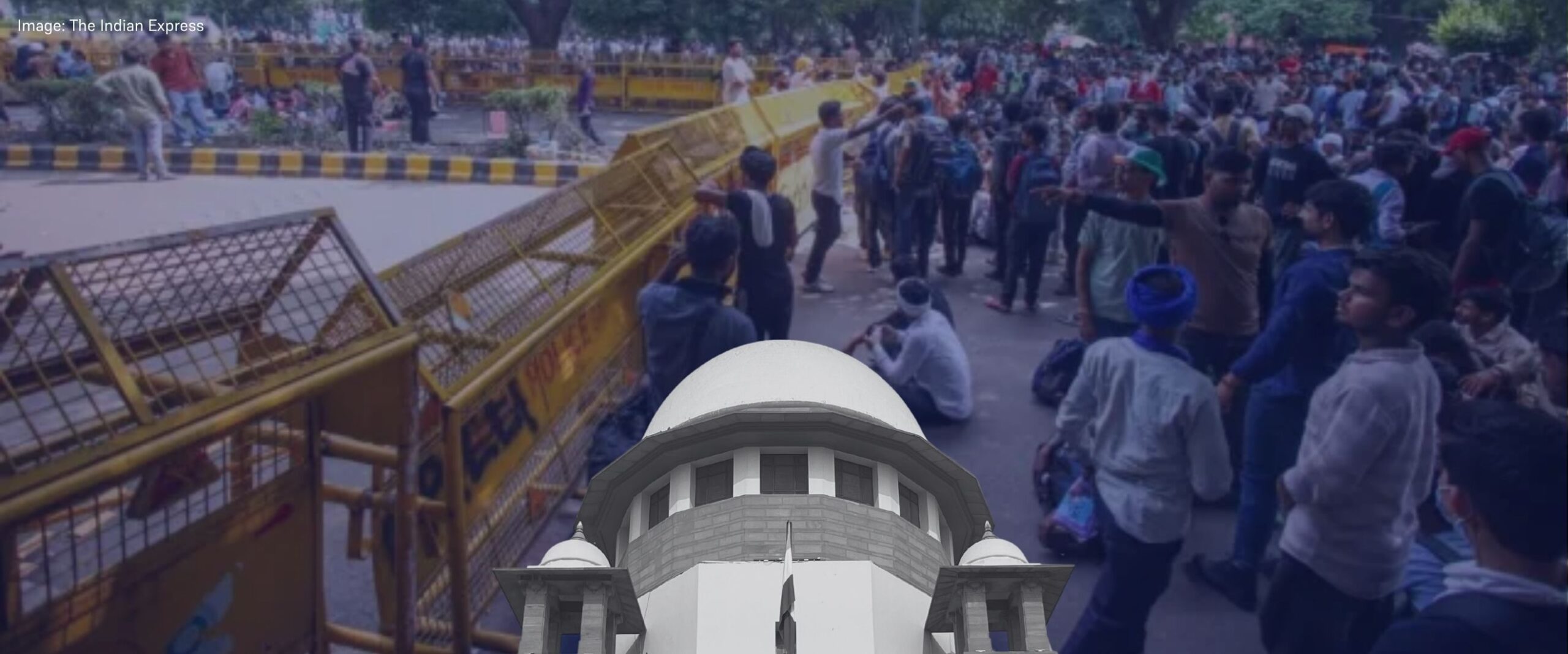
A Bench of Chief Justice Surya Kant and Justices Joymalya Bagchi and V. Mohana refused to reconstitute the High-Powered Enquiry Committee (HPEC) investigating allegations of police excesses during the 20 July student protests at Jantar Mantar. The Court found that the challenge to its composition rested on “conjecture and preconceived notions”, raised even before the HPEC had begun its enquiry.
The composition stays
On 25 August, petitioners sought the reconstitution of the HPEC, which was formed a week before on 18 August. While Solicitor General Tushar Mehta called the application “very mischievous”, Senior Advocate Gopal Sankaranarayanan said the petitioners had raised a “common concern” about the panel. The Court said it would hear those concerns, while making clear that the HPEC should be allowed to work.
In its latest order, the Court said it was “constrained to observe, with some measure of disquiet” that “aspersions” had been cast on the HPEC “in a manner that is both premature and precipitate”. The objection, it said, rested on “conjecture and preconceived notions” about a body that had not yet embarked upon its inquiry.
The Bench stressed in its order that the HPEC’s role was to assist the Court “with the highest standards of fairness and transparency and with a dispassionate approach”, rather than “to espouse the causes of one or the other party before us”.
Pellets, violence, property
The Court asked the HPEC to begin with four issues identified in its 18 August order: the use of pellet guns, targeted violence and harassment of female protesters, and “excessive violence and destruction of property occasioned on either side”. The order had recorded allegations of disproportionate force against protesters, including pellet gun use, lathi charges, tear gas and violence by police personnel in plain clothes. It had recorded allegations of violence against women and children. The respondents had alleged that protesters damaged public property and injured police and security personnel.
The constitutional questions arising from the protests remain before the Court. The Bench reaffirmed that those questions would be considered “at the appropriate stage”.
A safer way into the HPEC
The Court directed the HPEC to keep the identities of vulnerable witnesses “confidential and undisclosed” and maintain “utmost confidentiality” over their statements and evidence. It also said the HPEC could create a separate online portal for witnesses and other stakeholders to submit documents and evidence.
The question of access had come up in the earlier hearing. Counsel had told the Bench that vulnerable petitioners and witnesses were reluctant to approach the HPEC because material passed through different chambers and nodal officers and said that women who had allegedly faced gender violence were particularly hesitant to come forward. The Bench had said there should be no “gap in accessibility” between the HPEC and those approaching it.
Protection for a 14-year-old protestor
The Bench had been informed at the earlier hearing that a 14-year-old female protester and her family were under threat. The CJI had said, “Such matters cannot be taken lightly.” Counsel had further submitted that the Delhi Police had taken no action against those allegedly responsible. The Court has now directed the police to assess their “threat perception”, provide protection and investigate the allegations expeditiously. A status report has been directed to be filed on 9 October.
The Court appointed Senior Advocate Dr Monika Gusain and C. Solomon, AoR, as Amici Curiae and asked the HPEC to appoint a Member Secretary and submit its first report at the earliest. The nodal counsel appointed under the 18 August order would remain confined to assisting the Court and providing logistical support.
The matter will next be heard on 9 October.