





Analysis
How do judges address perceived partiality?
From Justices Kumar and Sharma to CJI Surya Kant and former Justice Katju, the Supreme Court’s record of recusals invites scrutiny

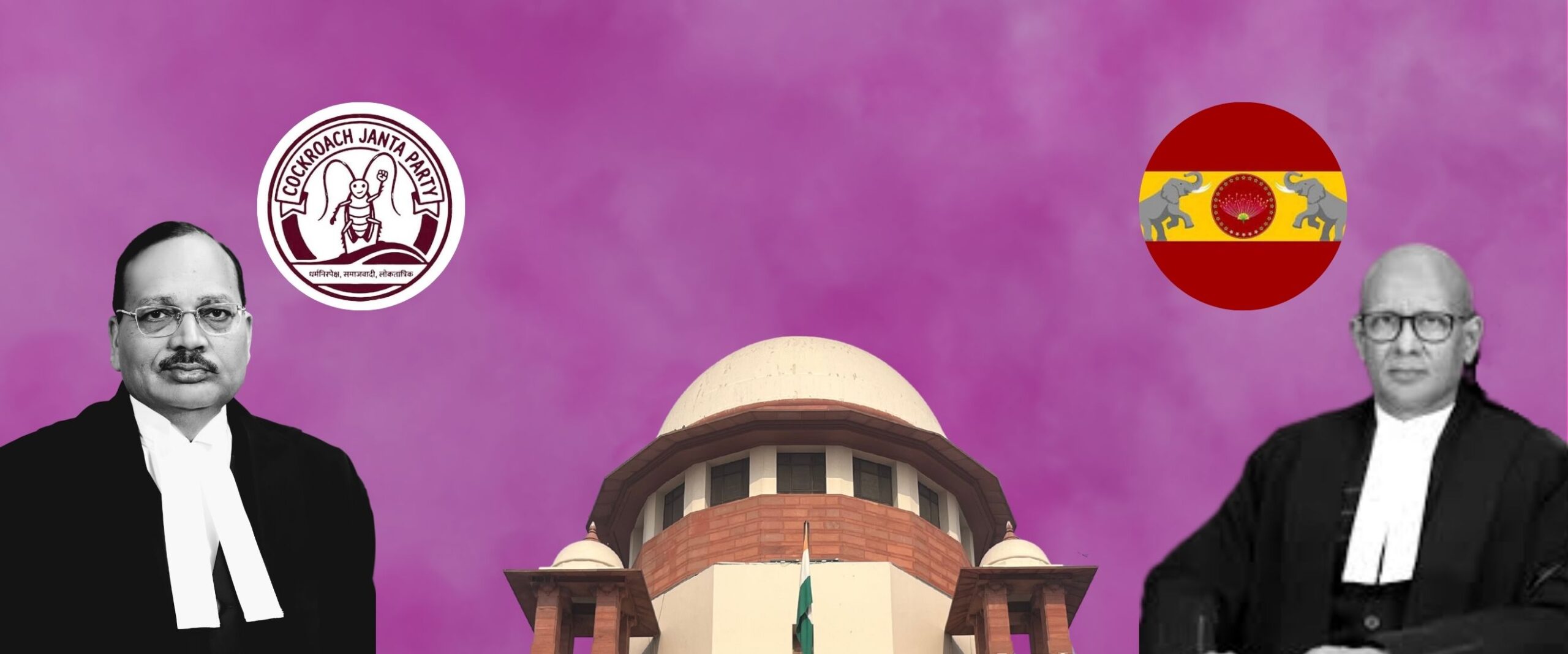
On Wednesday, Justice P.V. Sanjay Kumar withdrew from an appeal challenging Tamil Nadu Revenue Minister K.A. Sengottaiyan’s election. The Supreme Court’s written order records his recusal without explaining its reason. Reportedly however, Justice Kumar explained that his earlier courtroom remarks had been misrepresented as praise for Tamil Nadu Chief Minister C. Joseph Vijay, creating an impression that made it inappropriate for him to hear a dispute involving a minister from Vijay’s party.
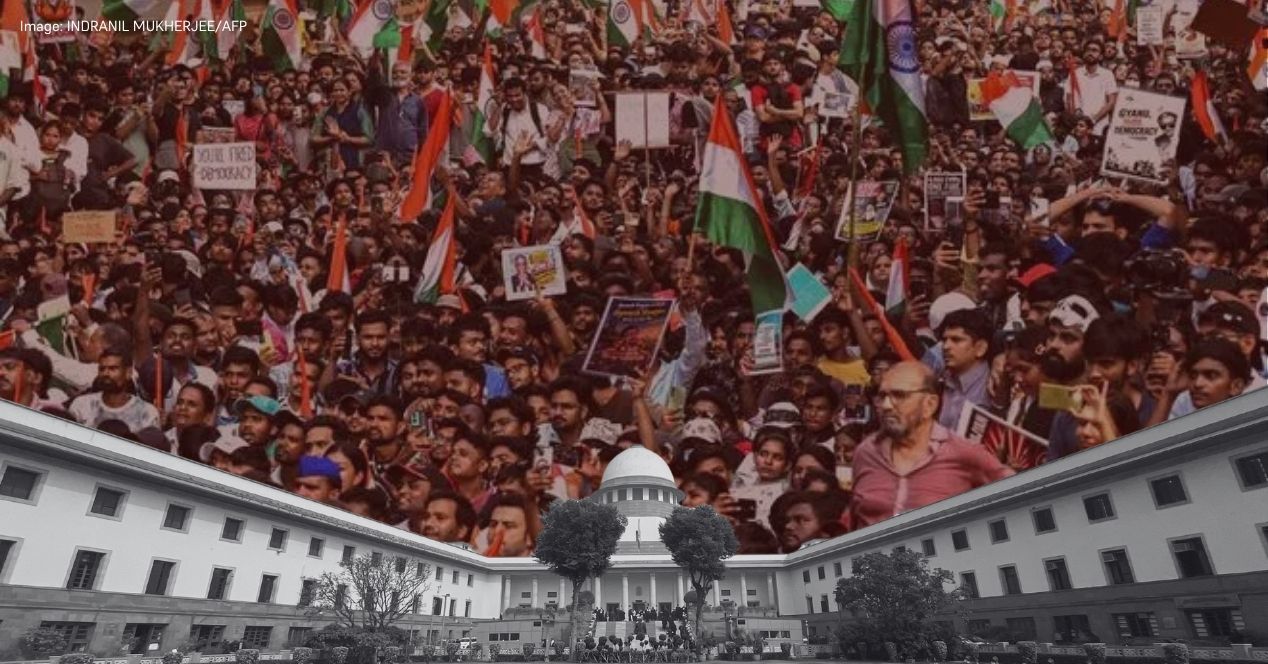
This invites comparison with Chief Justice Surya Kant’s continued participation in proceedings concerning the Cockroach Janta Party (CJP), whose identity emerged from controversy over his own courtroom remarks. While both judges have said their words were misrepresented, their responses to hearing connected disputes have differed, bringing into focus the requirement that “justice should not only be done, but also be seen to be done.”
A perception sufficient to withdraw
Justice Kumar’s remarks were made during a criminal appeal heard on 30 September concerning alleged theft of data from a hair salon in Coimbatore. According to Daily Thanthi, the State government counsel P. Karunakaran disclosed that he had previously represented the complainant and said that another lawyer, S. Gauthaman, would appear for the State. When Gauthaman sought time, Justice Kumar commented on the unresolved arrangement between counsel before noting, in translation, “your Chief Minister (Vijay) is performing well”. The report added that he had received favourable information about Vijay and expressed happiness for Tamil Nadu. Maalai Malar and the Hindu Tamil Thisai carried similar accounts.
Daily Thanthi’s report of the recusal preserves an important detail: Justice Kumar recalled news of the CM’s performance before questioning the counsel’s repeated adjournment requests. He explained an intent to contrast the CM’s desire for quick action with the counsel’s delay and objected to its circulation as praise for the Tamilaga Vettri Kazhagam. The appeal arose in an election petition filed by V.B. Prabhu of the All India Anna Dravida Munnetra Kazhagam (AIADMK), alleging defects in the notarial attestation of Sengottaiyan’s nomination affidavit. The Madras High Court rejected the petition for failure to plead essential material facts, including the material impact of the defect on the election result.
The Chief Justice and the CJP
Contrast Justice Kumar’s conduct with CJI Surya Kant’s reference to “cockroaches” during a hearing in May which ultimately inspired the CJP. The CJI has subsequently explained that his remarks were directed at people entering professions through fraudulent degrees and described the misrepresented circulation as driven by “malicious intent” to mislead young people. The contrast is explicit.
The CJI’s public defence questioned the motive of those who circulated his remarks. The relevant consideration for recusal, however, is whether his continued participation could create a reasonable apprehension of bias, regardless of how that perception arose.
The argument for another bench is strongest when the controversy is material to adjudication. Petitions arising from the CJP protests which challenge police action require consideration of reports which are independently assessable on their own facts. A reasoned explanation for the CJI’s continued participation would help demonstrate how the Court addresses the appearance of impartiality.
Reviewing a policy that possibly arose from one’s own suggestion
The Jantar Mantar proceedings add another dimension. In its 9 October order, the CJI-led Bench recorded agreement among counsel that protesters should have basic amenities and that suitable alternative sites should be identified. Competent authorities were asked to consider the suggestion.
On 13 October, Additional Solicitor General Chetan Sharma informed the Delhi High Court that Jantar Mantar has been denotified “pursuant to SC orders”, referring specifically to the 9 October suggestion. On 15 October, when the CJI-led Bench questioned this connection, Solicitor General Tushar Mehta attributed the decision to an earlier committee report and disputed reliance on the Court’s order. The differing explanations sharpen the issue. Listing the denotification challenges before another bench would provide greater distance between the contested judicial basis and the execution action under review.
Earlier responses to courtroom remarks
A historical parallel was witnessed in 2009. Justice Markandey Katju’s reported reference to “Talibanisation”, during Mohd Salim’s challenge to a school’s prohibition on his beard, prompted objections to his impartiality. At the time, PTI reports recorded Justice Katju’s apology and subsequent recall of the dismissal, and the matter was listed before another Bench.
Justice Kumar’s reported praise for a chief minister created a perception of political sympathy for the ruling party of which the respondent was a member. The CJI’s remarks sparked the formation of a party whose members are parties to the dispute before his bench. Justice Katju’s remark arose directly from the religious practice at issue in the case before him, making its connection to the merits of that dispute the most immediate of the three.
The Court has also resisted recusal demands. In its 2019 order rejecting Harsh Mander’s application for recusal of former CJI Ranjan Gogoi, the CJI-led Bench emphasised that judges must ask difficult questions and that objections without a firm basis could encourage litigants to bench-hunt for a more receptive judge.
Disclosure before a decision
Justice S.C. Sharma’s participation in the election commissioners’ appointment case supplies a further comparison. The Madhya Pradesh High Court’s directory lists his son, Siddharth Sharma, as Election Commission counsel since 10 July 2024. After the split opinions on 23 September, applicants seeking recall of the 2023 appointments law alleged that Justice Sharma had failed to disclose this connection during the hearings. They argued that early disclosure would have enabled a recusal request.
An allegation of this nature remains distinct from a judicial finding. Its institutional significance lies in the opportunity provided by early disclosure for parties to raise concerns before a decision is made, and for the judge to explain whether those concerns warrant withdrawal. In Rupa Ashok Hurra v Ashok Hurra (2002), the Court recognised that an undisclosed connection creating an apprehension of bias, coupled with an adverse judgement, could justify exceptional curative relief, subject to stringent requirements. The Restatement of Values of Judicial Life which were adopted by the Court in 1997 requires judicial conduct to sustain public confidence in impartiality. Justice Kumar’s reported explanation gives practical expression to that concern. The CJI’s continued participation in CJP proceedings and denotification challenges warrants scrutiny against the same principle.
The cases involve different circumstances, but the Court owes litigants a consistent account of how those differences matter. Timely disclosure and recorded reasons would make the appearance of justice an intelligible institutional commitment, rather than a standard whose application varies with the roster.
Related articles

Analysis
Judgement un-reserved: SC Judge K.V. Viswanathan recuses after arguments conclude
A post-reservation recusal raises questions about disclosure protocols for former advocates directly elevated to the bench
Channel
Oral remarks by Judges: What’s their purpose?
In the age of livestreaming and live-tweeting, oral remarks are often pulled from the courtroom and thrust into the news cycle. We explain.
Analysis
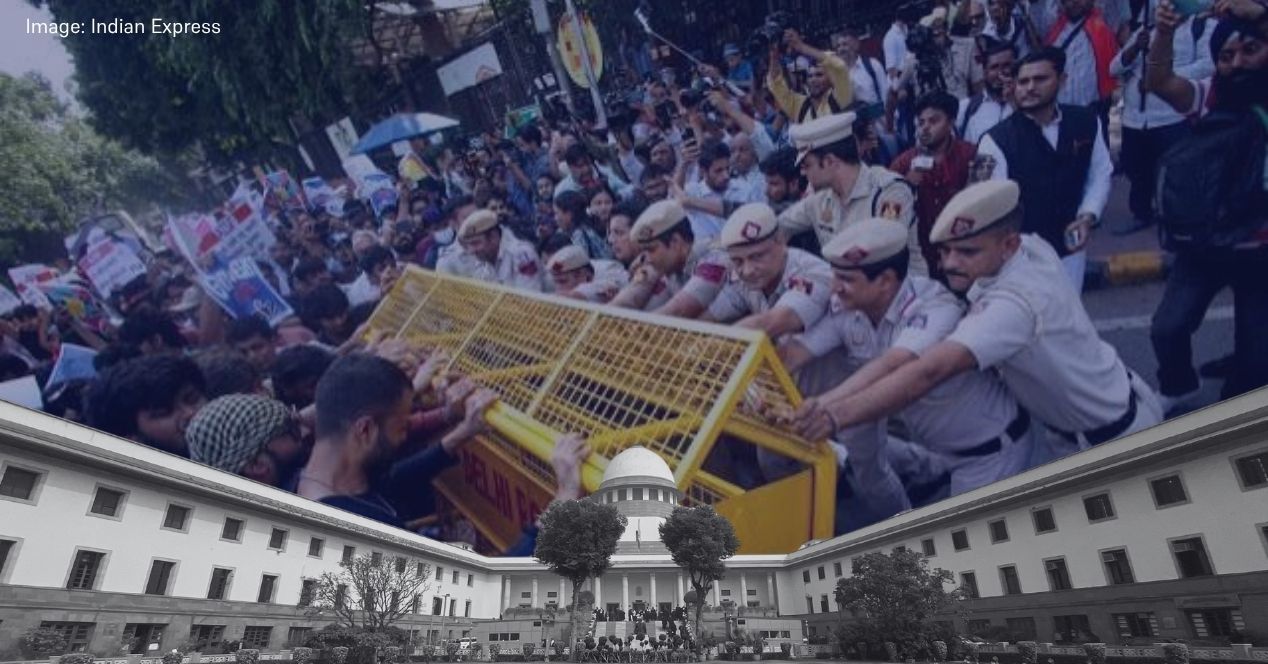
Dissent over SIR: Making sense of Supreme Court hearings
The extraordinary Sunday sitting raised expectations, but its directions will count only if the following proceedings produce safeguards
Analysis
Delhi CEC Protests | Live Updates from the Supreme Court
On the extraordinary occasion of a march to the Supreme Court by the Leader of Opposition, we report between Court and the streets