





Analysis
Dissent over SIR: Making sense of Supreme Court hearings
The extraordinary Sunday sitting raised expectations, but its directions will count only if the following proceedings produce safeguards

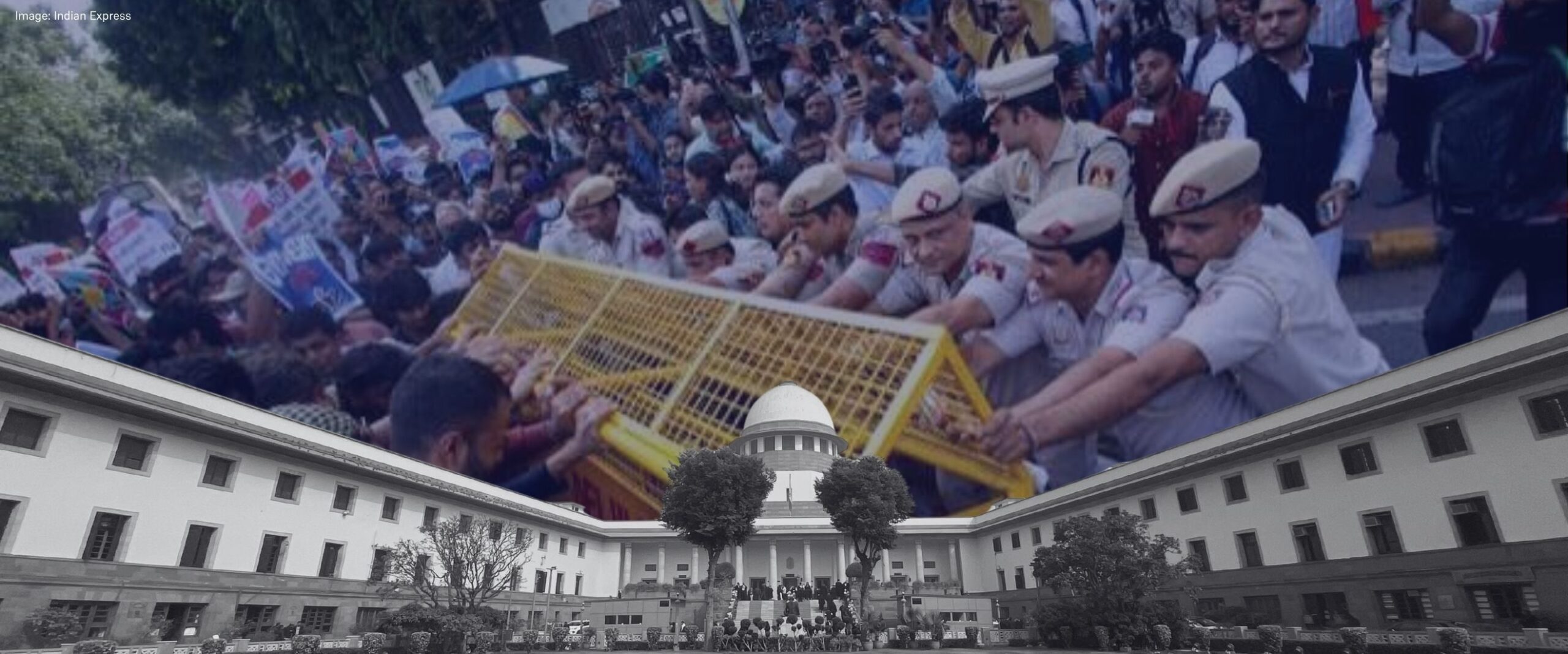
Legislator Bhim Singh was arrested by the police in the early hours of 10 September 1985. He was on the road to Srinagar to attend a session at the Jammu and Kashmir assembly, scheduled the next day. He was released on bail six days later. The session began without his presence. Justice O. Chinnappa Reddy of the Supreme Court, wrote the judgement that decided the matter in November 1985. Singh was a free man by then. Justice Reddy declined to treat the release as the end of the case. The mischief or malice and the invasion, he held, may not be washed away or wished away by his being set free.
On Sunday, 11 October 2026, Solicitor General Tushar Mehta made the opposite submission to the same Court. A habeas corpus petition was filed after a large number of persons had been detained in Delhi over the protests against Chief Election Commissioner Gyanesh Kumar. Mehta told the Bench that the habeas corpus petitions seeking the release of protestors had become infructuous as the persons named in it had since been released. The Bench issued notice on the petition all the same.
This illustrates a difficulty that the Court has grappled with several times over the decades in matters concerning liberty. Often decisions are delayed reactions to time sensitive events. A person kept away from a protest site on the day of the protest cannot be given that day back by a later order. Time sensitive petitions arguably require urgent intervention by the Court, before facts are established.
The Court has now encountered that problem in four sets of proceedings. They arise from the Special Intensive Revision (SIR) of Electoral Rolls. The first three proceedings concern the manner in which the State may regulate dissent. The fourth concerns the grievances that provoked the dissent in the first place.
How the protest was policed
On 9 October, a Bench of Chief Justice Surya Kant with Justices Joymalya Bagchi and V. Mohana stated that the Delhi Police’s order directing the closure of 57 Metro stations in Delhi before the 10 October protests was “overreaching”. It distinguished “prohibition” from “regulation”.
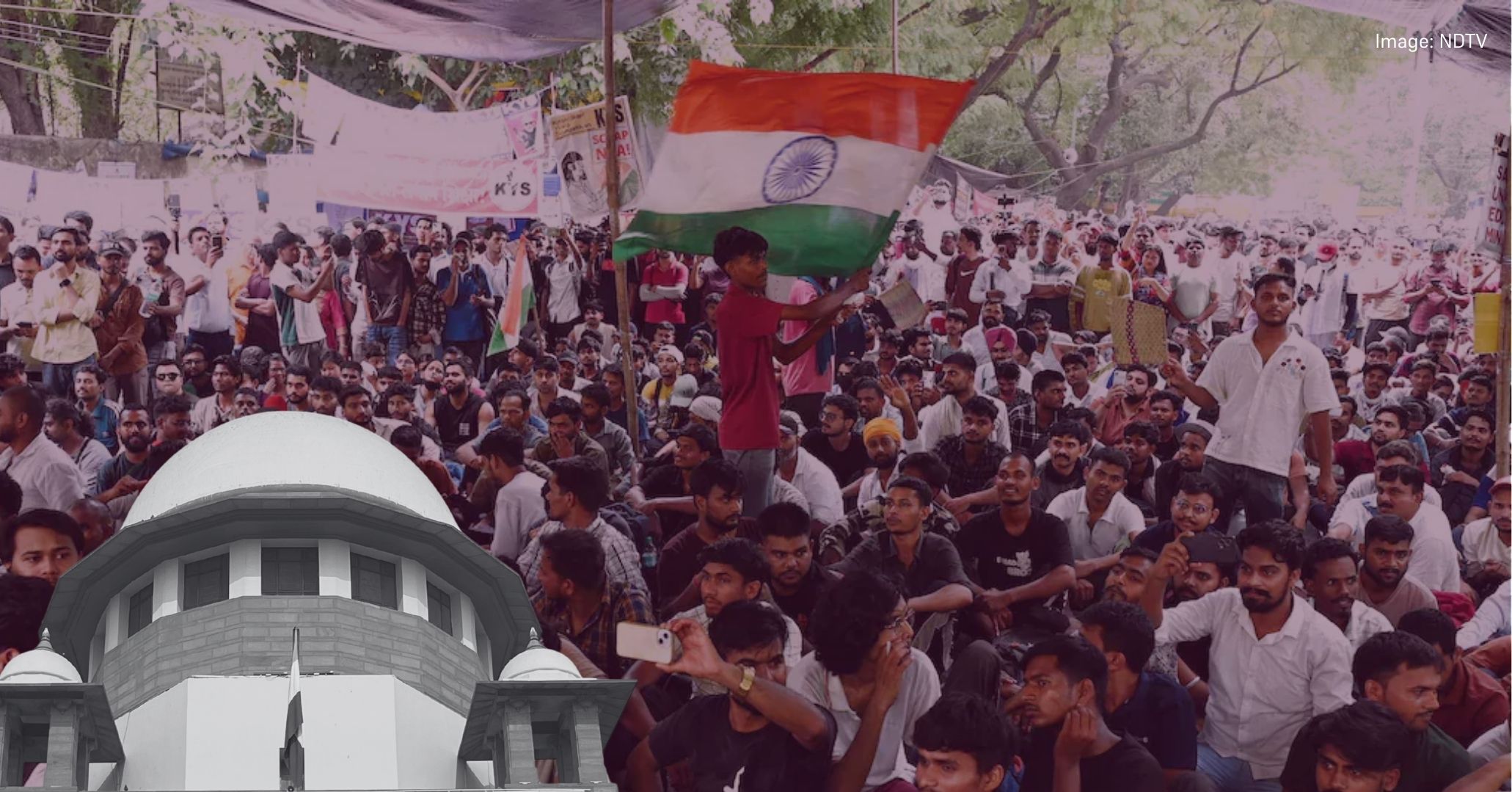
On 10 October, 45 Delhi Metro stations remained shut. The police detained opposition leaders, lawyers and protestors. Justices Bagchi and Mohana assembled on Sunday, 11 October, to hear a contempt petition alleging violation of the Court’s 9 October Order. A habeas corpus petition was also listed seeking a release of the detained protestors. Several parties mentioned petitions alleging police excesses against protesters. They include one by Member of Parliament Manoj Kumar Jha and one jointly by the Supreme Court Advocate-on-Record Association (SCAORA) and the Supreme Court Bar Association (SCBA). Network of Women in Media, India (NWMI) filed the third petition alleging physical handling, intimidation, arbitrary detention or coercive removal of women journalists while engaged in bona fide journalistic activity infringing their dignity, bodily integrity and personal liberty under Article 21, in addition to burdening their freedom of speech and expression under Article 19(1)(a).
Contempt, however, requires “wilful disobedience” under the statute. Determining whether the authorities were in “wilful disobedience” of the Court’s direction now depends on how “disobedience” is calculated. Mehta claimed that the authorities complied with the direction—4157 scheduled Metro trips had run and that 45 of the network’s 303 stations were closed. Justice Bagchi asked the Union to show the closed stations on a map. While a station may remain closed, it still runs every train. Passengers are only carried past the stations.
In Sudhir Vasudeva v M. George Ravishekaran (2014), the Court confined a contempt of court to “the four corners” of the order alleged to be breached. The 9 October order left it to the authorities to take “a prudent decision” to run services in a regulated manner. The unqualified command was that there be “no outright prohibition on the movement of Metro trains”.
One of the six interim directions from Sunday’s Order bars “illegal detention”. The test of illegality comes from Article 21, under which liberty may be taken away only by “procedure established by law”. In Maneka Gandhi v Union of India (1978), the Court held that a procedure which removes liberty must itself be ‘fair, just and reasonable. In Rajender Singh Pathania v State (NCT of Delhi) (2011), the Court confined preventive arrest to cases where an offence cannot otherwise be prevented. By issuing notice despite the plea of infructuousness, the Bench kept the legality of the detentions open for scrutiny.
The petitions on police excesses raise a different question. Manoj Kumar Jha alleges disproportionate force and harassment of women protesters, and asks the Court to declare the police action illegal. The SCBA seeks a status report on the detention of lawyers near the Court and the names of the officers involved. It asks that CCTV and body-camera footage be preserved. The NWMI sought directions for appropriate safeguards to ensure women’s equal and safe participation in journalistic work in public spaces.
Where protest may be held
On the day of the Sunday sitting, the Delhi Police Commissioner signed a standing order de-notifying Jantar mantar as a designated protest site in Delhi. The standing order was made public on 12 October. It named Ramlila Ground, Burari Ground and CBD Ground as alternatives. The order relies on the recommendation of a committee constituted by the Ministry of Home Affairs.
Interestingly, the Supreme Court, in August 2026, had issued notice in a case that sought to move protests away from Jantar Mantar. The standing order went ahead and decided a question that was already before the Supreme Court.
The standing order has been challenged in the Supreme Court and reportedly relies on the Court’s earlier recognition of Jantar Mantar. It also questions the suitability of the new venues. (Swaty Singh v Union of India)
That recognition came in Mazdoor Kisan Shakti Sangathan v Union of India (2018). The Court was considering an order of the National Green Tribunal that had stopped all protests at Jantar Mantar. Justices A.K. Sikri and Ashok Bhushan held that “total extinction is not balancing” between the rights of residents and those of protesters. They found that Ramlila Maidan “may not be sufficient” as an alternative and directed the police to frame guidelines for regulated protest. The decision favoured regulation rather than a ban on Jantar Mantar. The standing order, however, removes the site.
The 9 October order is consistent with the 2018 judgement. It asked the competent authority to consider “suitable alternative sites” at which basic amenities could be provided to protesters. It placed no restriction on Jantar Mantar and said nothing of closing it.
The grievance behind the protests
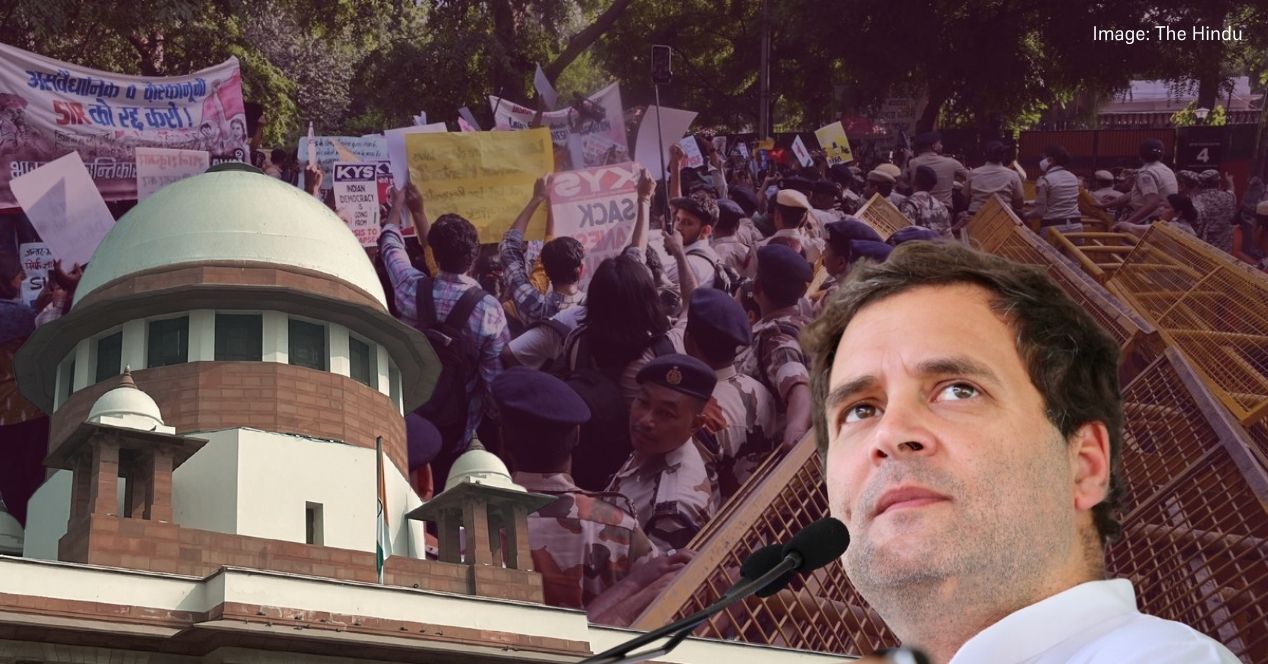
On 12 October, Rahul Gandhi and ten other Opposition leaders filed a writ petition against the Election Commission and its three members. The central question concerns how the ECI decided to conduct the SIR. The petition relies on the Indian Express reports that Election Commissioners Sukhbir Singh Sandhu and Vivek Joshi dissented from Chief Election Commissioner Gyanesh Kumar. According to reports, the two recorded written objections on at least 14 occasions over ten months. The ECI has responded that all three members approved its orders.
The petition asks the Court to examine whether decisions allegedly taken by the Chief Election Commissioner alone complied with Article 324 of the Constitution. It also invokes Section 18 of the 2023 law on Election Commissioners, under which the majority view prevails where the members differ.
The petition seeks the ECI’s files on the revision since June 2025 and an audit of deletions by a committee headed by a retired judge. It also seeks an interim suspension of the revision.
The Court’s domain
On 11 October, Chief Justice Surya Kant declined to meet Opposition leaders who wished to hand him a memorandum. He reportedly cited the pendency of the issues and the separation of powers. The next day, he spoke to reporters at the National Human Rights Commission’s foundation day event. Asked about the protests, he replied that the matter was one of law and order and lay outside his domain.
Pratap Bhanu Mehta, in his Indian Express article, equated the Court with the Election Commission, as both acting with “shameless disregard for the constitutional purpose of their office”. He called the Court “the only practical mechanism of accountability” over the ECI. His complaint was that its interventions had legitimised the revision of electoral rolls “without any real safeguards”. His sharpest charge stated that both the institutions have a “lack of self-awareness” and described the result as a “culture of impunity” that had become institutionalised. He warned that the independence of the Court and the Commission “has now become a shield for the government”.
This standard applies to all four proceedings. A prompt hearing earns public confidence only when it produces safeguards that bind the executive. The Court’s scrutiny of the affidavits on the policing, the standing order denotifying Jantar Mantar as a designated protest site and the ECI’s decision-making process will show whether the Court supplies such safeguards.
Related articles

Analysis
What are the sub judice cases that form part of INDIA Bloc’s memorandum to CJI Surya Kant?
CJI Surya Kant declined to meet INDIA bloc leaders as matters concerning alleged electoral irregularities are pending before the SC
Analysis
Delhi CEC Protests | Live Updates from the Supreme Court
On the extraordinary occasion of a march to the Supreme Court by the Leader of Opposition, we report between Court and the streets
Analysis
Delhi protests: No immediate relief on contempt and Habeas Corpus petitions
The Supreme Court directed restoration of services in New Delhi and will hear compliance reports from State authorities on Tuesday

Analysis
SC asks authorities to “regulate” metro, train services ahead of CJP protest
The Bench ruled out a complete Metro shutdown and directed authorities to issue a traffic advisory