

Arun Palli
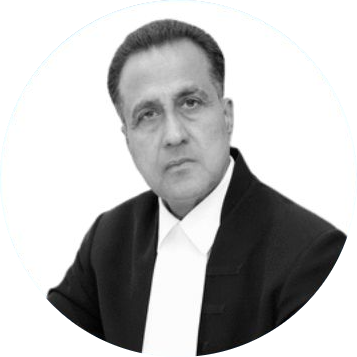
Arun Palli
Sitting Judge of the Supreme Court of India
Assumed Office2nd Jun, 2026
Retires On17th Sep, 2029
Previously
Chief Justice of Jammu and Kashmir High Court16 April 2025 – 1 June 2026
Judge at Punjab & Haryana High Court28 December 2013 – 15 April 2025
Profile
Early Life and Education
Justice Arun Palli hails from Patiala, Punjab, and was born on 18 September 1964. Both his great-grandfather Lachchman Dass Palli and grandfather Lajpat Rai Palli were practising advocates at the Patiala District Bar. His father, Prem Kishan Palli, was a Senior Advocate and, later, served as a judge of Himachal Pradesh High Court, eventually retiring in 1998.
Justice Arun Palli completed his Bachelor of Commerce and Bachelor of Laws from Panjab University, Chandigarh, in 1988.
Career as a Lawyer
Justice Palli began his practice at the Punjab and Haryana High Court. His practice spanned across diverse areas, including civil, criminal, constitutional, revenue, industrial and labour law. He served as the Additional Advocate General for Punjab from 1 September 2004 till March 2007. On 26 April 2007, he was designated as a senior advocate.
He appeared before the Supreme Court, the Delhi High Court and the Himachal Pradesh High Court.
Career as a Judge
Justice Palli was appointed as a Judge of the Punjab and Haryana High Court on 28 December 2013 and served at the same High Court for about 11 years and 3 months.
During this period, he also served as the Executive Chairman of Haryana State Legal Service Authority from 31 May 2023. He was also appointed as a Member of the Governing Body of the National Legal Services Authority (NALSA) on 31 October 2023 for a period of two years.
On 16 April 2025, he took oath as the 38th Chief Justice of Jammu and Kashmir High Court.
On 27 May 2026, the Supreme Court Collegium recommended the appointment of Justice Palli to the Supreme Court. The Department of Justice notified his appointment on 1 June. He took oath alongside four other judges on 2 June. Justice Palli is expected to serve a tenure of 3 years and 3 months, retiring on 17 September 2029.
Notable Judgements
In UT of J&K v Som Raj (2025), a Jammu and Kashmir High Court Division Bench of Chief Justice Arun Palli and Justice Rajnesh Oswal held that refusing regularisation of a worker after extracting work for more than three decades would be illegal, inequitable and contrary to the welfare obligations of the State. The decision arose from a petition filed by the Government against an order of the Central Administrative Tribunal, Jammu, directing the retrospective regularisation of a daily-wage earner. The Court found that the worker was in service for more than three decades. Denying regularisation after such a long period of employment would be contrary to the law.
In Sikandar Singh v Directorate of Enforcement (2024), a Division Bench of the Punjab and Haryana High Court led by Justice Arun Palli held that the staying of a First Information Report (FIR) does not prevent the registration of an Enforcement Case Information Report (ECIR) by the Enforcement Directorate (ED). The accused person had shown that the FIRs alleging the predicate offence against them had been stayed by a separate bench of the Punjab and Haryana High Court. They argued that the ED would be acting in contravention of law in registering an ECIR concerning the predicate offences reported in the stayed FIRs.
In Roop Bansal v Union Of India (2023), a Division Bench of Justice Arun Palli and Justice Vikram Aggarwal of the Punjab and Haryana High Court set aside the arrest of Roop Bansal, a real estate group M3M Director, in a money laundering case. The Court observed that the arrest was in defiance of the provisions of Section 19 of the PMLA in view of the Supreme Court’s judgement in Pankaj Bansal v Union of India (2023). In that case, the Supreme Court had mandated that a copy of the written grounds of arrest is furnished to the arrested person as a matter of course and without exception. The High Court held that Pankaj Bansal will be applicable retrospectively.